9
To protect the fuel system from gum formation,
mix in a fuel stabilizer when adding fuel.
See Storage. All fuel is not the same. If you
experience starting or performance problems
after using fuel, switch to a different fuel
provider or change brands. This engine
is certied to operate on gasoline. The
emission control system for this engine is
EM (Engine Modications).
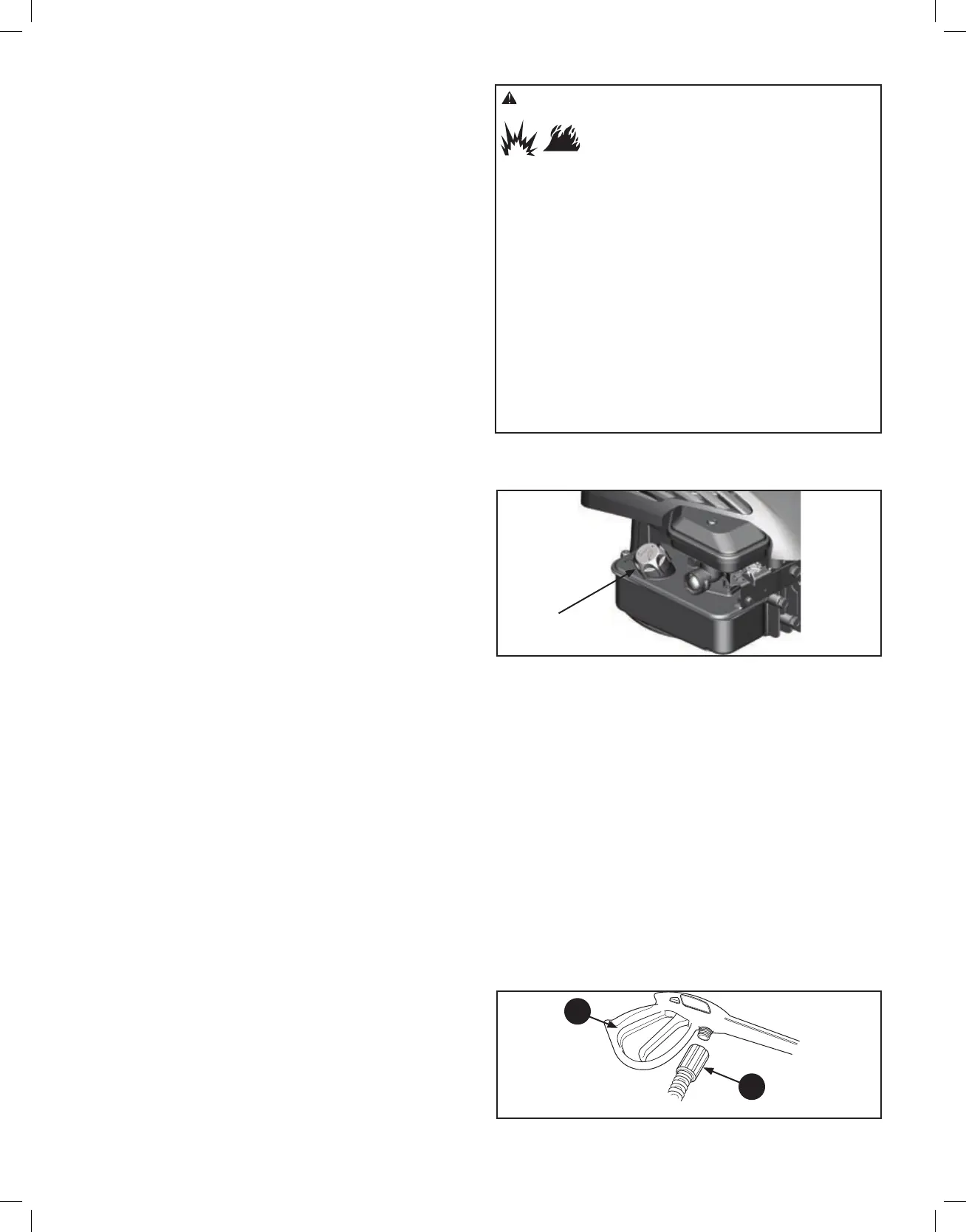
1. Clean area around fuel ll cap and remove
cap. See Figure 5.
2. Slowly add regular unleaded fuel to fuel tank.
Be careful not to overll. Allow about 1.5”
(4 cm) of tank space for fuel expansion.
3. Install fuel cap and let any spilled fuel
evaporate before starting engine.
High Altitude
At altitudes over 5,000 feet (1524 meters), a
minimum 85 octane / 85 AKI (89 RON) gasoline
is acceptable. To remain emissions compliant,
high altitude adjustment is required. Operation
without this adjustment will cause decreased
performance, increased fuel consumption, and
increased emissions. See an Authorized Briggs
& Stratton dealer for high altitude adjustment
information. Operation of the engine at altitudes
below 2,500 feet (762 meters) with the high
altitude kit is not recommended.
Connect Hose and Water Supply to Pump
NOTE: Remove and discard the shipping caps
from the pump’s high pressure outlet and water
inlet before attaching hoses.
1. Uncoil high pressure hose and attach one
end of hose (C) to base of spray gun (D). See
Figure 6. Tighten by hand.
NOTICE: Avoid pressure washer damage.
Failure to follow operator’s manual for fuel
recommendations voids warranty.
DO NOT use unapproved gasoline such •
as E85.
DO NOT mix oil in gasoline.•
DO NOT modify engine to run on •
alternate fuels.
NOTICE: DO NOT run the pump without the
water supply connected and turned on.
Damage to equipment resulting from failure to •
follow this instruction will void warranty.
WARNING: Fuel and its vapors are
extremely ammable and explosive.
Fire or explosion can cause severe
burns or death.
When adding fuel
Turn pressure washer OFF and let it cool at •
least 2 minutes before removing fuel cap.
Loosen cap slowly to relieve pressure in tank.
Fill fuel tank outdoors.•
DO NOT overll tank. Allow space for •
fuel expansion.
If fuel spills, wait until it evaporates before •
starting engine.
Keep fuel away from sparks, open ames, •
pilot lights, heat, and other ignition sources.
DO NOT light a cigarette or smoke.•
Figure 5
Figure 6
D
C


 To Next Page