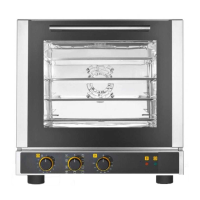
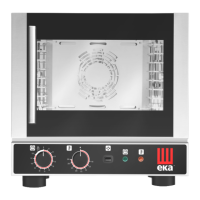
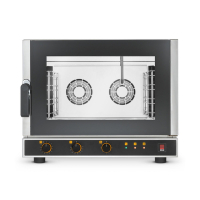
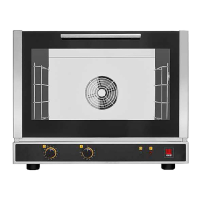
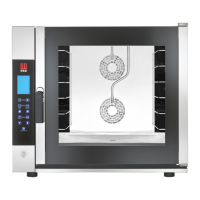
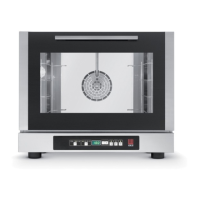
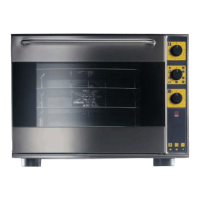
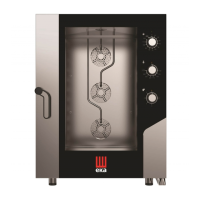
Electric Ovens rev. 1 ____________________________________ EKF 423 – EKF 423/001 – EKF 423 U – EKF 423 M
_________________________________________________________________________________________ page 9
MOD.
MOD. MOD.
MOD. E
EE
EKF
KF KF
KF 4
44
423 M
23 M23 M
23 M
Traditional cooking
Traditional cookingTraditional cooking
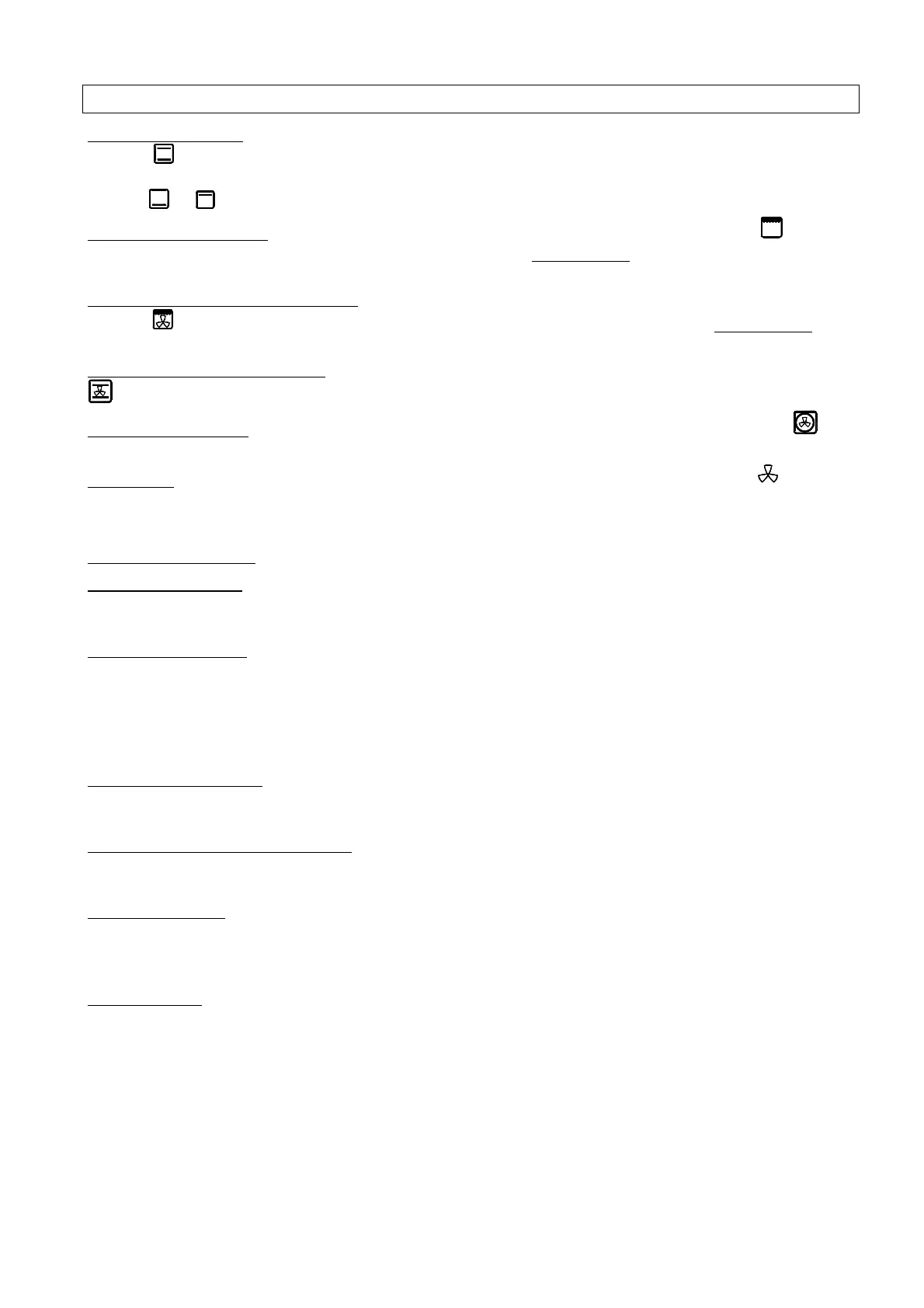
Traditional cooking - Switch on the oven. Turn the knob of the functions selector (Fig. 3) to
symbol and the thermostat knob in line with the required temperature If you want a
different temperature at the top or bottom, turn the functions selector knob in line with the
symbol or .
Cooking with the grill
Cooking with the grillCooking with the grill
Cooking with the grill - Switch on the oven. Turn the functions selector knob to and the
thermostat knob in line with the required temperature (
IMPORTANT
IMPORTANTIMPORTANT
IMPORTANT: grill cooking must be done
with the oven door closed
).
Cooking with the ventilated grill
Cooking with the ventilated grillCooking with the ventilated grill
Cooking with the ventilated grill - Switch on the oven. Turn the functions selector knob to
symbol and the thermostat knob in line with the required temperature (
IMPORTANT
IMPORTANTIMPORTANT
IMPORTANT: grill
cooking must be done with the oven door closed
).
Ventilated traditional cooking
Ventilated traditional cookingVentilated traditional cooking
Ventilated traditional cooking - Switch on the oven. Turn the functions selector knob to symbol
and the thermostat knob in line with the required temperature.
Convection cooking
Convection cookingConvection cooking
Convection cooking - Switch on the oven. Turn the functions selector knob to symbol and
the thermostat knob in line with the required temperature.
Defreezing
DefreezingDefreezing
Defreezing - Switch on the oven. Turn the functions selector knob to symbol and the
thermostat knob to its OFF position.
9.
9.9.
9.
Cooking advice
Cooking adviceCooking advice
Cooking advice
Traditional cooking
Traditional cookingTraditional cooking
Traditional cooking - Heat is supplied from above and below and, therefore, it is preferable to
use the central guides. If cooking requires extra heat from above and below, use the top or
bottom guides.
Convection cooking
Convection cookingConvection cooking
Convection cooking - Heat is transferred to the foods by pre-heated air, forced to circulate by in
the cooking chamber. The heat quickly and uniformly reaches all parts of the chamber, enabling
simultaneous cooking of different types of food (providing they have the same cooking
temperature), placed on the shelves without mixing tastes and smells. Convection cooking is
particularly convenient for rapid defreezing, and for sterilising preserves and drying mushrooms
and fruit.
Cooking with the grill
Cooking with the grillCooking with the grill
Cooking with the grill - Grilling is effected by the thermal radiation of an incandescent electrical
heating-element. The temperature produced by the infra-red rays is very high and one-way
(downward from above), and, therefore, food surfaces are immediately browned.
Cooking with
Cooking with Cooking with
Cooking with the ventilated grill
the ventilated grillthe ventilated grill
the ventilated grill - Forced circulation of air is combined with thermal radiation
produced by the grill, and this allows heat to gradually penetrate the inside of the food without
burning the surface.
Cooking desserts
Cooking dessertsCooking desserts
Cooking desserts - Desserts require a very high temperature (usually from 150 to 200°C) and a
pre-heated oven (about ten minutes). The oven door must not be opened until at least 3/4 of
the cooking time has elapsed. Whipped dough must be difficult to detach from a spoon
because excessive fluidity would prolong cooking time to no avail.
Cooking meat
Cooking meatCooking meat
Cooking meat - Meat to be cooked should weight at least 1 Kg to prevent it drying too much.
Very tender red meats to be cooked rare, which must be cooked on the outside to keep all their
gravy, require short cooking time at high temperature (200-250°C). The gravy ingredients must
be placed immediately in the pan only if the cooking temperature is brief, otherwise they should
be added during the last half-hour. You can check the degree of cooking by squashing the
meat with a spoon: if the meat does not yield, it is correctly cooked. For roast beef and fillet,
which must remain pink inside, cooking time must be very brief. Meats may be placed on a
plate suitable for oven cooking or directly on the grill, under which you should place a tray to
collect the gravy. When cooking has finished, we advise you to wait for 15 minutes before
cutting the meat so that the gravy does not come out. Before being served, the dishes may be
kept hot in the oven at minimum temperature.


 To Next Page
 Loading...