
 Need help?
Do you have a question about the TEFAL GV9071 Pro Express Care and is the answer not in the manual?
Prevents soleplate clogging with active coating that eliminates fibres and impurities.
Cables are insulated and checked. Damaged cables require repair by an approved centre.
Pressure is low with safety valve for excess pressure and thermal fuse for overheating.
Caused by chemical descaling products; never use them in the water tank.
Indicates no water in the tank or the tank is not properly seated.
Check water level, tank seating, and steam output dial settings.
Use a damp pad, sponge while warm, or a specific cleaning stick.
Use a damp cloth or non-abrasive sponge when the soleplate is cool.
Rinse boiler every 10 uses; do not use descaling agents or vinegar.
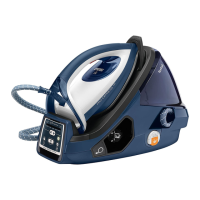
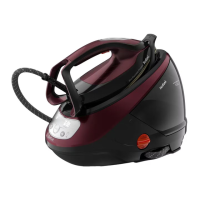
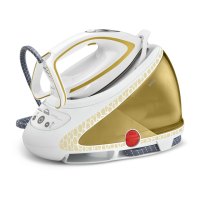
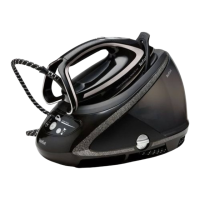
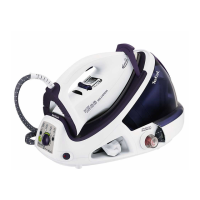
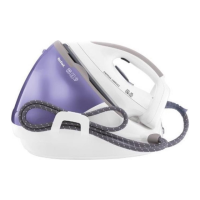
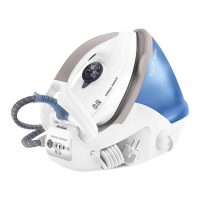
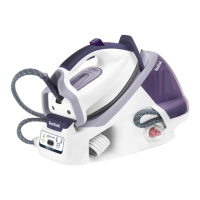
This document describes a steam generator iron, detailing its functions, usage, and maintenance.
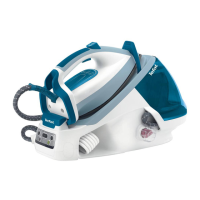
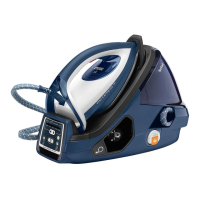
The device is a powerful iron that generates steam, designed to make ironing easier and more efficient. It comes in two main types: a steam generator and a steam station. A steam generator is the more powerful of the two, featuring a separate boiler unit that constantly pumps large amounts of steam through the iron's soleplate directly into clothes. This design significantly reduces ironing time and produces excellent results. A steam station, while similar to an ordinary iron, has a larger water tank. In this model, water is pumped into the iron itself, and steam is generated within the iron, not a separate boiler unit. The steam output is constant but less powerful than a steam generator.
The iron incorporates an "Autoclean Catalys soleplate" (depending on the model), which is designed to prevent clogging. Its active coating helps eliminate fibers and impurities that often stick to the soleplate, which can reduce its glide.
For energy efficiency, some models feature an "ECO setting." This function reduces energy consumption, meaning less electricity is used and slightly less steam is generated.
The device operates under pressure, but the pressure level is relatively low, making it safe. It includes two safety systems: a valve to prevent excess pressure and a thermal fuse to prevent overheating. In case of a malfunction, the valve allows surplus steam to escape.
Some models offer "2-in-1," "Smart technology," and "easy control" functions. These features involve an electronic regulation system that automatically sets the perfect temperature and steam combination for various ironable fabrics, eliminating the need for manual sorting and reducing the risk of damage.
The iron is designed to work with tap water. However, for very hard water, it is recommended to mix 50% tap water with 50% distilled water. In regions near the sea where salt content in water may be high, only distilled water should be used. Rainwater or water containing additives (like starch or perfume) or from clothes dryers/refrigerators/air conditioners should not be used, as these can affect steam properties, cause deposits in the steam chamber, soil laundry, and prematurely age the appliance.
To avoid lime scale, the water in the steam generator is not in direct contact with the heating element. However, the tank should be rinsed after every 10 uses to prevent deposits.
If the red water light flashes, it indicates either no water in the tank or that the tank is not fully or firmly pushed down. If the generator is not producing steam, check that the water tank is not empty, that the removable water tank is firmly in place, and press the restart button. Also, ensure the steam output control dial is not set to minimum.
If water drops drip onto the floor during ironing, this is normal and occurs due to steam condensing on the board. If the iron is dripping water, set the iron's temperature control to match the fabric type and adjust the steam output accordingly (e.g., MIN for synthetics).
A rattling noise from time to time is normal, caused by cold water flowing into the boiler containing hot water. A metallic sound after use is also normal, resulting from temperature changes in the internal parts.
If the iron does not glide easily, it may be due to laundry starches or synthetic fibers sticking to the soleplate. Cleaning the soleplate is recommended. If the soleplate is dirty or brown and stains clothing, it could be because the iron is too hot (check temperature settings in the manual) or due to starch use (only spray starch on the reverse of the fabric). Brown streaks from the soleplate holes and stained laundry can be caused by chemical descaling products or additives in the water, which should never be put in the water tank. Insufficiently rinsed washing or ironing new clothing before washing can also cause this.
Shiny marks on fabric, especially dark-colored ones, can be avoided by ironing clothes inside out and using the correct temperature. For mixed-fiber fabrics, set the temperature for the most fragile fiber. It's advisable to start with fabrics that require a low temperature, as the iron takes longer to cool down than to heat up.
An appropriate ironing board should be height-adjustable, steady, robust, and perforated to allow steam to pass through fabric fibers, making ironing easier. The cover should also facilitate steam flow.
For cleaning the soleplate:
Descaling is generally not needed for the steam generator, but the boiler can be rinsed every 10 uses. Never use descaling agents or vinegar.
Before any maintenance, ensure the appliance is unplugged, and the soleplate, boiler, and iron rest have cooled down (at least 2 hours). Do not use maintenance or descaling products on the soleplate or base unit, and never hold the iron or its base unit under running tap water.
Cleaning the base unit: Wipe plastic parts occasionally with a slightly damp soft cloth.
To prolong efficiency and prevent scale deposits, rinse the boiler every 10 uses (around once a month). Ensure the generator is cool and unplugged for over 2 hours. Slowly loosen the boiler cap. If there's an anti-calc rod, remove and rinse it under the tap before replacing it. Fill the boiler 3/4 full with tap water using a jug. Gently shake the base unit for a few seconds, then empty it completely over the sink. Repeat this operation for best results.
If the orange light keeps flashing after rinsing the boiler, press and hold the restart button for about 3 seconds to stop the light from flashing.
Pumping, vibrating, and clicking noises during startup or use are normal, indicating the pump injecting water into the boiler or the steam valve opening.
If steam escapes from the anti-scale Valve Plug, it may be tightened incorrectly, or the seal inside the cap may have perished.
If the steam cord gets warm during ironing, this is normal. However, if it appears damaged, have it repaired by an authorized service partner.
If steam comes from the iron or generator base when switched on but not in use, the generator's safety mechanism has activated, and it needs to be checked by an authorized service agent.



 To Next Page
 General