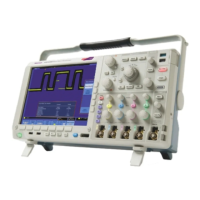
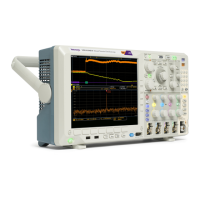
The Tektronix MSO44, MSO46, MSO44B, and MSO46B 4 Series Mixed Signal Oscilloscopes are advanced instruments designed for comprehensive signal analysis and measurement. These oscilloscopes are equipped with a processor system that includes non-removable mass storage, making them suitable for environments requiring robust data handling and security protocols. The primary function of these devices is to capture, display, and analyze electrical signals, providing users with detailed insights into circuit behavior.
Function Description
These mixed-signal oscilloscopes are engineered to handle a wide range of measurement tasks, from basic waveform visualization to complex signal debugging. They integrate both analog and digital channels, allowing for synchronized analysis of mixed-signal designs. The instruments are capable of acquiring and processing large volumes of data, which is temporarily stored in volatile memory during active operation and can be saved to non-volatile memory for long-term retention.
The oscilloscopes support various data input methods, including direct user interaction via the interface, application software operations, and programmatic commands. This flexibility allows users to configure settings, initiate measurements, and export data through multiple avenues. The internal processor system manages the operating system, application software, and all measurement functions, ensuring stable and reliable performance.
Data storage within the instrument is categorized into volatile and non-volatile memory devices. Volatile memory, such as SDRAM, holds active acquisition data, video graphics data, and host processor memory. This data is temporary and is lost when the instrument is powered off. Non-volatile memory, including e.MMC, EEPROM, and Flash Memory, stores the instrument's Linux operating system, application software, user data (waveforms, measurement results, instrument settings), factory data, maintenance data, and various micro-controller firmwares. User data and settings are directly modifiable by the user, while other system-level data is indirectly modified by the instrument's resources.
Usage Features
The MSO44, MSO46, MSO44B, and MSO46B series offer multiple interfaces for data export and remote control, enhancing their utility in various test and measurement setups. These include USB Host ports, a USB Device port, and an Ethernet port.
USB Host ports are designed for user storage and recall of reference waveforms, screen images, and instrument setups. They also facilitate firmware updates using removable USB flash drives. This allows users to easily transfer measurement data and configurations to external storage or load new software versions.
The USB Device port enables remote control and data transfer to a PC using the USBTMC protocol. This feature is crucial for automated test environments where the oscilloscope needs to be controlled programmatically and data needs to be offloaded efficiently.
The Ethernet port provides extensive remote control capabilities using protocols such as LXI, VISA, or Socket Server. This allows for network-based control and data transfer, making the oscilloscopes suitable for distributed test systems and remote monitoring applications. Users can access the instrument's web-based interface to configure network settings, manage security, and perform various administrative tasks.
The instrument's user interface is designed for intuitive operation, allowing users to adjust settings, view measurements, and manage data effectively. User settings and data can be saved and recalled, providing continuity across different measurement sessions.
Maintenance Features
A significant aspect of these oscilloscopes, particularly for environments with data security concerns, is their declassification and security instructions. These instructions detail procedures for clearing and sanitizing memory devices and disabling data output interfaces.
For working instruments, the sanitization process involves several steps to ensure that all user data and settings are removed from non-volatile memory. This includes clearing network configuration passwords, mDNS Hostname and description, and Ethernet port settings. The "TekSecure Erase Memory" function is provided to clear/reset internal memory, and pushing the "Default Setup" button before powering off ensures that the instrument returns to its factory default state. These procedures are designed to meet stringent security requirements, such as those specified in NISPOM, DoD 5220.22–M, Chapter 8.
For non-functional instruments that need to be returned for repair, specific instructions are provided for removing the Processor board. This board contains user data and settings in its e.MMC non-volatile memory. By removing and securely disposing of or storing the Processor board, users can ensure that sensitive data does not leave their secured environment. The instrument can then be reassembled without the Processor board and sent to a Tektronix Service Center for repair, where a new Processor board will be installed.
The servicing instructions emphasize the importance of qualified personnel for any servicing tasks to prevent personal injury. They also highlight the need to perform procedures in a static-safe environment with proper electrostatic discharge controls to avoid damaging internal circuits. The manual provides detailed steps for accessing the chassis, removing components, and reassembling the instrument, ensuring that maintenance can be performed safely and effectively.
Tektronix offers support for product information, sales, service, and technical assistance through their website and customer care centers. Warranty information is also available online, providing users with resources for protecting their product investment.



 To Next Page
 General