3-4
(6) If the casing is separated from the bearing and the
base, set the height and the position in consideration
of the clearance between the rotating body and the
casing.
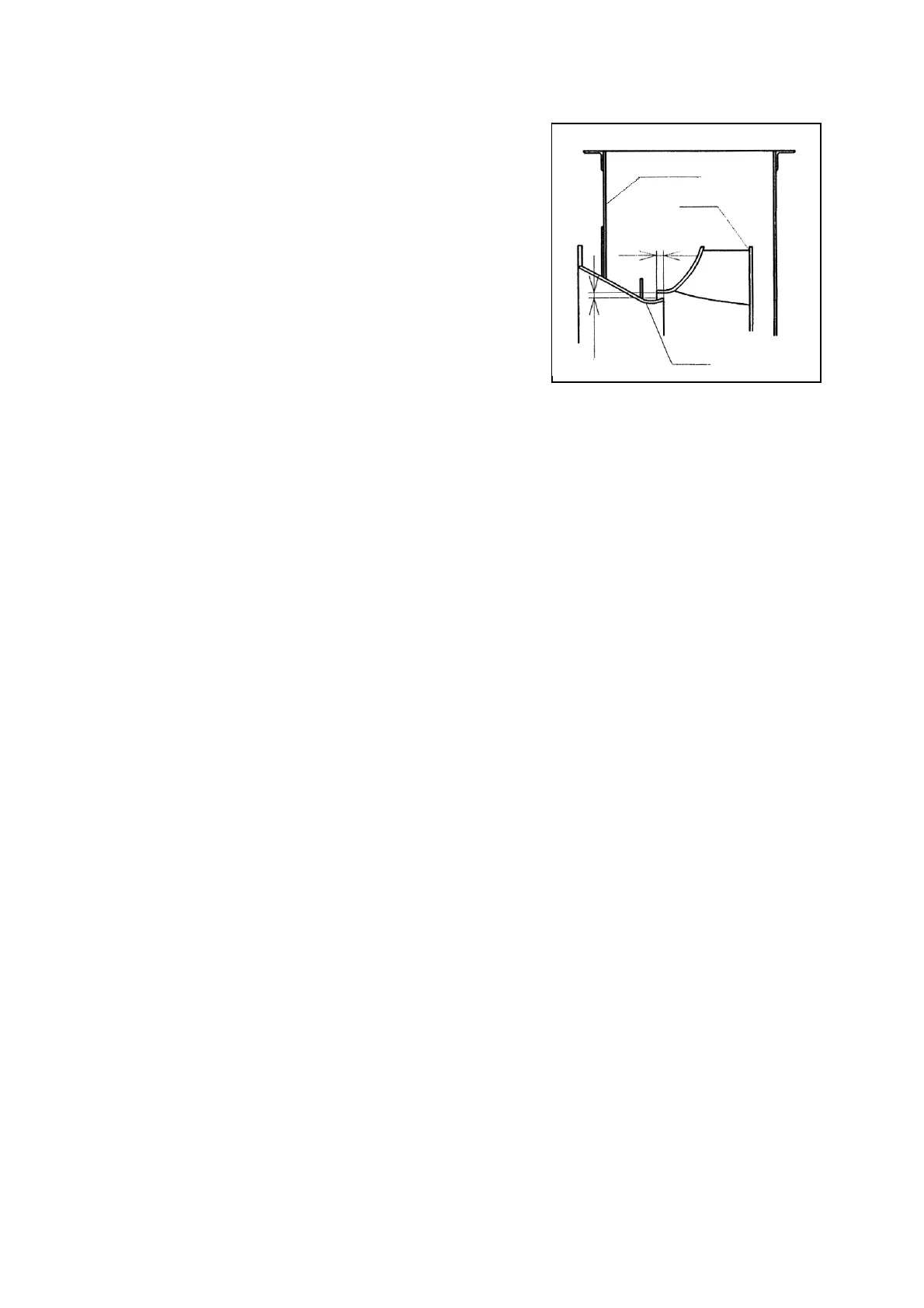
Adjust the clearance between the impeller and the air
intake and the clearance between the main shaft and
the casing (shaft seal) so that they are as even as
possible in terms of circumference.
However, if the fan handles a gas at a temperature
exceeding 200°C, adjust the height in consideration
of thermal expansion of the casing center. Calculate
the expansion of the center height by assuming that it
expands about 1 mm per meter when temperature
increases by 100°C.
(7) After sufficiently roughing the inner surface of foundation bolt holes, fill them with non-shrink
mortar. Set the foundation bolts such that they are vertical in the center of the holes.
(8) After the mortar has fully cured, firmly tighten the nuts of the foundation bolts.
Tighten the bolts uniformly.
Weld the liners so that they will not move during the operation of the unit.
(9) Fill the clearance between the fan base and the foundation concrete with mortar to integrate them
into a concrete structure.
(10) Check that the mortar has not contracted or cracked.
If the drain piping and/or cooling water for the bearing are required, consider the installation of a
sump pit.
(11) When a vibration isolator is equipped, fix the vibration isolation base (lower base) in place with the
foundation bolt.
If vibration isolation springs are used in building equipment, install the vibration isolation materials
at equal intervals around the center of gravity of the fan assembly.
(12) When the fan is installed and the ducts are connected, carry out the alignment work described in
the section 3.6.
Ensure to tighten the foundation bolts before measuring the alignment results.
Casing
Impeller
Clearance
Clearance
ir intake



 To Next Page