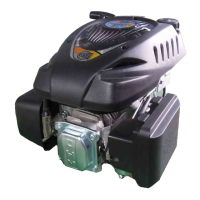
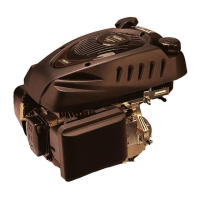
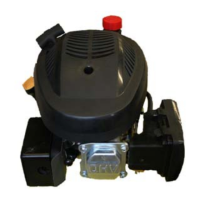
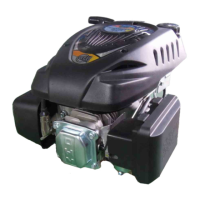
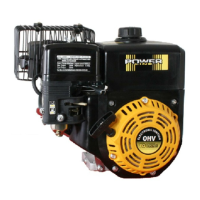
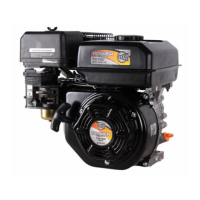
The provided manual describes the TG715 / TG715S engine, a 4-stroke, air-cooled OHV, single-cylinder gasoline engine. This document serves as an instruction manual in multiple languages (Danish, English, German, French, Russian, Slovenian, Croatian, and Slovak) covering its operation, maintenance, and specifications.
Function Description:
The TG715 / TG715S is a compact and robust gasoline engine designed for various applications, likely in power equipment such as tillers, generators, or other machinery requiring a reliable internal combustion engine. Its 4-stroke design ensures efficient fuel consumption and reduced emissions compared to 2-stroke engines. The air-cooled OHV (Overhead Valve) configuration contributes to its simplicity, durability, and ease of maintenance. The engine is started either manually via a recoil starter or electrically (for 230V electric starter models), offering flexibility in different operational scenarios. Fuel is supplied from a tank with a capacity of 3.6 liters, and lubrication is managed by SAE30 oil with a capacity of 0.6 liters.
Important Technical Specifications:
- Engine Type: 4-stroke, air-cooled OHV, 1-cylinder, gasoline engine
- Bore x Stroke: 70 x 54 mm
- Stroke Volume: 208 cc
- Max Power: 4.2 kW (HP) at 3600 rpm
- Constant Power: 3.7 kW (HP) at 3600 rpm
- Fuel: Unleaded gasoline (95 octane)
- Fuel Capacity: 3.6 Liters
- Lubricating Oil: SAE30 (or 10W-40 depending on ambient temperature)
- Lubrication Oil Capacity: 0.6 Liters
- Starting System: Recoil (manual) or 230V Electric Starter
- Sparking Plug: F7RTC / 20EPR-U (Art no 40-11294)
- Regulating System: Mechanical
- Dimensions (LxWxH): 380 x 315 x 335 mm
- Dry Weight: 16 kg
Usage Features:
The manual provides clear instructions for starting and operating the engine.
- Starting Procedure:
- Open the fuel tap.
- For a cold engine, open the choke. (Choke is not needed for a hot engine).
- Turn the gas control lever to full gas.
- Set the throttle cable to "start position."
- For recoil start: Pull the recoil starter gently until resistance is felt, then pull quickly and energetically. Allow the rope to slide back gently.
- For 230V electric start: Plug the cord into the power socket and the engine's electrical socket, then press the red start button. Remove the plug after starting.
- Regulate the choke for smooth engine running.
- Operation: After starting, gradually close the choke and adjust the gas to the desired speed. Users are warned to observe the exhaust (should not be black, indicating too high a load or incorrect adjustment) and listen for unpleasant sounds or vibrations, which require immediate engine shutdown and adjustment/dealer contact.
- Stopping Procedure: Turn the gas control to "Low" and the fuel tap to "off."
- Fueling: Only unleaded 95 octane fuel should be used, and the tank should not be overfilled. A fuel indicator is present.
- Oil Selection: The manual includes a chart for selecting the appropriate SAE30 or 10W-40 oil based on ambient temperature, emphasizing the importance of using the correct oil for the season.
Maintenance Features:
Regular maintenance is crucial for optimal engine performance and longevity. The manual outlines a comprehensive maintenance schedule and procedures.
- Oil / Changing Oil:
- Always check the oil level when the engine is horizontal, ensuring the oil is visible up to the edge of the fill hole.
- Oil should be changed according to machine specifications. The procedure involves running the engine for 5 minutes to warm the oil, unscrewing the drain plug (Fig 6.1) to drain the warm oil into a suitable container, and then refilling with new oil up to the edge of the fill hole.
- Environmental Responsibility: Emphasizes proper disposal of used engine oil, recommending sealed containers for recycling centers or service stations, and strictly prohibiting disposal in waste, on the ground, or down drains.
- Air Filter:
- Regular inspection and cleaning are necessary to prevent reduced combustion and engine power.
- The cleaning process involves disassembling the air filter components (nut, washer, gasket, cover, foam element, air filter element - Fig 8.A-L).
- The air filter element should be tapped gently to remove dust or blown with compressed air from the inside out (never brushed). Replace if heavily soiled.
- The foam element should be cleaned with petrol or kerosene, wrung dry, soaked in fresh oil, and excess oil squeezed out.
- Crucial Warning: No oil should be applied to the air filter element (Fig 8.G).
- Reassembly must ensure all parts are correctly fitted to prevent air leakage into the engine.
- Sparking Plug:
- Maintenance should be performed on a cold engine.
- Remove the sparking plug cover, brush off dirt, and use a wrench to loosen.
- Inspect for intact insulation, clean with a steel brush, and measure the electrode distance (0.7-0.8 mm).
- Reinstall if in good condition and replace the cover.
- Maintenance Schedule (Intervals):
- Every time: Inspect bolts and nuts, inspect and fill with oil, inspect for oil leakage, inspect air filter.
- Every 20 running hours: Change oil.
- Every 50 running hours: Clean air filter (with a special note for tillers to follow the machine's manual).
- Every 100 running hours: Clean fuel filter, inspect sparking plug.
- Every 200 running hours: Adjust valves, inspect valves.
- Transport and Storage:
- Transport: The engine must be kept horizontal to prevent fuel and oil spillage.
- Storage: Run the engine until it stops, drain remaining fuel from the carburetor, and store fuel in an approved container. Remove the spark plug, add 1 tablespoon of oil to the cylinder, reinstall the spark plug (without the cap), and pull the cord until resistance is felt to close valves and protect from rust. Protect the engine with a thin layer of oil. Store in a dust-free, child-safe area.
The manual emphasizes safety warnings throughout, including the importance of reading the manual, following dealer guidelines, stopping the engine before refueling, cleaning spills, keeping flammable objects away, operating in well-ventilated areas due to toxic exhaust, avoiding contact with rotating parts and hot engine components, and never operating under the influence of alcohol or drugs. All repairs should be carried out by an authorized dealer.

 Need help?

 To Next Page
 General