VEHICLE SAFETY
THOR MOTOR COACH | MADE TO FIT
13
3
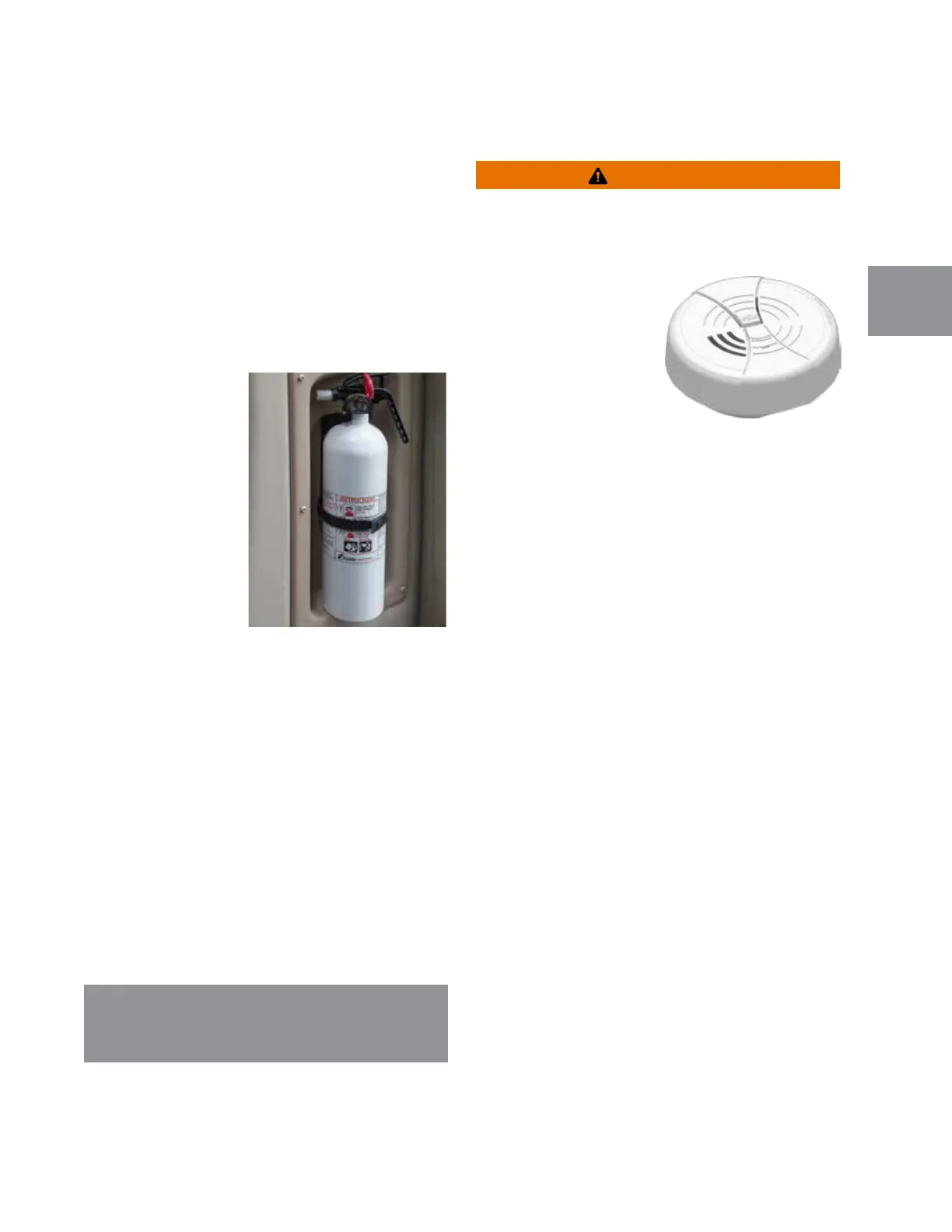
Typical Class B-C fire extinguisher
Fire Extinguisher
Fire extinguishers are classied and rated by re type, A,
B, and C. ese classications identify the kinds of res or
burning materials they are designed to extinguish:
Class A - Solid materials such as wood, paper, cloth, rub-
ber, and some plastics.
Class B - Liquids such as grease, cooking oils, gasoline,
kerosene or other ammable liquids.
Class C - Electrical such as electrical wires or other live
electrical equipment.
A dry-chemical re
extinguisher has
been installed by the
entrance door. It is suit-
able for extinguishing
small res of the Class
B or C type only.
Operation
For information on
how to use your re
extinguisher, refer to
the re extinguisher
manufacturer’s own-
er's manual or the label
axed to the side of
the re extinguisher.
Inspection
Inspect the extinguisher at least once a week (more frequently
if it is exposed to weather or possible tampering). is should
also be done before beginning a vacation or during an extend-
ed trip.
Replacement
e re extinguisher must be replaced following the re
extinguisher manufacturer’s owner's manual instructions,
and/or expiration date listed on the label axed to the side
of the re extinguisher.
NOTE: Know the location of the fire extinguisher
installed in your motorhome and become familiar with
its operation.
Smoke Alarm
This smoke alarm will not alert hearing impaired
residents. Special alarms with ashing strobe lights
are recommended for the hearing impaired.
WARNINGWARNING
e smoke alarm installed
in your motorhome is
listed for use in recreation
vehicles. ey only work
as intended if they are
maintained in operational
condition. Smoke alarms
have a limited life and over
time, will cease to function.
Immediately replace the
smoke alarm if it is not
working properly, if it
displays any type of problem, or as recommended by the
smoke alarm manufacturer. Be sure to read, understand,
and follow the information provided by the smoke alarm
manufacturer, including information on the limited life of
smoke alarms.
Be aware the smoke alarm is not fool proof and cannot
detect res if smoke does not reach it. Anything preventing
smoke from reaching the alarm may delay or prevent an
alarm.
ough the alarm horn in this detector meets or exceeds
current UL standards, it may not be heard for reasons that
include (but not limited to): a closed or partially closed
door, distracting noises from electronics, appliances, loud
outside noises, etc.
Operation
e smoke alarm is operational once the battery is correctly
installed. It will not function if the battery is missing, dis-
connected, dead, the wrong type, or not installed correctly.
It requires one standard 9 volt battery. Refer to the smoke
alarm manufacturer's owner's manual for correct battery
and installation information.
e LED light indicates if the battery is functioning prop-
erly. When the production of combustion is sensed, the
smoke alarm sounds a loud alarm that continues until the
air is cleared of smoke. e LED light also gives a visual
indication of a sounding alarm.
When the battery becomes weak, the alarm will 'beep'
about once a minute indicating a low battery. is warning
Typical RV smoke alarm


 To Next Page