ELECTRICAL SYSTEM
THOR MOTOR COACH | MADE TO FIT
75
10
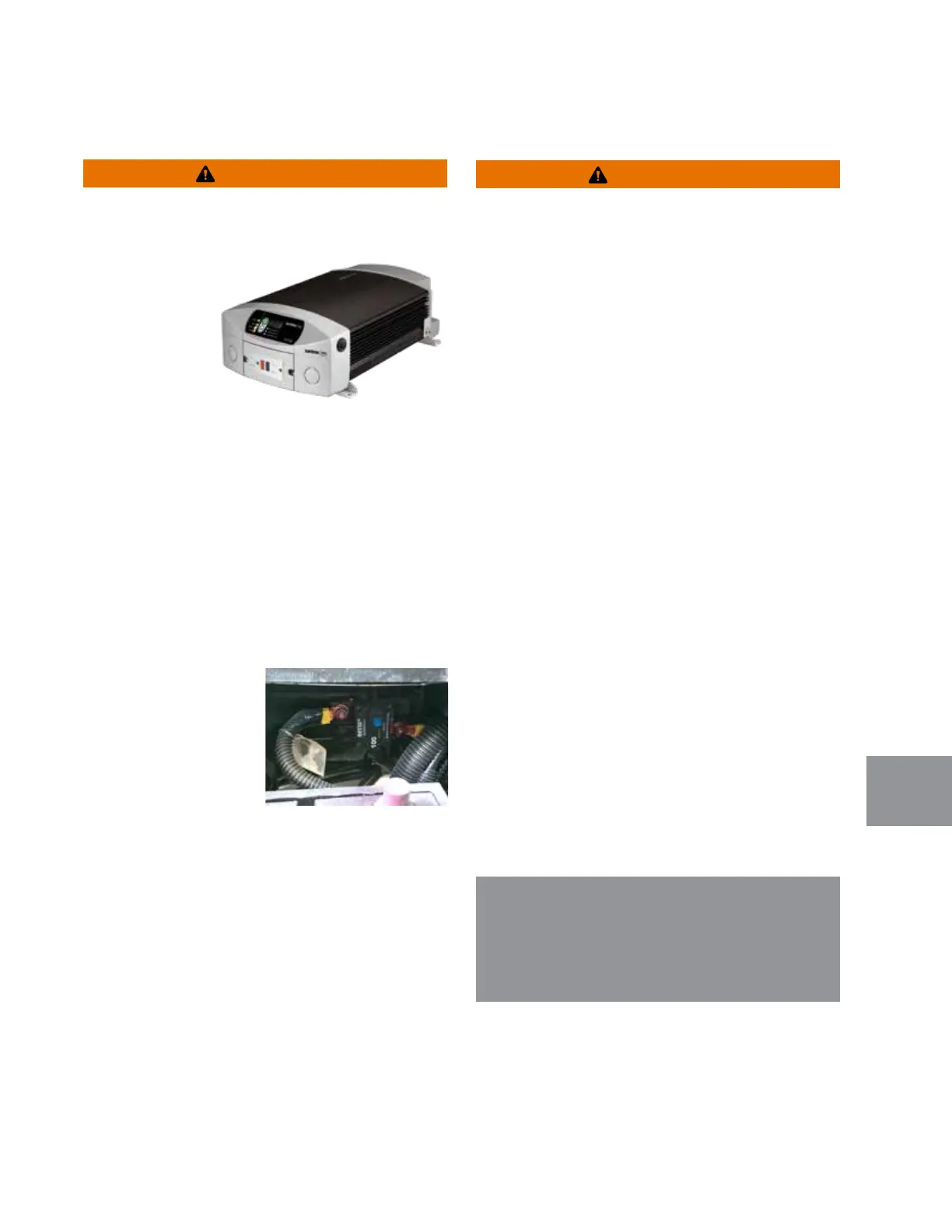
Typical inverter: model, features, and
installation location varies, depending on
motorhome model and floor plan.
The factory-installed inverter is not intended for use
with medical device(s).
WARNINGWARNING
Inverter
Your motorhome
may be equipped
with a factory
installed inverter
that converts
12 volts DC to
usable 120 volts
AC. It supplies
continuous AC
power to appli-
ances connected
to its output (gen-
erally a residential-type refrigerator and select circuits). In
some installations, inverters may supply charging voltage
to auxiliary batteries. Inverter settings are entered on the
front panel, remote inverter panel (typically located near the
entrance door), or through the settings menu of the multi-
plex main panel (if equipped). e inverter should be turned
OFF when the motorhome is in storage.
Inspection and Maintenance
With most inverter instal-
lations a separate circuit
breaker is installed in the
battery compartment,
near the auxiliary battery.
is circuit breaker pro-
tects the inverter from
overloads (attempting to
draw more power from
the inverter than it is
designed to supply). If the
inverter is not working, check to determine if this circuit
breaker is ‘tripped.’ If so, re-set it and reduce power con-
sumption through the inverter.
Also check the fuse located on the inverter. Inverters are
typically installed behind a panel or bed pedestal near the
Power Load Center (fuse and circuit breaker panel). ere
are no customer serviceable parts inside the inverter case
and the manufacturer’s warranty will be void if the case has
been opened. e inverter's cooling ns and the cooling
fan should be kept clear of any obstructions. If you have
further concerns contact your dealer.
Replacement circuit breakers must be of the same
voltage, amperage rating, and type. Never use a higher
rated replacement circuit breaker; doing so may cause
a re by overheating the motorhome’s wiring.
WARNINGWARNING
Circuit Breakers
Circuit breakers protect the 120 volt wiring and compo-
nents in your motorhome from circuit overloads and
shorted circuits. Should a circuit overload or short circuit
occur, the circuit breaker protecting the aected circuit will
'trip,' preventing the ow of electricity through that circuit.
If a circuit breaker trips, turn OFF and unplug the electrical
appliance(s) or devices on that circuit and allow the circuit
breaker to cool down. Aer the cool down period, reset the
circuit breaker by moving the switch to the OFF position
and then back to the ON position, then plug-in the electri-
cal devices and try operating them. If the circuit breaker
re-trips or frequently trips, unplug the appliances(s) on the
circuit and contact your selling dealer’s service department
to have the electrical problem diagnosed and repaired. It is
possible that the appliance is faulty, not the circuit.
A circuit breaker identication label is permanently
attached to the inside surface of the 120 volt AC Load
Center. e circuit breakers will not oer complete pro-
tection of the motorhome electrical system in the event of
a power surge or spike.
Maintenance
Before using your motorhome, inspect the circuit breakers
and replace them as needed. Test each circuit breaker by
moving the individual switches to the OFF position, and
then back to the ON position. Circuit breakers may degrade
over time and, as part of your motorhome's maintenance,
must be replaced as needed.
NOTE: Circuit breakers and fuses are vital in keeping
the electrical system of your motorhome in a safe
operational condition.
Never bypass or defeat circuit breakers or circuit
fuses.
Typical Inverter Circuit Breaker


 To Next Page