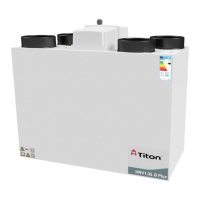
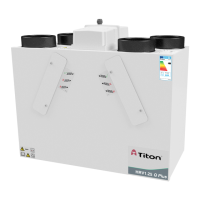
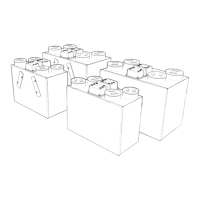
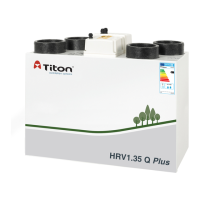
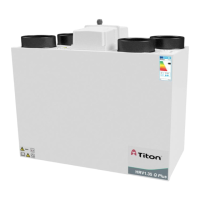
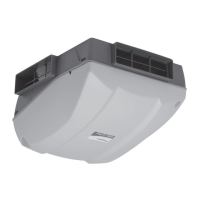
This document is a product manual for Titon HRV Q Plus Heat Recovery Ventilation Units, covering models HRV1, HRV1.25, HRV1.35, HRV1.75, HRV2, HRV2.85, and HRV3 Q Plus, including ABS variants. It provides comprehensive information on installation, operation, maintenance, and safety.
Function Description
Titon HRV Q Plus units are designed to provide heat recovery ventilation for dwellings. They work by extracting stale, warm air from "wet rooms" (e.g., kitchens, bathrooms) and transferring its heat energy to fresh, incoming outdoor air before supplying it to habitable rooms. This process helps maintain good indoor air quality while minimizing heat loss, contributing to energy efficiency. The units are controllable via various volt-free switches and sensors, allowing for flexible operation modes such as continuous ventilation, setback speed, and boost speed. Some models also feature Summer Bypass and SUMMERboost® functionalities to manage ventilation during warmer periods, and Automatic Frost Protection for cold weather.
Important Technical Specifications
Electrical Supply:
- HRV1, 1.25, 1.35, 1.75, 2, 2.85 Q Plus: 230V~ 50-60Hz single phase, fuse rating 3A.
- HRV3 Q Plus: 230V~ 50-60Hz single phase, fuse rating 5A.
- Mains rated 3 core flexible cord (PVC sheathed, brown, blue, green/yellow 0.75mm²) supplied.
- Must be connected to a local double pole isolation switch with at least 3mm contact separation.
- Appliance must be earthed.
Control & Communication Cabling:
- auralite®, control & communication cable access via fitted cable gland(s) suitable for Ø3-6mm cable.
- auralite®, control & communication cable: Unshielded 4 Core 18-24AWG Stranded, Tinned Copper.
- Control & communication cables should not be placed within 50mm or on the same metal cable tray as 230V lighting or power cables.
- All cable glands must be fully tightened.
Ducting:
- HRV1 & 1.25 Q Plus: Ø125mm ducting recommended.
- HRV1.5, 1.75, 2, 2.75 & 3 Q Plus: Ø150mm ducting recommended.
- Short piece of flexible ducting (approx. 200mm) used to connect unit to ducting system.
- Minimum distance of 200mm between HRV Q Plus unit and any sharp bends in duct work.
- Ducting in unheated areas/voids must be insulated with at least 25mm material (thermal conductivity ≤0.04 W/(m.K)).
- Ducts within the building heated envelope between external terminals and unit's From Atmosphere and To Atmosphere ports should be insulated and wrapped with a vapour barrier.
- All ducting joints must be permanently sealed with tape and/or non-hardening sealant and/or Jubilee clips.
- Minimum distance of 2m between external supply and exhaust terminals.
Condensate Drain:
- 15mm compression fitting on the base of the unit.
- Must incorporate a suitable trap acting as an air lock.
- Must be adequately secured and insulated with at least 25mm of insulating material (thermal conductivity 0.04 W/(mK)) if passing through an unheated void.
- Minimum 5° fall from the unit.
- Titon recommends diaphragm type waste valve (e.g., Hepworth Hepv0 Hygienic self-sealing plastic waste valve) as an alternative to traditional U-Traps.
Duct Heater (Optional):
- MAX 1000W.
- Designed for insertion into standard spiral steel ducting.
- Air must flow in the direction of the arrow on the heater.
- Can be fitted horizontally or vertically; electrical connection cabinet can face upwards or sideways (max 90°), but NOT downwards.
- Access opening must have a fixed mesh or intake air device.
- Warning sign must be attached near air outlet stating it must not be covered.
- Distance from (to) heater to (from) duct bend, valve, filter, etc. should be at least twice the duct diameter.
- Insulation material must be incombustible.
- Metal casing to combustible material distance: NOT less than 30mm.
- Maximum ambient temperature: 40°C.
- Air flow speed through heater: at least 1.5 m/s.
- Maximum output temperature: 40°C.
- Equipped with two overheating cut-outs (one manual reset).
- Electrical protection class: IP43.
Dimensions:
- HRV1, 1.25, 1.35 Q Plus: 600mm (width), 430mm (height from base to top of unit), 295mm (depth). Additional 100mm clearance below unit.
- HRV 1.75, 2, 2.85 & 3 Q Plus: 715mm (width), 490mm (height from base to top of unit), 426mm (depth). Additional 100mm clearance below unit.
- "DO NOT 'BOX-IN' UNIT" area indicated for servicing.
Usage Features
Controls & Features:
- Setback Speed: Reduces ventilation rates, automatically set at mid-point between minimum continuous speed and selected continuous speed. Enabled by volt-free one-way switch or combined with Boost Speed via 3-position switch TP 508.
- Boost Speed with Overrun Timer: Increases extract and supply air flow. Features step-less independent fan controls and an Overrun Timer variable between 0 and 60 minutes. Triggered by any device providing a volt-free one-way switch (PIR, thermostat, humidistat, standard switch).
- SUMMERboost® (ABS models only): Allows both supply and extract fans to run at full speed when Summer Bypass is activated. Enabled by removing a link wire. Can be prevented manually (volt-free switch) or automatically (wall-mounted room thermostat) if room temperature falls below thermostat setting.
- Summer Bypass: Automatically controlled to divert stale air around the heat cell during hot periods, allowing fresh air to enter without preheating.
- Automatic Frost Protection: Reduces supply ventilation rate in very cold weather to prevent ice build-up in the heat cell. Increases supply flow rate back to commissioned settings as internal temperatures rise.
- Duct Heater Connection: Facility for controlling an external duct heater (MAX 1000W) to pre-warm incoming fresh air, maintaining ventilation flow rates in very low temperatures. Fan speeds are not changed during duct heater operation, but Automatic Frost Protection will engage if temperatures fall below a predetermined level.
- Summer Mode (A models only): Stops the supply fan to reduce warm fresh air supply during hot weather. Can be triggered manually (volt-free switch) or automatically (wall-mounted room thermostat). Not to be installed in dwellings with open flue combustion appliances.
- Constant Volume Fans: Automatically adjust speed based on system resistance to maintain required airflow.
- Step-less Fan Speed Setting: Allows fine-tuning of fan speeds.
- Independent Adjustment of Fans: Separate control for supply and extract fans.
Commissioning:
- Fan speeds require adjustment to achieve adequate ventilation flow rates.
- Continuous Speed and Boost Speed are programmed via the Program/Run Switch and rotary potentiometers.
- Unit may take up to four minutes to start operating after power application.
- Prior to first commission, set Continuous Speed potentiometers to minimum and Boost Speed potentiometers to maximum, or reset the controller.
- Continuous Supply & Extract Speeds: Set by moving Program/Run Switch to Continuous position, rotating potentiometers, then returning switch to centre Run position.
- Boost Supply & Extract Speeds: Set by moving Program/Run Switch to Boost position, rotating potentiometers, then returning switch to centre Run position.
- Boost Overrun: Timer variable between 0 and 60 minutes, adjustable at any time via potentiometer.
- Controller Reset: Rotate Supply and Extract Continuous Speed potentiometers fully anti-clockwise. Rotate Supply and Extract Boost Speed potentiometers fully clockwise. Move Run/Program Switch from Run to Continuous, then to Boost, then back to Run, waiting two seconds between each movement.
- Hardware Reset: If fan motors are prevented from operating (e.g., due to repeated supply interruptions), switch off power for 5 minutes, then restore. This resets the motor and PCB hardware without affecting commissioning settings.
Maintenance Features
Routine Maintenance:
- All ventilation units require periodic maintenance by a suitably qualified and competent person, except for filter changes.
- Air filters should be checked regularly; replacement frequency depends on environmental conditions.
- WARNING: ISOLATE the unit from mains power supply and allow sufficient time for all moving parts to stop before any servicing or maintenance. Units with a Duct Heater may have multiple live supplies.
Front Cover Removal:
- ISOLATE unit from mains power supply and allow sufficient time for moving parts to stop.
- Loosen two corner screws on the bottom front of the unit.
- Completely remove the centre screw.
- Remove Front Cover by pulling it away from the unit at the bottom and lifting.
- Replacement is the reverse; ensure secure location and tighten screws.
Cleaning Interior:
- Slide out Filter Frames.
- Carefully remove dust from heat exchanger face, unit interior, and Bypass (if fitted) using a vacuum cleaner.
- Do not use water or other fluids.
Cleaning Exterior:
- Use a clean cloth and warm water with a mild detergent solution.
- Do not use solvents or abrasive cleaners.
Condensate Tray:
- If split, a replacement must be ordered and fitted.
- HRV1, 1.25 & 1.35 Q Plus: Part No. XP40042/012
- HRV1.5, 1.75, 2, 2.85 & 3 Q Plus: Part No. XP40142/012
Filter Replacement:
- Filters should be replaced at least annually, or more regularly.
- Replacement filters are available from Titon in G3 and G4 grades.
- G3 Filters: Both faces white.
- G4 Filters: One face white, one face blue.
- Filter media should be replaced like for like.
- Filter frames can be metal or plastic.
- How to Change Filters:
- Remove Front Cover or Filter Covers.
- Slide out Filters. Note which side of the unit the shorter filter media (ABS models) is on.
- Filters can be cleaned with a vacuum cleaner.
- Replace filters by carefully sliding in replacement/cleaned filters, ensuring they are in the same positions.
- Replace Front Cover or Filter Covers.
Duct Heater Maintenance (if fitted):
- No maintenance required except a periodic functional test.
- Overheating Cut-out Activation:
- Do not interfere with the heater (except by authorised electrical fitter).
- Turn off mains power.
- Investigate reason for activation.
- Reset the cut-out once the fault is eliminated (reset button on the lid).

 Need help?
 General

 To Next Page