Need help?
Do you have a question about the TMG TMG-AFN48 and is the answer not in the manual?
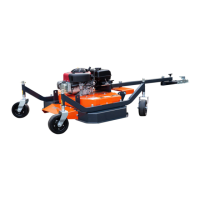
This document is a product manual for the TMG Industrial ATV Tow-behind Finish Mower, specifically models TMG-AFN48 and TMG-AFN60.
The TMG Industrial ATV Tow-behind Finish Mower is designed for efficient and versatile lawn and field maintenance, particularly suited for use with an ATV, UTV, or other utility vehicles. Its tow-behind design allows for easy attachment and operation, making it ideal for large areas such as lawns, fields, parks, and golf courses. The mower is equipped with a gasoline engine, providing independent power for cutting, which allows it to be used with a variety of tow vehicles without relying on their PTO systems.
The primary function of this device is to cut grass and vegetation in large areas. It operates as a finish mower, meaning it is designed to provide a clean, even cut, similar to a lawnmower, rather than a rough cut like a brush hog. The mower features multiple blades (the exact number is not specified but implied by the "finish mower" designation and typical designs) that rotate horizontally to cut grass. The cutting height is adjustable, allowing users to customize the lawn finish according to their needs. The tow bar offset is also adjustable, which enables the mower to cut areas that are difficult to reach directly with the tow vehicle, such as under trees or along fences, without the tow vehicle needing to drive over the area. This feature helps prevent compaction of the soil and damage to the grass.
While specific engine horsepower, cutting width, or weight are not detailed in the provided excerpts, the model numbers TMG-AFN48 and TMG-AFN60 typically indicate cutting widths of 48 inches and 60 inches, respectively. The manual includes detailed torque specifications for various bolts and cap screws, indicating a robust construction. For example, SAE 2 bolts range from 0.5 N.m (0.4 lb-ft) for M3 to 2600 N.m (1917 lb-ft) for M36. SAE 5 and SAE 8 bolts also have corresponding torque values, emphasizing the importance of proper fastening for safety and performance. The inclusion of metric torque specifications (M3 to M36) further suggests a design that accommodates various fastener types and ensures structural integrity. The engine is gasoline-powered, and the manual details procedures for changing engine oil, tensioning and replacing belts, and troubleshooting engine-related issues.
The mower is designed for ease of use and maneuverability.
The manual provides comprehensive guidelines for routine maintenance and troubleshooting to ensure the longevity and optimal performance of the mower.
The manual stresses the importance of reading and understanding all instructions before operating the mower to ensure safe and effective use. It also highlights the need for regular inspections and maintenance to prevent breakdowns and extend the life of the equipment.
 General
| Brand | TMG |
|---|---|
| Model | TMG-AFN48 |
| Category | Lawn Mower |
| Language | English |

 To Next Page