EasyManua.ls Logo

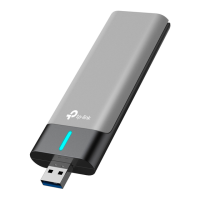
TP-Link TX20U Nano - User Manual

TP-Link TX20U Nano
2 pages
Print Icon
To Next Page IconTo Next Page
Loading...
Wireless USB Adapter
Quick Installation Guide
Images are for demonstration only.
1 Connect to a Computer
7106510401 REV1.0.0©2023 TP-Link
2 Install Driver
a. Go to My Computer or This PC.
b. Double click the TP-Link CD-ROM then
run SetupInstall.exe to install driver.
Notes:
• If you cannot nd the setup program, please download
the driver at www.tp-link.com/support.
• If an unknown publisher message pops up, select Ye s
to continue.
• If Windows User Account Control requires admin
credentials, type user name and password of your
Windows administrator account.
SetupInstall.exe
Question and Answer IconNeed help?

Do you have a question about the TP-Link TX20U Nano and is the answer not in the manual?

Summary

Connect to a Computer

Install Driver

Join a Wireless Network

Troubleshooting

FAQ: Adapter Hardware Version

Frequently asked question about finding the adapter's hardware version.

FAQ: Wireless Network Connectivity

Frequently asked question about finding or connecting to wireless networks.

FAQ: Driver Installation Issues

Frequently asked question about troubleshooting driver installation.

Safety Information

Summary

Connect to a Computer

Install Driver

Join a Wireless Network

Troubleshooting

FAQ: Adapter Hardware Version

Frequently asked question about finding the adapter's hardware version.

FAQ: Wireless Network Connectivity

Frequently asked question about finding or connecting to wireless networks.

FAQ: Driver Installation Issues

Frequently asked question about troubleshooting driver installation.

Safety Information

Overview

This document serves as a quick installation guide for a TP-Link Wireless USB Adapter, outlining the steps for connecting the device, installing its drivers, and joining a wireless network. It also provides troubleshooting information and safety guidelines.

Function Description

The TP-Link Wireless USB Adapter is designed to provide wireless connectivity to a computer. By plugging this adapter into a computer's USB port, users can access Wi-Fi networks, enabling internet access and network communication without the need for an Ethernet cable. This device is particularly useful for desktop computers that do not have built-in wireless capabilities or for laptops with malfunctioning internal Wi-Fi adapters. The adapter facilitates communication with wireless routers and access points, allowing the computer to send and receive data over a wireless local area network (WLAN).

Usage Features

The installation and usage of the TP-Link Wireless USB Adapter are straightforward, designed for ease of use even for individuals with limited technical expertise.

  1. Connecting to a Computer: The first step involves physically connecting the wireless USB adapter to an available USB port on your computer. The guide illustrates a typical desktop computer setup with the adapter plugged into a USB port, indicating a simple plug-and-play physical connection.

  2. Driver Installation: After connecting the adapter, the necessary drivers must be installed for the operating system to recognize and utilize the device correctly.

    • Accessing Installation Media: Users are instructed to navigate to "My Computer" or "This PC" to locate the TP-Link CD-ROM. This implies that the adapter typically comes with a physical installation CD containing the required drivers.
    • Running the Installer: Once the CD-ROM is accessed, users need to double-click and run the "SetupInstall.exe" file to initiate the driver installation process. This executable guides the user through the installation steps.
    • Troubleshooting Driver Issues: The guide anticipates potential issues during driver installation and offers solutions:
      • Missing Setup Program: If the setup program cannot be found on the CD-ROM or if a CD-ROM drive is unavailable, users are advised to download the driver from the official TP-Link support website (www.tp-link.com/support). This ensures that users can still install the driver even without the physical media.
      • Unknown Publisher Message: During installation, the operating system might display a warning about an "unknown publisher." Users are instructed to select "Yes" to continue, indicating that the software is safe to install despite the warning.
      • Administrator Credentials: If Windows User Account Control prompts for administrator credentials, users must provide the username and password of their Windows administrator account to proceed with the installation. This is a standard security measure for installing system-level software.
  3. Joining a Wireless Network: Once the drivers are successfully installed, the computer can detect and connect to available wireless networks.

    • Accessing Network Settings: Users are guided to click the network icon (typically found in the system tray or taskbar) to open the list of available wireless networks.
    • Selecting and Connecting: From the list, users should select their desired Wi-Fi network (e.g., "TP-Link_XXXX") and click "Connect."
    • Entering Password: If the network is secured, users will be prompted to enter the network password (security key) to establish a connection.
    • Automatic Connection: The interface shown includes a "Connect automatically" option, which, when checked, ensures that the computer will automatically connect to this specific network whenever it is in range, streamlining future access.

Maintenance Features

The document provides guidance on maintaining the device's functionality and ensuring safe operation, primarily through troubleshooting and safety information.

  1. Troubleshooting Common Issues: The guide includes a dedicated "Troubleshooting" section with links to online FAQs for common problems, empowering users to resolve issues independently.

    • Hardware Version Identification: For issues related to identifying the adapter's hardware version, a link to a specific FAQ (https://www.tp-link.com/faq-46.html) is provided. This is crucial for ensuring compatibility with drivers and support resources.
    • Network Detection/Connection Issues: If the computer cannot find or connect to wireless networks, users are directed to another FAQ (https://www.tp-link.com/faq-2253.html). This addresses problems with network visibility or authentication.
    • Driver Installation Failures: In cases where the driver installation fails, a dedicated FAQ (https://www.tp-link.com/faq-252.html) offers solutions, reinforcing the importance of correct driver setup.
  2. Safety Information: The document emphasizes critical safety guidelines to ensure the longevity of the device and the safety of the user.

    • No Disassembly/Repair: Users are explicitly warned not to attempt to disassemble, repair, or modify the device. This is a standard recommendation for electronic devices to prevent damage, maintain warranty, and avoid potential hazards. For service needs, users are advised to contact TP-Link support.
    • Restricted Use Areas: The device should not be used in locations where wireless devices are prohibited, adhering to local regulations and safety protocols.
    • Environmental Protection: Users are instructed to keep the device away from water, fire, humidity, or hot environments. These conditions can severely damage the electronics and pose safety risks.
    • Power Source Compliance: The product should only be powered by power supplies that comply with Power Source Class 2 (PS2) or Limited Power Source (LPS) of IEC 62368-1. This ensures that the device receives appropriate and safe power, preventing electrical damage or hazards.
  3. Technical Support and Resources: For ongoing support, replacement services, user guides, and other information, users are directed to the official TP-Link support website (https://www.tp-link.com/support). A QR code is also provided for convenient access to these resources via a smartphone or tablet. This comprehensive support system ensures that users have access to assistance throughout the product's lifecycle.

TP-Link TX20U Nano Specifications

General IconGeneral
InterfaceUSB 2.0
AntennaInternal Antenna
Wireless StandardsIEEE 802.11ax/ac/n/g/b/a
Frequency5 GHz, 2.4 GHz
Wireless SecurityWPA3
CompatibilityWindows 11/10

Related product manuals