RUNNING ADJUSTMENTS
67
BRAKES
Hydraulically operated disc brakes are fitted to the front
wheels and drum brakes to the rear wheels. Pressure applied to
the brake pedal is transferred to the hydraulic system, to operate
the brakes. The handbrake is connected by cables and
compensating mechanism to levers incorporated in the rear brake
backing plates. Applying the handbrake operates the rear brakes
only, independently of the hydraulic system.
Front Brake Adjustment
The disc brakes fitted to the front of the vehicle are self-
adjusting. Replacement shoe pads should be fitted when the
linings are reduced to approximately
1
/
8
" (3 mm.) thickness.
NOTE. Under no circumstances allow the pads to wear below
1
/
16
” (l.5 mm.) thickness. They should therefore be renewed if of
insufficient thickness to ensure safe braking for a further 6,000
miles (10,000 km.).
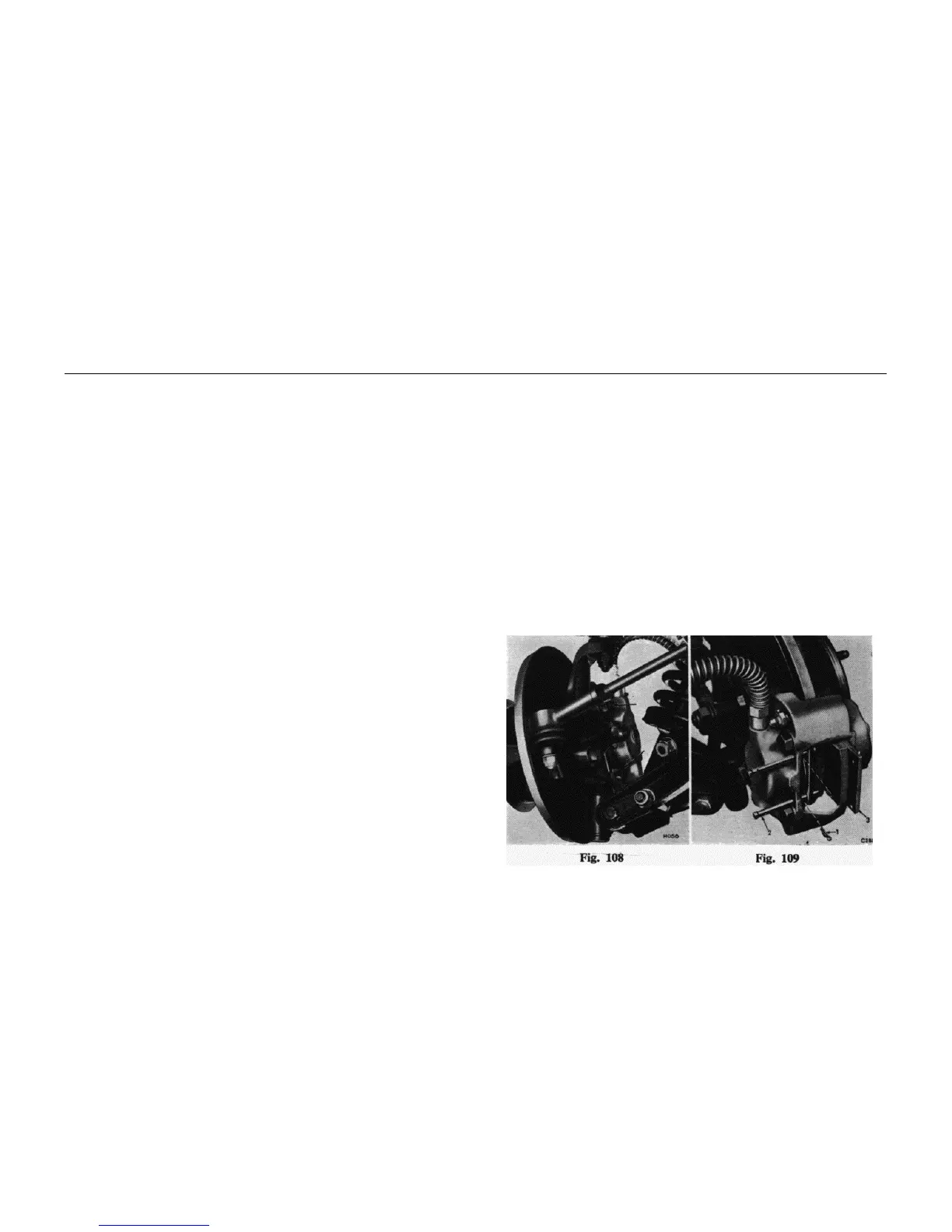
Periodically check the tightness of the caliper securing bolts (Fig.
108).
Pad Renewal (Fig. 109)
Pad renewal may be effected without having to bleed the
brake system.
1. Jack up the front of the car and remove the road wheels.
2. Withdraw the retaining pins(I) and remove the pad retainers
(2).
3 Remove the pads (3) from the calipers.
4. Push the pistons to the bottom of their cylinders and fit new
pads.
5. Refit the pad retainers and secure with the retaining pins.
6. Pump the foot pedal until solid resistance is felt.
Rear Brakes (Fig. 110)
Brake shoes, contaminated with oil or grease, are detrimental
to brake efficiency. Should a brake be so affected, the drum and
backing plate must be thoroughly cleaned with petrol, and the
brake shoes renewed. When renewing or replacing shoes, the
pull-off springs, behind the shoes, must hook through the correct
holes, as shown.


 To Next Page