This document is an owner's manual for TROY-BILT REAR-TINE TILLERS, covering Models 12208, 12209, 12210, and 12217. It provides comprehensive information on safety, assembly, controls, operation, and maintenance.
Function Description:
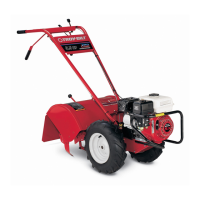
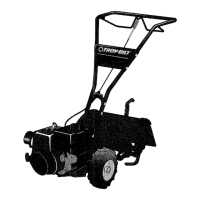
The TROY-BILT REAR-TINE TILLERS are designed for tilling and cultivating gardens, as well as other property management projects. They are described as standard-rotating-tine (SRT) tillers, meaning the tines rotate in the same direction as the wheels, propelling the tiller forward. The tillers are known for their ruggedness, performance, and high-quality engineering, making it easier to prepare soil for planting, cultivate, and power compost.
Important Technical Specifications:
The manual covers four specific models with varying horsepower:
- Model 12217: 3.5 HP TUFFY®
- Model 12208: 4.5 HP Super TUFFY®
- Model 12209: 5.5 HP BRONCO™
- Model 12210: 6.5 HP Super BRONCO™
The transmission is pre-filled with gear oil at the factory, but users must check the level. Motor oil is not included with the tiller and must be added to the engine crankcase before the first start. Tires, if pneumatic, should be inflated equally to 15-20 PSI. The machine meets voluntary safety standard B71.8-1996.
Usage Features:
- Handlebar Height Adjustment: The handlebars are adjustable to three different settings (High, Medium, Low) to position them at approximately waist level when the tines are 3"-4" into the soil.
- Wheel Drive Pins: Each wheel is equipped with a Wheel Drive Pin, allowing for two modes:
- WHEEL DRIVE: Pins are inserted through both wheel hubs and the wheel shaft, locking the wheels to the shaft for powered movement. This is the required setting for engine operation.
- FREEWHEEL: Pins are inserted only through the wheel shaft (not the wheel hubs), allowing the wheels to turn freely for manual pushing or pulling when the engine is off.
- Forward Clutch Bail: This control engages forward drive to both the wheels and tines. Lifting and holding the bail against the handlebar causes forward rotation; releasing it disengages motion.
- Reverse Clutch Control (Models 12209/12210 only): These models feature a knob that, when pulled out, engages reverse drive to the wheels and tines for maneuvering. It should never be used for tilling in reverse.
- Depth Regulator Lever: This lever controls the tilling depth, with settings ranging from a "travel" position (tines 1-1/2" off the ground) to a maximum tilling depth of approximately 6", depending on soil conditions. Users are advised to start with shallow settings and gradually increase depth.
- Tilling Techniques:
- Let the tiller do the work: Avoid pushing down on handlebars; allow the wheels to pull the tiller.
- Tilling depths: Start shallow, gradually increasing depth. Cultivate at very shallow depths to protect plants.
- Avoid tilling wet, soggy soil: Wait for soil to dry to prevent large, hard clumps.
- Avoid making footprints: Walk on the untilled side of the unit to prevent soil compaction.
- Choosing correct speeds: Match engine speed to tilling depth to ensure adequate power without laboring the engine.
- Tilling patterns: Overlap passes by half the tiller width, and for seedbed preparation, make a second pass at a right angle.
- Tilling on slopes: Till up and down moderate slopes, not steep inclines. Maintain full engine oil level. Terrace gardening is an option for longer slopes.
- Power Composting: The tiller can be used to till under organic matter like crop residues, leaves, and grass clippings, which decompose to add nutrients to the soil.
- Loading and Unloading: Requires two or more people and sturdy ramps with good traction and side rails. The tiller should be rolled manually with the engine off, and wheels chocked and secured once in the vehicle.
Maintenance Features:
A "Required Maintenance Schedule" table outlines routine checks:
- Before Each Use: Check engine oil level, clean engine.
- Every 10 Hours: Check drive belt tension, check nuts and bolts, change engine oil (more frequently in dusty conditions, and after first 2 hours of break-in), lubricate tiller, service engine air cleaner system.
- Every 30 Hours: Check gear oil level in transmission, check tines for wear, check tire pressure (pneumatic tires only), service spark plug.
- And Every 5 Operating Hours: Clean engine.
- Tiller Lubrication: Proper lubrication of the tiller is essential. Use a good quality lubricating oil (#30 weight engine oil) and a clean, high-quality general purpose grease. Lubrication points include wheel shafts, depth regulator lever, and handlebar attaching screws.
- Check for Oil Leaks: Regularly inspect for oil leaks from the transmission housing.
- Check Hardware: Periodically check all nuts and screws for tightness.
- Transmission Gear Oil Service: Check gear oil level (halfway up the main drive shaft) and add GL-4 gear oil (SAE 85W-140 or SAE 140) if low. Draining and refilling requires removing the transmission cover and gasket.
- Bolo Tines: Inspect tines at the beginning of each tilling season and every 30 operating hours. Worn tines reduce tilling depth and effectiveness. Tines can be replaced individually or as complete sets.
- Drive Belt Tension: Proper tension on both forward and reverse drive belts is crucial for performance and belt life. The manual provides detailed instructions for checking and adjusting tension by measuring the cable spring length.
- Engine Cleaning: Keep the engine clean to prevent overheating.
- Air Cleaner Service: Inspect and service the air cleaner more often in dusty conditions.
- Engine Oil Service: Check engine oil level regularly and change oil as recommended.
- Spark Plug Service: Inspect, clean, or replace the spark plug after every 100 operating hours or annually.
- Spark Arrester Screen Service: If equipped, remove and clean the screen.
- Off Season Storage: Clean the tiller and engine, perform routine lubrication, protect the engine (including fuel system) as per the engine manual, and store in a clean, dry area away from ignition sources.
The manual emphasizes numerous safety precautions, including:
- Reading the entire manual and engine manual before operation.
- Never allowing children or uninstructed adults to operate the tiller.
- Keeping the operating area clear of bystanders.
- Wearing appropriate protective footwear and clothing.
- Avoiding underground electric cables, telephone lines, pipes, or hoses.
- Handling fuel with extreme care due to flammability.
- Stopping the engine and disconnecting the spark plug wire before any adjustments, repairs, or inspections.
- Ensuring wheels are in WHEEL DRIVE position before starting the engine.
- Never operating the tiller in FREEWHEEL mode with the engine running.
- Avoiding running the engine in enclosed areas due to carbon monoxide.
- Being aware of unexpected bouncing or jumping if tines strike hard soil or obstacles.
- Not overloading the tiller or tilling too deeply/quickly.
- Using extreme caution when reversing.
- Keeping away from rotating tines and hot engine parts.
- Not tampering with engine governor settings.
- Ensuring all safety devices and shields are in place.
- The engine exhaust contains chemicals known to cause cancer, birth defects, or other reproductive harm (California Proposition 65 warning).
- Spark arrester is required in California and other states for operation on certain lands.

 Need help?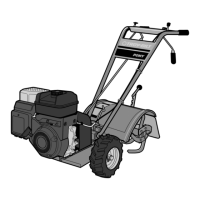




 To Next Page
 General