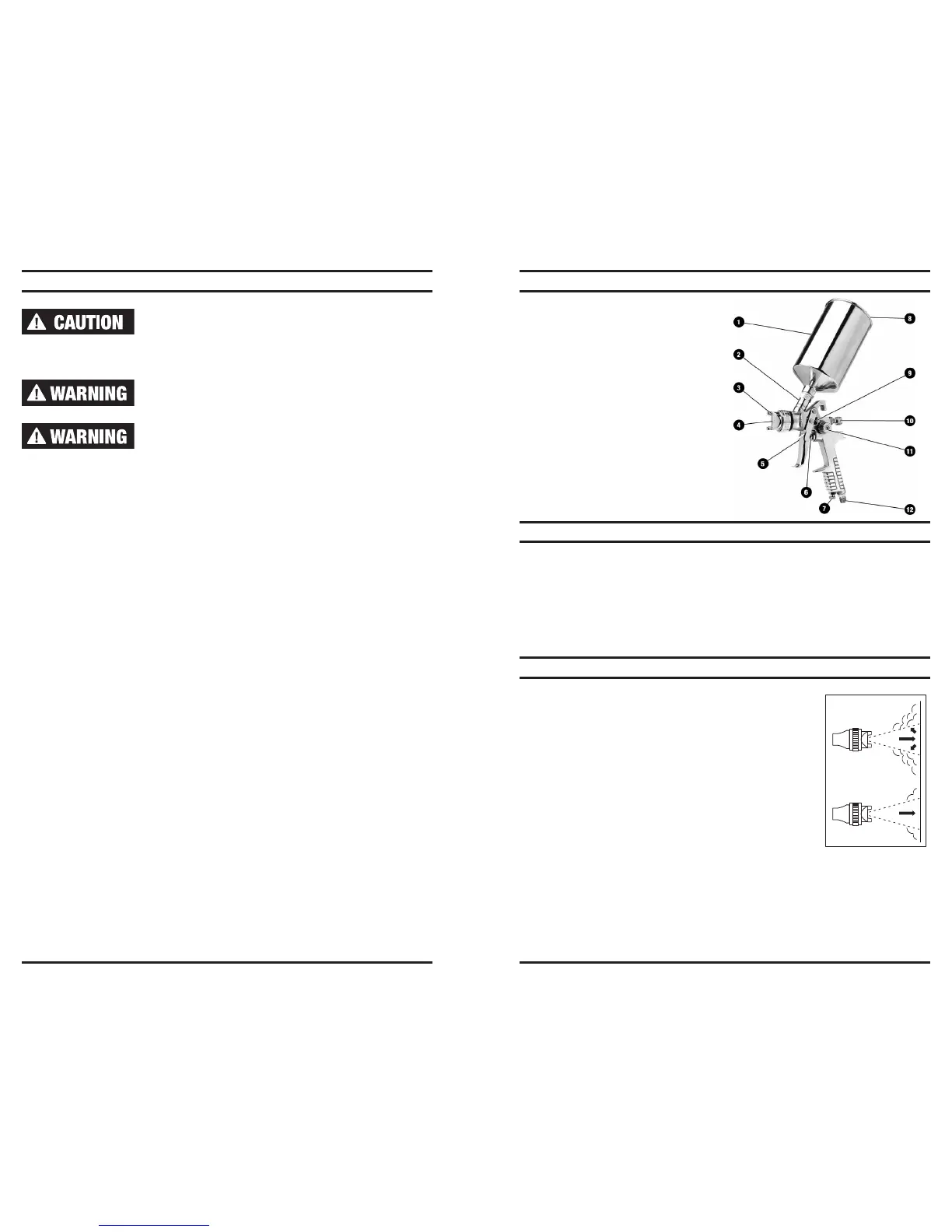
FEATURES AND SPECIFICATIONS
1) 600ml Aluminum Paint Cup
2) Fluid Inlet (Optional Material Filter)
3) Air Cap
4) Fluid Tip (Nozzle)
5) Trigger
6) Packing Nut (Air Valve)
7) Air Control Knob
8) Cup Lid
9) Fluid Needle
10) Fluid Control Knob
11) Spray Pattern Control Knob
12) 1/4” NPS Air Inlet Fitting
INTRODUCTION
Your new TEKZ® spray gun is a vital link in the finishing application. In addition to
operating the spray gun properly, techniques of surface preparation, paint preparation
and the nature of the specific spray material to be used must be understood. These
instructions will explain the differences among various spray methods and serve as a
guide in the proper operation and techniques of spray painting. Please refer to the
Parts section of this manual for model specific information.
TYPES OF SPRAY GUNS
There are three basic types of spray guns: siphon feed, pres-
sure feed, and gravity feed. The type of spray gun used
depends upon the application and the size of the project.
These types of spray guns can be either “conventional” spray
or HVLP (High Volume Low Pressure) spray.
Conventional spray guns use a much higher air cap pressure
(more than 10 PSI) to atomize the paint than is used by HVLP
spray guns which results in more overspray and lower transfer
efficiency. (Transfer efficiency refers to the percentage of paint
sprayed that actually adheres to the surface being painted).
HVLP, electrostatic and airless paint spray guns are the only spray methods that meet
the strict 65% transfer efficiency rate required by some air quality district regulations.
This improved transfer efficiency results in a significant material savings when com-
par
ed to conventional spray guns. Be sure to check local, state and national regula-
tions that may apply before performing any spraying operations.
6 7
WORK AREA SAFETY
BBeeffoorree ddiissaasssseemmbbllyy oorr rreemmoovvaall ooff aannyy ppaarrtt ooff gguunn oorr
aattttaacchheedd ccoommppoonneennttss,, sshhuutt ooffff aaiirr ssuuppppllyy ttoo gguunn,, sshhuutt ooffff
aaiirr ccoommpprreessssoorr,, rreelleeaassee pprreessssuurree ffrroomm sspprraayy gguunn bbyy ddeepprreessssiinngg ttrriiggggeerr,, aanndd ddiiss--
ccoonnnneecctt ppoowweerr ssoouurrccee.. NNEEVVEERR aassssuummee ssyysstteemm pprreessssuurree iiss zzeerroo..
TTOO AAVVOOIIDD CCRREEAATTIINNGG AANN EEXXPPLLOOSSIIVVEE AATTMMOOSSPPHHEERREE,, WWOORRKK
OONNLLYY IINN WWEELLLL VVEENNTTIILLAATTEEDD AARREEAASS..
AALLWWAAYYSS UUSSEE AA RREESSPPIIRRAATTOORR TTHHAATT MMEEEETTSS OOSSHHAA//NNIIOOSSHH
RREEGGUULLAATTIIOONNSS TTOO PPRREEVVEENNTT IINNHHAALLAATTIIOONN OOFF TTOOXXIICC
MMAATTEERRIIAALL..
1.
KKeeeepp yyoouurr wwoorrkk aarreeaa cclleeaann aanndd wweellll lliitt..
Clutter and dark areas invite accidents.
2.
DDoo nnoott ooppeerraattee aaiirr ccoommpprreessssoorr oorr ootthheerr ppoowweerr ttoooollss iinn eexxpplloossiivvee aattmmoosspphheerreess,,
ssuucchh aass iinn tthhee pprreesseennccee ooff ffllaammmmaabbllee lliiqquuiiddss,, ggaasseess,, oorr dduusstt
. Electric motors used
in these machines create sparks which may ignite the dust or fumes.
3.
KKeeeepp ppeettss,, bbyyssttaannddeerrss,, cchhiillddrreenn,, aanndd vviissiittoorrss aawwaayy wwhhiillee ooppeerraattiinngg aa sspprraayy gguunn..


 To Next Page
 Loading...