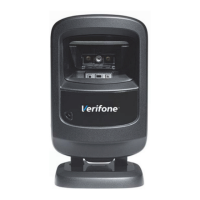
The Verifone DS9208 Scanner is a versatile bar code imager designed for efficient and flexible scanning of both 1D and 2D bar codes. This device is capable of reading bar codes from various sources, including printed labels and loyalty cards, making it suitable for a wide range of retail and service environments. Its design emphasizes ease of use, allowing for quick and accurate scanning to assist customers efficiently.
Function Description
The primary function of the Verifone DS9208 Scanner is to capture and decode 1D and 2D bar codes. It operates as a point-and-shoot scanner, eliminating the need for precise alignment of the bar code, which streamlines the scanning process. This hands-free and hand-held flexible scanner is designed to integrate with Verifone point-of-sale (POS) systems, specifically the Topaz and Ruby2 registers.
The scanner connects to the POS system via a supplied cable, typically to COM port 8, which is the default port for scanner connections. For setups requiring a secondary scanner, COM port 1 can be utilized. The device's configuration is managed through the POS system's maintenance menu, where users can select the scanner type and apply specific settings to ensure proper operation.
Key configuration steps involve logging into the POS system, navigating to the CSR Func > Maintenance Menu, and then selecting the Device Configuration option. Within Device Configuration, the user selects "ScannerConfig" and then chooses the "2D Scanner" option to enable the Verifone DS9208. After changing the scanner type or moving it to a different port, a reboot of the register is required to apply the changes.
The scanner supports specific bar code configurations to optimize its performance with Verifone systems. These include setting defaults, enabling RTS/CTS Option 3, converting UPC-E to UPC-A (01h), enabling Symbol Code ID Character (02h), and configuring data suffixes. These settings ensure that the scanner accurately reads and transmits bar code data in the format expected by the POS system.
Usage Features
The Verifone DS9208 Scanner is designed for user-friendly operation in a retail setting. Its point-and-shoot capability means that cashiers and other users do not need special training to align bar codes, allowing for faster transaction times and improved customer service. The flexibility of being both a hands-free and hand-held device provides adaptability to different scanning scenarios, whether items are passed over the scanner or the scanner is brought to larger, heavier items.
The device includes an aiming dot feature to guide users in positioning the scanner correctly over a bar code. When the aiming dot is working, it indicates that the scanner is powered on and ready to read. If the aiming dot is present but the bar code is not reading, it suggests that the bar code might be unreadable or the aiming dot is not centered on the bar code.
Audible feedback is provided through a beeper, which confirms successful scans. The volume of this beeper can be adjusted to suit the environment or user preference. There are three volume settings: Low Volume (2), Medium Volume (1), and High Volume (0), which can be selected by scanning specific bar codes provided in the installation guide. This feature allows for customization of the user experience, ensuring that the feedback is clear without being disruptive.
The scanner's integration with Verifone's Topaz and Ruby2 systems is seamless once configured. The configuration process, while requiring specific steps within the POS menu, is guided and ensures that the scanner communicates effectively with the register. This integration allows for real-time processing of scanned items, contributing to efficient inventory management and sales operations.
Maintenance Features
Maintenance of the Verifone DS9208 Scanner primarily involves ensuring proper connectivity, correct configuration, and addressing common operational issues. The installation guide provides a troubleshooting chart to help users diagnose and resolve problems quickly.
One common issue is the aiming dot not working, which indicates a lack of power to the scanner. The solution involves checking the cable connection to both the POS system and the scanner to ensure it is secure. It is also crucial to verify that the correct cable type is being used, as an incorrect cable can prevent the scanner from functioning. If the scanner is disabled, checking the configuration on the POS system is necessary to re-enable it.
If the aiming dot is working but the scanner is not reading bar codes, potential causes include an unreadable bar code or the aiming dot not being centered. Users are advised to try scanning another bar code of the same product or to ensure the aiming dot is properly centered on the bar code. This helps differentiate between a scanner issue and a problem with the bar code itself.
Another maintenance aspect is managing the beeper volume. If the beeper is not audible or is too low, it indicates that the volume setting needs adjustment. The installation guide provides specific bar codes that, when scanned, will change the beeper volume to low, medium, or high. This allows users to easily control the audio feedback without needing to access complex menu settings.
For more advanced troubleshooting or additional information, the manufacturer's website is provided as a resource. This online portal offers further documentation and support, allowing users to access detailed guides and updates for the DS9208 scanner. This ensures that users have access to comprehensive support beyond the basic troubleshooting steps outlined in the manual. Regular checks of the cable connections and periodic review of the scanner's configuration settings within the POS system can help prevent many common issues and ensure the scanner operates reliably.


 To Next Page
 General