EasyManua.ls Logo

VEVOR BM8902-A - User Manual

VEVOR BM8902-A
28 pages
Print Icon
To Next Page IconTo Next Page
Loading...
Technical Support and E-Warranty Certificate www.vevor.com/support
BREAD MAKER
MODEL:BM8902-A
We continue to be committed to provide you tools with competitive price.
"Save Half", "Half Price" or any other similar expressions used by us only represents an
estimate of savings you might benefit from buying certain tools with us compared to the major
top brands and does not necessarily mean to cover all categories of tools offered by us. You
are kindly reminded to verify carefully when you are placing an order with us if you are
actually saving half in comparison with the top major brands.

Questions and Answers

Summary

Support and Contact Information

Contact for Assistance

Provides contact details for product questions and technical support via the website.

Safety and Disposal Guidelines

General Safety Warnings

Covers risks of injury, indoor use only, and proper appliance disposal methods.

User Responsibility and Supervision

Highlights reading instructions, checking voltage, and the need for supervision.

Operational Safety Precautions

Details on handling hot parts, electrical safety, cord management, and appliance movement.

Appliance Specific Safety

Warnings regarding bread pan, grounded plugs, and moving parts during operation.

Usage, Cleaning, and Electrical Safety

Covers intended use, cleaning, extension cord guidelines, and polarized plug safety.

Control Panel and Basic Operation

Control Panel Layout

Overview of the bread maker's control panel buttons and display.

Initial Power-Up and Start;Stop

Explains the initial sequence and how to start/stop the baking program.

Program Selection and Description

Details on using the MENU button and descriptions for basic bread programs.

Program 1-4 Overview

Summarizes Basic, French, Whole Wheat, and Sweet bread programs.

Advanced Programs and Settings

Covers programs 5-15, crust color, weight selection, and delay timer.

Delay Timer Functionality

Instructions for setting a delayed start time for bread making.

Appliance Features and Error Handling

Keep Warm and Environment

Details on the keep warm function and recommended environmental conditions.

Power Interruption Memory

How the appliance handles power interruptions and resumes operation.

Warning Display Codes

Explanation of error codes 'HHH' and 'EE0'.

Initial Setup and Operation Guide

First Use Preparation

Steps for initial cleaning and running the appliance empty to remove odors.

Loading Ingredients

Instructions for placing the bread pan, kneading paddle, and adding ingredients.

Program Setup and Execution

Selecting programs, crust, weight, and delay settings, then starting the process.

Adding Add-ins and Removing Bread

Guidance on adding extra ingredients and safely removing the baked bread.

Maintenance and Ingredient Basics

Cleaning and Maintenance Procedures

Detailed steps for cleaning the bread maker components.

Introduction to Flour Types

Basic information on Bread Flour and All-Purpose Flour for baking.

Other Flour Varieties

Description of Whole-Wheat, Black Wheat, Self-rising, Corn, and Oatmeal flours.

Sugar and Yeast

Role of sugar for yeast and types of yeast used in bread makers.

Essential Baking Ingredients

Information on Salt, Eggs, Oils, Baking Powder, Baking Soda, and Water.

Yeast Viability Test

A method to check if the yeast is fresh and active.

Precise Measurement and Adding Sequence

Importance of Accurate Measurement

Emphasizes accurate measurement for successful bread making.

Ingredient Adding Order

Specifies the correct sequence for adding liquid, dry ingredients, and yeast.

Measuring Liquids and Dry Goods

Guidelines for accurately measuring liquid and dry ingredients.

Accessory Usage Guide

Instructions for using measuring cups, spoons, and the hook.

Troubleshooting and Problem Solving

Kneading Blade Removal

Using the hook to safely remove the kneading blade.

Common Issues and Solutions

Addresses smoke, thick crust, and difficulty removing bread.

Operation and Motor Issues

Troubleshooting uneven stirring, overheating ('HHH'), and motor noises.

Bread Size and Rising Problems

Solutions for large bread, dough not stirring, and small loaves or no rise.

Dough Overflow and Collapsed Bread

Solutions for dough overflowing the pan or bread collapsing.

Bread Density and Surface Issues

Addresses dense bread, hollow middles, and dry powder on the surface.

Crust and Sugar Related Issues

Troubleshooting dark crust with excess sugar or inadequate stirring.

Bread Maker Recipes

Basic Bread Recipe

Ingredients and quantities for Basic Bread, with options for different weights.

French Bread Recipe

Ingredients and quantities for French Bread, with options for different weights.

Whole-Wheat Bread Recipe

Ingredients and quantities for Whole-Wheat Bread, with options for different weights.

Sweet Bread Recipe

Ingredients and quantities for Sweet Bread, with options for different weights.

Buttermilk Bread Recipe

Ingredients and quantities for Buttermilk Bread, with options for different weights.

Gluten-Free Bread Recipe

Ingredients and quantities for Gluten-Free Bread, with options for different weights.

Quick Bread Recipe

Ingredients and quantities for Quick Bread, with options for different weights.

Cake Recipe

Ingredients and quantities for making Cake.

Knead Program Recipe

Ingredients and quantities for using the Knead program.

Dough Program Recipe

Ingredients and quantities for using the Dough program.

Pasta Dough Recipe

Ingredients and quantities for making Pasta Dough.

Yogurt Recipe

Ingredients and quantities for making Yogurt.

Jam Recipe

Ingredients and quantities for making Jam.

Bake Program Guide

Instructions for using the Bake program and adjusting temperature.

Homemade Program Customization

Guide to customizing processes for DIY bread using the Homemade menu.

Summary

Support and Contact Information

Contact for Assistance

Provides contact details for product questions and technical support via the website.

Safety and Disposal Guidelines

General Safety Warnings

Covers risks of injury, indoor use only, and proper appliance disposal methods.

User Responsibility and Supervision

Highlights reading instructions, checking voltage, and the need for supervision.

Operational Safety Precautions

Details on handling hot parts, electrical safety, cord management, and appliance movement.

Appliance Specific Safety

Warnings regarding bread pan, grounded plugs, and moving parts during operation.

Usage, Cleaning, and Electrical Safety

Covers intended use, cleaning, extension cord guidelines, and polarized plug safety.

Control Panel and Basic Operation

Control Panel Layout

Overview of the bread maker's control panel buttons and display.

Initial Power-Up and Start;Stop

Explains the initial sequence and how to start/stop the baking program.

Program Selection and Description

Details on using the MENU button and descriptions for basic bread programs.

Program 1-4 Overview

Summarizes Basic, French, Whole Wheat, and Sweet bread programs.

Advanced Programs and Settings

Covers programs 5-15, crust color, weight selection, and delay timer.

Delay Timer Functionality

Instructions for setting a delayed start time for bread making.

Appliance Features and Error Handling

Keep Warm and Environment

Details on the keep warm function and recommended environmental conditions.

Power Interruption Memory

How the appliance handles power interruptions and resumes operation.

Warning Display Codes

Explanation of error codes 'HHH' and 'EE0'.

Initial Setup and Operation Guide

First Use Preparation

Steps for initial cleaning and running the appliance empty to remove odors.

Loading Ingredients

Instructions for placing the bread pan, kneading paddle, and adding ingredients.

Program Setup and Execution

Selecting programs, crust, weight, and delay settings, then starting the process.

Adding Add-ins and Removing Bread

Guidance on adding extra ingredients and safely removing the baked bread.

Maintenance and Ingredient Basics

Cleaning and Maintenance Procedures

Detailed steps for cleaning the bread maker components.

Introduction to Flour Types

Basic information on Bread Flour and All-Purpose Flour for baking.

Other Flour Varieties

Description of Whole-Wheat, Black Wheat, Self-rising, Corn, and Oatmeal flours.

Sugar and Yeast

Role of sugar for yeast and types of yeast used in bread makers.

Essential Baking Ingredients

Information on Salt, Eggs, Oils, Baking Powder, Baking Soda, and Water.

Yeast Viability Test

A method to check if the yeast is fresh and active.

Precise Measurement and Adding Sequence

Importance of Accurate Measurement

Emphasizes accurate measurement for successful bread making.

Ingredient Adding Order

Specifies the correct sequence for adding liquid, dry ingredients, and yeast.

Measuring Liquids and Dry Goods

Guidelines for accurately measuring liquid and dry ingredients.

Accessory Usage Guide

Instructions for using measuring cups, spoons, and the hook.

Troubleshooting and Problem Solving

Kneading Blade Removal

Using the hook to safely remove the kneading blade.

Common Issues and Solutions

Addresses smoke, thick crust, and difficulty removing bread.

Operation and Motor Issues

Troubleshooting uneven stirring, overheating ('HHH'), and motor noises.

Bread Size and Rising Problems

Solutions for large bread, dough not stirring, and small loaves or no rise.

Dough Overflow and Collapsed Bread

Solutions for dough overflowing the pan or bread collapsing.

Bread Density and Surface Issues

Addresses dense bread, hollow middles, and dry powder on the surface.

Crust and Sugar Related Issues

Troubleshooting dark crust with excess sugar or inadequate stirring.

Bread Maker Recipes

Basic Bread Recipe

Ingredients and quantities for Basic Bread, with options for different weights.

French Bread Recipe

Ingredients and quantities for French Bread, with options for different weights.

Whole-Wheat Bread Recipe

Ingredients and quantities for Whole-Wheat Bread, with options for different weights.

Sweet Bread Recipe

Ingredients and quantities for Sweet Bread, with options for different weights.

Buttermilk Bread Recipe

Ingredients and quantities for Buttermilk Bread, with options for different weights.

Gluten-Free Bread Recipe

Ingredients and quantities for Gluten-Free Bread, with options for different weights.

Quick Bread Recipe

Ingredients and quantities for Quick Bread, with options for different weights.

Cake Recipe

Ingredients and quantities for making Cake.

Knead Program Recipe

Ingredients and quantities for using the Knead program.

Dough Program Recipe

Ingredients and quantities for using the Dough program.

Pasta Dough Recipe

Ingredients and quantities for making Pasta Dough.

Yogurt Recipe

Ingredients and quantities for making Yogurt.

Jam Recipe

Ingredients and quantities for making Jam.

Bake Program Guide

Instructions for using the Bake program and adjusting temperature.

Homemade Program Customization

Guide to customizing processes for DIY bread using the Homemade menu.

Overview

This document describes the VEVOR Bread Maker, Model BM8902-A, a household appliance designed for automated bread making. The device is intended for indoor use and offers various programs to create different types of bread and dough.

Function Description

The VEVOR Bread Maker automates the process of making bread, from kneading and rising to baking. It features a control panel with buttons for MENU, TIMER-, TIMER+, LOAF SIZE, COLOR, and START/STOP/PAUSE, allowing users to select and customize their baking programs.

The device offers 15 distinct programs:

  • Program 1: Basic - For white and mixed bread, primarily using wheat or rye flour, resulting in a compact consistency. The crust color can be adjusted.
  • Program 2: French - For light bread made from fine flour, typically fluffy with a crispy crust. Not suitable for recipes requiring butter, margarine, or milk.
  • Program 3: Whole Wheat - For bread made with heavy flours like whole wheat or rye, requiring longer kneading and rising phases. This program produces a more compact and heavy bread.
  • Program 4: Sweet - For bread with additives such as fruit juices, grated coconut, raisins, dry fruits, chocolate, or added sugar. A longer rising phase makes the bread light and airy.
  • Program 5: Buttermilk Bread - Kneads, rises, and bakes a loaf using butter and milk.
  • Program 6: Gluten Free - Kneads, rises, and bakes a gluten-free loaf, typically using gluten-free flour, rice flour, sweet potato flour, corn flour, and oat flour.
  • Program 7: Super Rapid - Kneads, rises, and bakes a loaf in less time than the basic bread program. The resulting bread is usually smaller with a dense texture.
  • Program 8: Cake - Kneads, rises, and bakes, but uses soda or baking powder for leavening.
  • Program 9: Knead - Allows the user to set a specific kneading time for different quantities of dough.
  • Program 10: Dough - Kneads and rises dough without baking. The dough can then be removed and used for making bread rolls, pizza, steamed bread, etc.
  • Program 11: Pasta Dough - Designed to thoroughly mix flour and water or other ingredients for pasta.
  • Program 12: Yogurt - Ferments and makes yogurt.
  • Program 13: Jam - Boils jams and marmalades.
  • Program 14: Bake - For additional baking of bread that is too light or not fully baked. This program does not include kneading or rising.
  • Program 15: Homemade - This customizable program allows users to set the duration for each phase: kneading, rising, baking, and keeping warm.

The bread maker also includes a "Keep warm" function that automatically keeps the bread warm for 1 hour after baking.

Usage Features

The bread maker is designed for ease of use with several customizable features:

  • Power-up and Default Settings: Upon plugging in, the device beeps, displays "3:00", and defaults to program "1" (Basic), "1500g" loaf size, and "MEDIUM" crust color.
  • Starting/Stopping Programs: Pressing the START/STOP button once starts a program, indicated by a beep, a lit indicator, and flashing dots in the time display. To pause, press START/STOP/PAUSE for approximately 0.5 seconds; the program will resume after 3 minutes if no further action is taken. To stop a program, press START/STOP for approximately 3 seconds until a beep is heard, indicating the program is switched off. This prevents accidental interruptions.
  • Menu Selection: The MENU button cycles through the 15 available programs, each accompanied by a short beep.
  • Crust Color Selection (COLOR): Users can choose between Light, Medium, or Dark crusts. For Menus 1 to 4, a "Rapid bread" option is also available, and "quick bread" without crust color choice. The default is Medium, but not available for Rapid bread in Menus 1 to 4.
  • Loaf Weight Selection (WEIGHT): For Menus 1 to 8, three weight modes are available: 1000g, 1250g, and 1500g. The default is 1250g. Menus 9, 10, 11, 12, and 13 do not allow weight selection.
  • Delay Function (TIME+, TIME-): This feature allows users to delay the start of a program for up to 15 hours. After selecting the menu and color, the TIME buttons can be used to adjust the delay in 10-minute increments. The total time displayed includes both the program duration and the delay time. This function is not available for Menus 9, 11, 12, and 13. Perishable ingredients like eggs, fresh milk, and fruits should be avoided when using the delay function.
  • Adding Ingredients: Ingredients should be added in a specific order: liquids first, then dry ingredients, and finally yeast. Yeast should be placed on dry flour and kept separate from liquids or salt. For recipes with high-content wheat flour dough, it's recommended to add yeast and wheat flour first, followed by sugar and salt, and then water or other liquids.
  • Add-ins: For programs with an "ADD" function (Base, quick, sweet, French, whole wheat, Rice, Gluten free), the machine will beep ten times to prompt the user to add fruits, nuts, or raisins. Adding these too early may diminish their flavor.
  • Ingredient Measurement: Accurate measurement is crucial for good bread. A measuring cup (240ML) and measuring spoons (tea Tsp for yeast/salt, table Tsp for sugar/oil) are provided. Liquids should be measured at eye level on a flat surface. Dry ingredients should be gently spooned into the cup and leveled off without compacting. Flour should be stirred to aerate it before measuring.
  • Kneading Blade: The kneading paddle is placed on the shaft in the bread pan. Greasing the blade with oil is recommended to prevent dough sticking and facilitate removal from the baked bread. If the blade remains in the bread after baking, use the provided hook to pry it out.

Maintenance Features

Proper cleaning and maintenance ensure the longevity and performance of the bread maker.

  • Cooling Down: Always disconnect the machine from the power outlet and allow it to cool completely before cleaning.
  • Bread Pan: Wipe the inside and outside of the bread pan with a damp cloth. Do not use sharp or abrasive agents to protect the non-stick coating. Ensure the pan is completely dry before reinstallation. If the kneading blade is difficult to remove, soak it in warm water for 30 minutes.
  • Kneading Blade: Clean the kneading blade with a wet rag.
  • Top Lid and Viewing Window: Allow the unit to cool. Use a damp cloth to wipe the lid and the interior of the viewing window. Abrasive cleaners should not be used as they can degrade the polished surface. Disassembling the lid for cleaning is not recommended.
  • Housing: Gently wipe the outer surface of the housing with a wet cloth, then dry with a clean cloth. Never use petrol or other liquids, and never immerse the housing in water.
  • Storage: Before storing, ensure the bread maker is completely cooled, clean, and dry, with the lid closed.

Important Safeguards and Troubleshooting:

  • Safety: Read the instruction manual carefully to reduce the risk of injury. The appliance is for indoor use only.
  • Disposal: The product falls under European Directive 2012/19/EC and should be disposed of at a collection point for recycling electrical and electronic devices, not with normal domestic waste.
  • Electrical Safety: Ensure the voltage matches the wall outlet. Do not immerse the cord, plugs, or bread maker in water. Unplug when not in use or cleaning. Do not operate with a damaged cord or plug.
  • Temperature Warnings:
    • "HHH" indicates high temperature inside the bread pan. Stop the program, unplug, open the lid, and let it cool for 10-20 minutes before restarting.
    • "EE0" indicates a disconnected temperature sensor. Stop the program, unplug, and check the sensor. Contact an authorized service agent if needed.
  • Troubleshooting Guide: The manual provides a detailed troubleshooting table for common issues such as smoke from ventilation, thick bottom crust, difficulty removing bread, uneven stirring, dough not stirring, bread size issues, and dough overflow, along with their causes and solutions. For example, if the bread bottom crust is too thick, it suggests taking the bread out sooner without keeping it warm. If the dough is too large to overflow, reduce the amount of liquids and improve dough rigidity.

This bread maker is designed to provide a convenient and versatile baking experience for various bread types and doughs, with features to ensure both ease of use and safety.

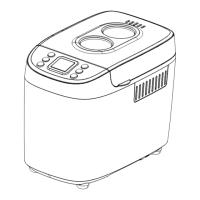
VEVOR BM8902-A Specifications

General IconGeneral
ModelBM8902-A
Power550W
Capacity2LB
DisplayLCD
Crust Color SettingsLight, Medium, Dark
Delay TimerYes
Keep Warm FunctionYes
Voltage120V
MaterialStainless Steel
ColorSilver
Bread TypesFrench, Gluten-Free
Timer15 hours