635
Customer Problem: “Soap cup doesn’t always “open”. Soap doesn’t come out.”
Possible Cause: Determine what wash cycle the customer is using. It is possible
Dishwasher is functioning properly.
Solution: When using the “light” cycle in the dishwasher, detergent
is placed on the bottom of the Inner door, not in the soap cup.
The detergent cup solenoid is not activated during the light cycle.
Customer Problem: “The inside of my door is stained by the soap cup.”
Possible Cause: The customer should refer to the use and care manual for discoloration of
stainless steel. Polishing the stainless steel will bring back the original
luster.
Solution: The customer should try a different brand of detergent. It is not possible
to determine to determine the chemical components which cause this.
Changing the inner door does not remedy the situation and is not covered
by the warranty.
HARDNESS OF WATER
Water has a different “hardness” or mineral content, in different locations. The hardness is
measured in grains per gallon (gpg). Find out your water’s hardness by asking your local water
department, county extension agent or water softening company. Ask how many “grains” of
hardness are in your water.
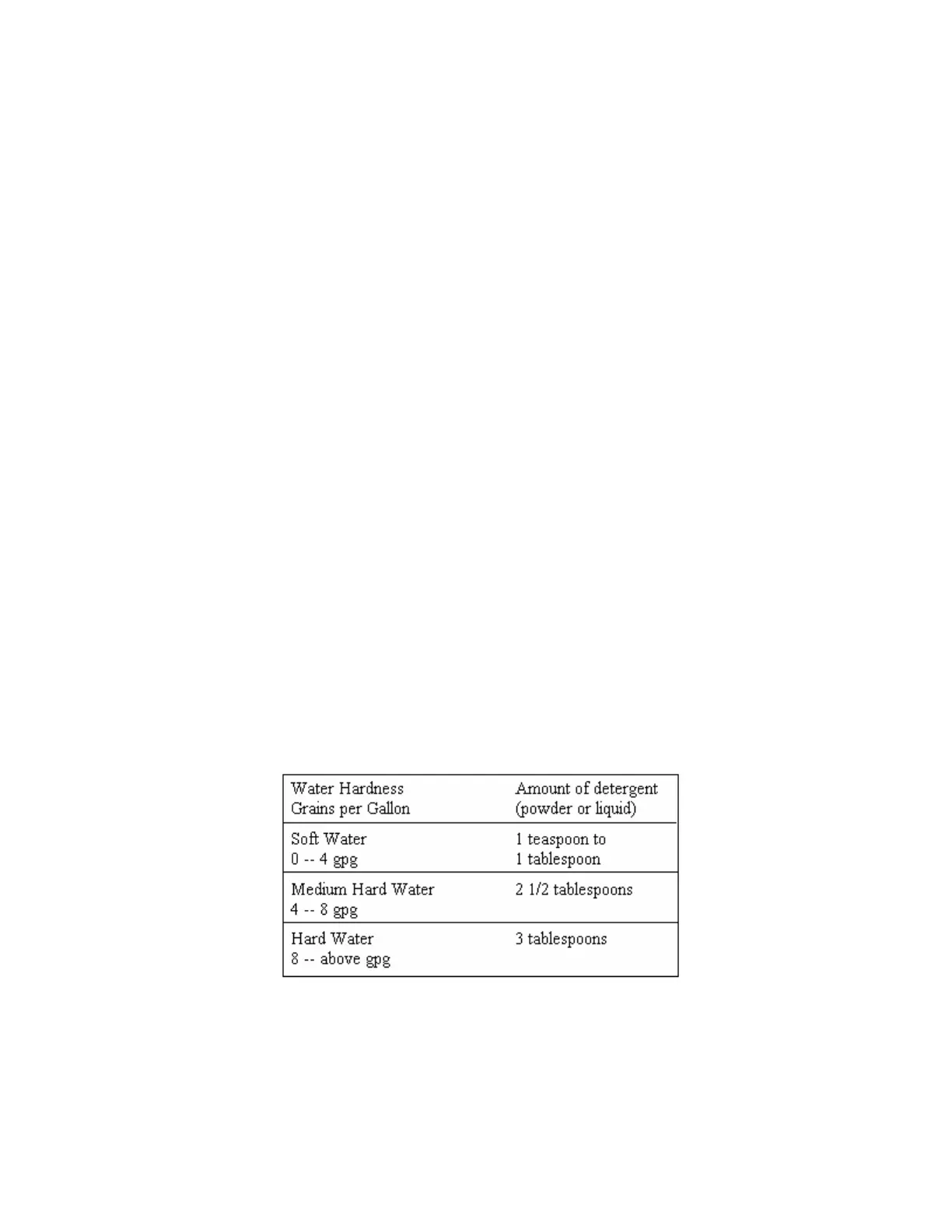
The harder the water is the more detergent you need. For the recommended detergent amounts
to use with your water, follow the guidelines on the chart below. With hard water, you need
more detergent to get dishes clean. With soft water, you need less detergent.
Too much detergent with soft water can cause “etching”, a permanent cloudiness of glassware.
If you have “hard” water, the dishes as well as the dishwasher itself may accumulate a gray
deposit after some time. This deposit can be remedied by using a mild citric acid solution
instead of detergent in the heavy wash program.



 To Next Page