637
Storing the detergent:
For best results, keep your detergent container tightly closed after each use, out of reach of
children and stored in a cool, dry place. Storage under the sink is not advisable for powered
detergents, because this area is generally too warm and moist to keep detergent fresh.
If your detergent gets old or lumpy, throw it away. Old detergent looses its strength and lumpy
detergent may not dissolve.
Rinse Aids
A rinse aid causes water to flow off the dishes quicker, preventing droplets that dry as spots and
making drying performance better. Rinse aids come in solid and liquid forms. Your
dishwasher’s rinse aid dispenser uses the liquid form. For the best results, use a liquid rinse aid
only if you have moderately hard to hard water. Rinse aids used with soft water can cause a
cloudy film on dishes.
Filling the rinse aid dispenser:
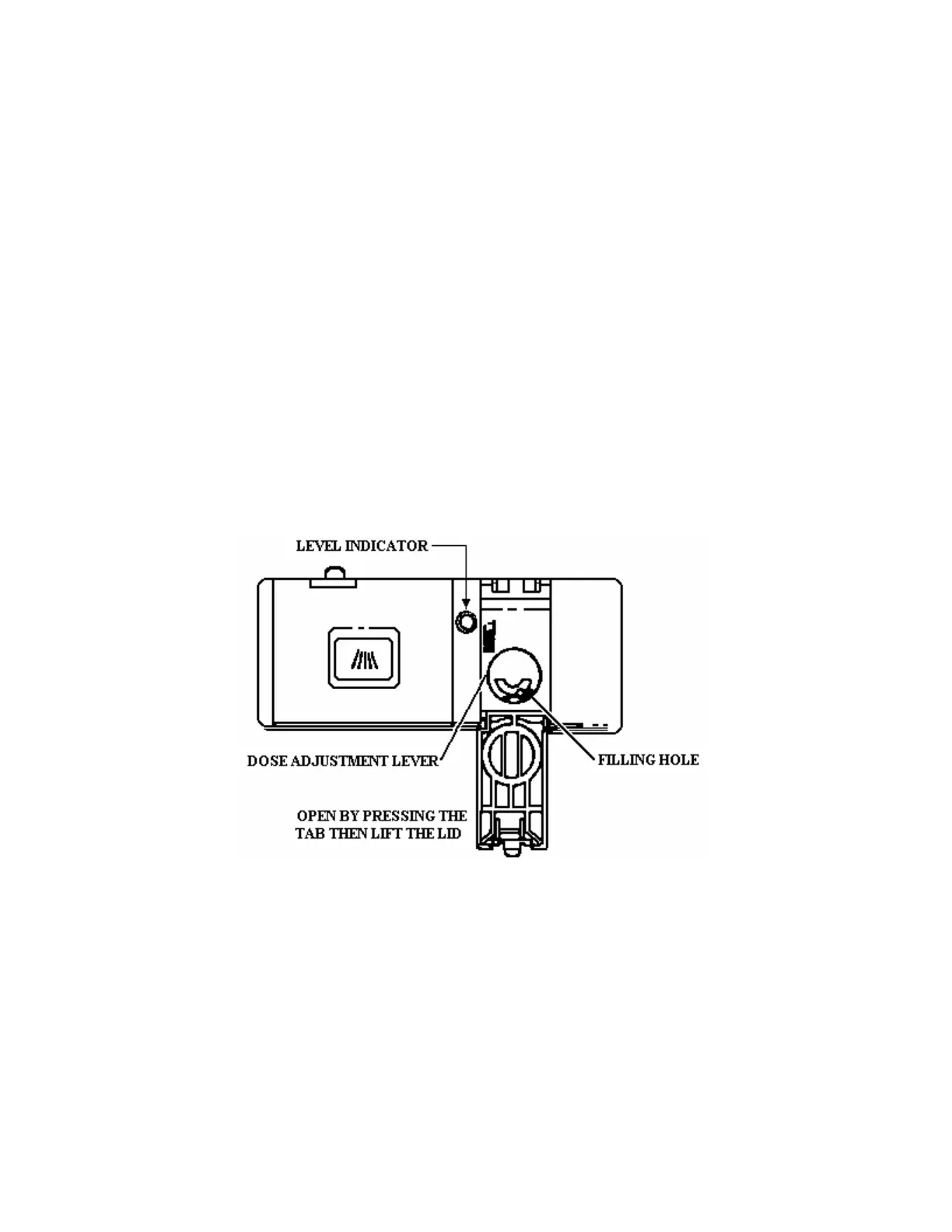
Drying will usually be better if you use a rinse aid. There is a level indicator next to the rinse aid
container which shows whether it is empty of full. If the indicator appears completely black,
there is sufficient rinse aid. If the size of the black spot is reduced, the container requires filling.
Adjusting the dosage of the rinse aid:
The rinse aid dosage is set by the manufacturer and is dispensed automatically into the final
rinse. If necessary, the rinse aid dosage can be adjusted by inserting a screwdriver inside the
filler hole where the adjustment device is set on “1”. However, when using hard water (above 8
gpg) a rinse aid containing citric acid can be used. Under these circumstances the dosage can be
increased by setting the dial to “3” or “4”.
NOTE:
Too much rinse aid is not advisable as this might result in the formation of foam,
especially if the dishwasher is connected to cold water supply.



 To Next Page