
 Need help?
Do you have a question about the Vislink HDX-1100 and is the answer not in the manual?
Guidance on manual usage and key sections.
Details unit capabilities, applications, and frequency band options.
Explains RF exposure limits and provides guidance on MPE calculations.
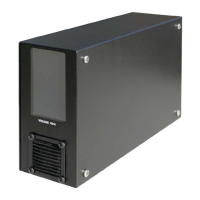
Illustrates and labels the front panel features of the HDX-1100.
Details the various input/output connectors on the rear panel.
Provides dimensions, weight, and details on optional mounting kits.
Describes how to navigate and select presets and RF channels on the touch panel.
Explains how to toggle between high/low power and turn RF output on/off.
Introduces the RCU, its connection, and interaction with the HDX-1100.
Details accessing the unit via PC web browser, including default credentials.
Describes the web browser main screen and the status screen for system information.
Introduces the setup screen for initial programming and preset editing.
Details accessing the General Setup screen and configuration options.
Explains how to view serial numbers and manage license keys for the unit.
Details configuring IP address, subnet, and gateway for network settings.
Guides on setting up text labels and numbers for presets.
Explains modulation settings and their impact on bit rate and transmission quality.
Details configuring video input types, resolution, and audio settings for presets.
Guides on configuring video input and encryption modes, including key management.
Describes how to set up and redefine channel frequencies for the unit.
Steps for recalling preset configurations from a PC via the web interface.
Details operation of the main screen for channel selection and power control.
Step-by-step guide to modifying channel frequencies using the touch panel.
Lists physical dimensions, weight, operating temperature, and environmental limits.
Details the available frequency bands and models for the HDX-1100.
Describes the BNC connectors used for analog and digital video inputs.
Details the 26-pin connector for DC power, control, and data interfaces.
Specifies the Type N female RF output connector and its impedance.
Lists supported modulation standards like DVB-T and RangeMaster.
Details the available encryption types that can be installed in the transmitter.
Explains high and low power modes, impedance, and output protection.
Lists supported audio inputs and various video input formats.
Specifies requirements for SD and HD encoding using H.264/MPEG-4.
Describes touch screen capabilities for configuration, control, and feedback.
Provides contact information for Vislink technical support across different regions.
Details required information for support calls and cautions about field repairs.
Summarizes the FCC channel plan for the 6.5 GHz band, including frequencies and bandwidths.
 General
| Audio Formats | Embedded audio |
|---|---|
| Input Connectors | HD-SDI, SD-SDI |
| Modulation | COFDM |
| Video Formats | 1080i, 720p, 576i, 480i |
| Power Supply | 12V DC |
| Dimensions | 140mm x 89mm x 30mm |
| Frequency Range | 2.70 GHz |
| Operating Temperature | -20°C to +50°C |

 To Next Page
