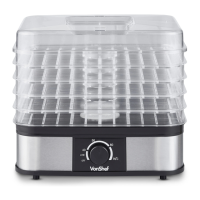
The VonShef 5 Tray Food Dehydrator (Model 2013381) is an appliance designed for preserving food by removing moisture through controlled heat and airflow. This method inhibits bacteria and microorganisms, allowing for extended shelf life without refrigeration. The dehydrator is suitable for health food enthusiasts, preparing snacks for children's lunch boxes, and for camping.
Function Description:
The food dehydrator operates by exposing food to heat and air, which removes moisture. It features five tiered trays where food is placed, ensuring proper air circulation. A ventilated lid covers the trays, and a base unit houses the heating element and a temperature control dial. The appliance is intended for indoor use and must be operated with all five trays in place for proper functioning. It is not designed to be operated by an external timer or separate remote-control system.
Important Technical Specifications:
- Voltage: 220-240V
- Rated Power: 550W
- Rated Frequency: 50/60Hz
- Number of Trays: 5 (additional trays, up to 20, are not supplied but can be used)
- Temperature Control: Dial ranging from LOW 35°C to a maximum of 70°C.
Usage Features:
- Preparation: Before first use, all packaging should be removed. The trays and lid should be washed in warm soapy water, rinsed, and dried thoroughly. The base unit should be wiped with a damp cloth. The base unit must never be submerged in water.
- Food Selection: To achieve a quality dried product, it is crucial to use produce of the highest quality, fresh, and fully ripe. Inferior or spoiled produce will result in a poor dried product. Over-ripened fruits and vegetables may become tough, fibrous, or soft and mushy when dried.
- Fruit Preparation: Fruits should be washed, and peeled if preferred (especially waxed fruits). Seeds should be removed, and bruised/molded fruit discarded. Slice fruit to the desired thickness; thinner slices dry faster. Preheating can prevent discoloration.
- Pretreating Fruits: Acidic solutions (pineapple or lemon juice) can reduce browning. Dip sliced fruit for about 2 minutes. Ascorbic acid (powdered vitamin C) can boost nutritional content; dissolve 3 tablespoons per liter of water and dip fruit for 2 minutes. For fruits with natural wax coatings (figs, grapes, prunes, blueberries, cranberries), dipping them in boiling water for 1-2 minutes makes the skin more porous, speeding up drying.
- Vegetable Preparation: Vegetables should be washed to remove dirt and bacteria, peeled if necessary, and spoiled portions removed. Slice or shred as preferred.
- Pretreating Vegetables (Blanching): Blanching is essential to destroy enzymes that cause bitter flavors.
- Steam Blanching: Preferred method. Steam sliced pieces for 2-3 minutes until heated through but not cooked.
- Microwave Blanching: Use a covered microwaveable container with a small amount of water. Refer to your oven's cooking chart.
- Boiled Blanching: Boil for 3-5 minutes if other methods are unavailable.
- Transfer blanched slices to dehydrator trays as quickly as possible.
- Meat & Fish Preparation: Extra precautions are needed due to susceptibility to bacteria. Wash hands, surfaces, utensils, chopping boards, and crockery before and after handling. Slice meat evenly into ¼ inch thick slices across the grain for tenderness.
- Meat: Use fresh or frozen lean meat for best jerky. Remove excess marbled fat. Season meat slices with salt (1 teaspoon per pound) and refrigerate for 6-12 hours, stirring occasionally. Pat dry before drying. Pork must be well-cooked before drying. Only use pre-cooked and processed ham.
- Fish: Recommended to boil or bake before drying. Bake for around 20 minutes at 204°C and dry for 2-8 hours.
- Poultry: Chicken should be fried or boiled before drying. Drying takes 2-8 hours.
- Loading Trays: Arrange food in tiered trays without overlapping to ensure free air circulation. Never cover the center hole in the trays or the vents on the ventilated lid.
- Assembly: Place trays into the base unit and put the ventilated lid on top. The lid must always be in place during operation. Improperly stacked trays negatively affect drying. It is recommended to use all sections, even if some are empty.
- Operation: Plug into a mains socket. Turn the TEMPERATURE CONTROL DIAL clockwise from 'OFF' to turn on and set the desired temperature.
- Tray Rotation: It is important to rotate trays during dehydration. Trays nearest the bottom receive the hottest, driest air, so rotating them 90° ensures more even drying.
- Drying Times & Temperatures: Recommended temperatures vary by food type:
- Herbs: 35-40°C
- Greens: 40°C
- Bread: 40-50°C
- Yoghurt: 45°C
- Vegetables: 50-55°C
- Fruits: 50-60°C
- Meat/Fish: 65-70°C
- Specific drying times for various fruits, vegetables, and meats are provided in tables within the manual, ranging from 3-4 hours for salmon jerky to 13-34 hours for certain fruits.
- Safety Precautions:
- Do not touch the dehydrator while in operation as it becomes hot. Use oven mitts for hot sections.
- Do not lift or move the dehydrator while in use.
- Do not leave unattended when plugged in.
- Do not operate for more than 40 hours continuously.
- Always allow the unit to cool completely before cleaning.
- Keep hair, loose clothing, fingers, and body parts away from openings and moving parts.
- Ensure the temperature control is set to Minimum before plugging in.
- Do not operate without food inside.
- Do not use oil sprays on trays.
- Do not insert objects into openings or cover the appliance.
- Do not operate with the top vent blocked or closed.
Maintenance Features:
- Cleaning:
- Always disconnect from mains before cleaning.
- Wash trays and lid in warm soapy water with a soft sponge, then rinse and dry thoroughly.
- Wipe the base unit with a slightly damp cloth.
- Never submerge the base unit in water or any other liquid.
- Do not use metal brushes or abrasive cleaners as they can damage the surface.
- Storage: Store in a cool, dry area with all trays securely stacked.
- Troubleshooting:
- No heat or fan: Ensure plugged in and mains socket is working.
- Products drying slowly: Reduce ingredients on trays, rearrange trays, increase temperature and drying time.
- Products drying unevenly: Ensure food is sliced to a similar thickness, rotate trays once or twice during dehydration, remove any food blocking airflow.
- Repair: Do not lubricate any parts or carry out maintenance/repair work other than what is shown in the manual, or as advised by DOMU Brands Customer Care Helpline.
- Disposal: Recycle where facilities exist; check with local authority for advice.
The VonShef 5 Tray Food Dehydrator is a practical appliance for those looking to preserve food naturally and efficiently, offering control over the drying process for various food types.


 To Next Page
 General