7
to the grooves than running a cartridge at a heavy setting. Make sure the damping
fluid is not installed when setting this force.
VERY IMPORTANT: MAKE SURE THE TONEARM IS PARALLEL TO THE PLATTER WHEN
SETTING THE TRACKING FORCE. IF IT IS NOT THE END RESULT WILL BE HIGHER OR
LOWER VTF THAN YOU WANTED.
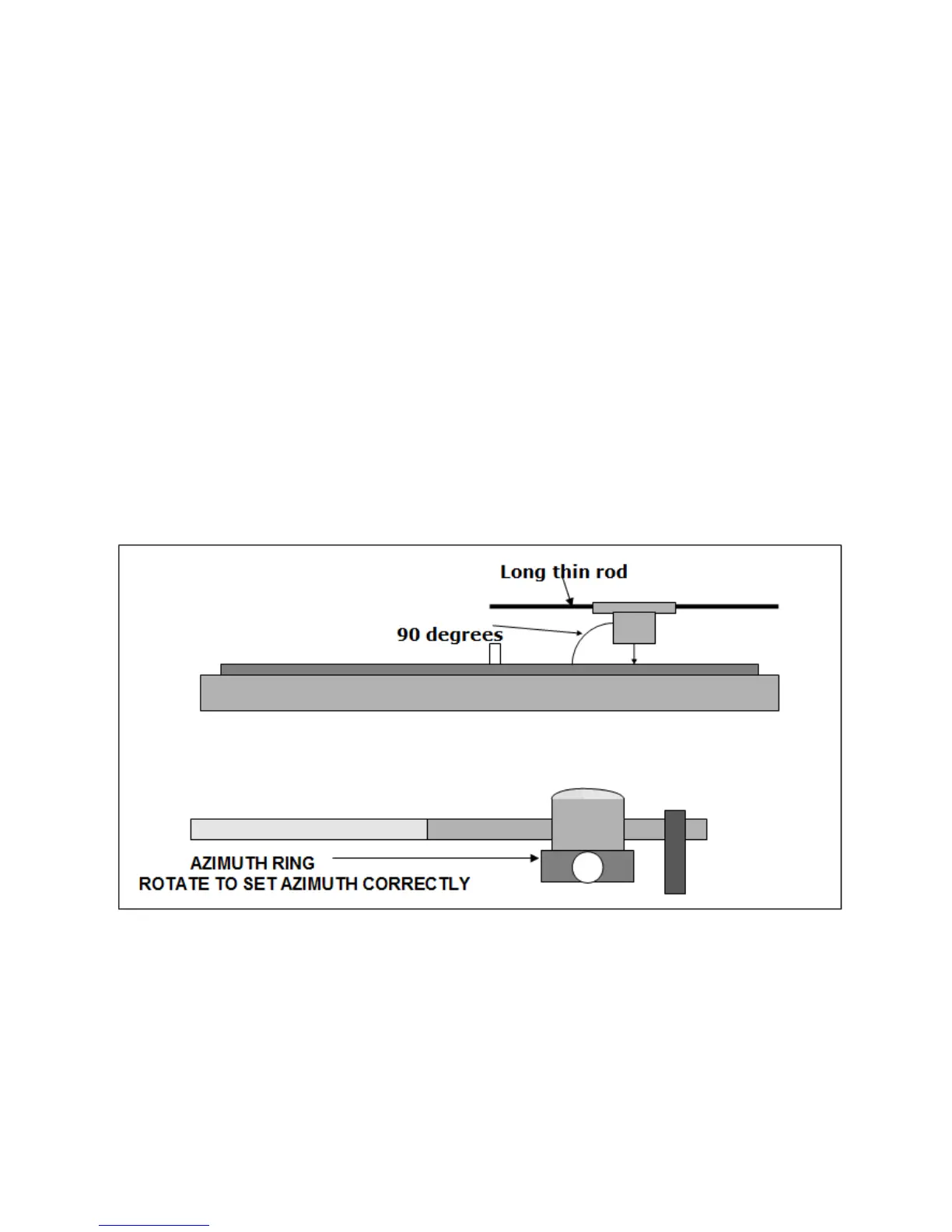
Next, the lateral balance or azimuth must be set. Because the phono cartridge is
offset, there is an unbalancing force that tilts the arm to one side. For the cartridge to
properly track the record groove, the stylus must be ninety degrees to the record
surface. Move the counterweight so a slight tracking force is applied and the stylus
just sits on the record surface.
use the azimuth ring to set correct azimuth. Lay the long thin rod supplied behind the
cartridge mounting screws into the V groove and use it as a guide for setting azimuth.
Rotate the flat part of the ring towards the side that is lower and that side will become
lighter causing it to rise. Playing with this will give very accurate azimuth settings.
Unlike other unipivot arms, the JMW’s lateral balance weight does not hang off to the
side of the arm. Instead, its position around the bottom of the upper bearing housing
places the weight below the pivot point. This increases mass below the pivot and
increases arm stability.
In the rear of the counterweight stub there is a large hole, in this hole is a screw that
is used for fine adjustment of VTF. Use the large wrench supplied for this operation.
Most times you will not need this but it is there if you want to really fine tune. You will
need a digital tracking force gauge to use this feature properly.


 To Next Page