What to do if there is too much oil in the fuel of Wacker Neuson Power Tools?
- SStephanie SandersSep 10, 2025
If there's too much oil in the fuel of your Wacker Neuson Power Tools, drain the fuel tank and refill it with new mixed fuel.

What to do if there is too much oil in the fuel of Wacker Neuson Power Tools?
If there's too much oil in the fuel of your Wacker Neuson Power Tools, drain the fuel tank and refill it with new mixed fuel.
What to do if my Wacker Neuson Power Tool engine does not start or stalls?
If your Wacker Neuson Power Tool engine fails to start or stalls, there are a couple of potential causes. First, check if there is fuel in the tank and fill it if necessary. Also, the spark plug may be fouled, in which case you should clean or replace it.
What to do if Wacker Neuson Power Tool engine overheats?
If your Wacker Neuson Power Tool engine is overheating, it could be due to an improper fuel mix, so adjust the fuel mix. It may also be caused by not enough oil, so add oil. Another possible reason is that you need to clean the cooling fins and fan blades.
Why is the Wacker Neuson Power Tool rammer operation erratic?
If the rammer operation of your Wacker Neuson Power Tool is erratic, it could be due to oil or grease on the clutch, so clean the clutch. Alternatively, you might need to replace broken or worn springs, remove soil buildup on the ramming shoe, replace broken parts in the ramming system or crankcase, or reduce engine operating speed.
What to do if Wacker Neuson Power Tool engine runs but the rammer does not tamp?
If the engine of your Wacker Neuson Power Tool runs but the rammer doesn't tamp, inspect the clutch for damage and replace it if necessary. Also, consider replacing a broken connecting rod or crankgear. Further, check for low engine performance, check for compression loss, or clear a plugged exhaust port.
Why Wacker Neuson Vibratory rammer & tamper engine hard to start?
If your Wacker Neuson vibratory rammer & tamper engine is hard to start, several factors could be the cause. It could be due to dirty air filters, which require cleaning or replacement. Another cause might be too much oil in the fuel, necessitating draining the old fuel and replacing it with a fresh mixture. Fouled or incorrect spark plugs, a dirty muffler or exhaust port, an incorrect fuel mixture adjustment, or low engine compression can also prevent the engine from starting easily. In the case of leaking crankshaft seals or low engine compression, consult the WM 80 Engine Repair Manual or the WM 80, WM 90 or Yanmar Engine Repair Manual respectively.
What to do if Wacker Neuson Power Tool engine runs, but rammer does not tamp?
If the Wacker Neuson Power Tool engine runs but the rammer does not tamp, it could be due to several reasons. Inspect the clutch for damage and replace it if necessary. Another cause may be a broken connecting rod or crankgear, which would need replacing. Finally, low engine performance, compression loss, or a plugged exhaust port can also be the reason. Diagnose and address these engine performance issues.
What to do if the muffler or exhaust port is dirty on Wacker Neuson Power Tools?
If the muffler or exhaust port is dirty on your Wacker Neuson Power Tools, remove and clean the muffler, and clean the exhaust port.
What to do if the spark plugs are fouled in Wacker Neuson Power Tools?
If the spark plugs are fouled in your Wacker Neuson Power Tools, you should clean or replace the spark plug and measure the electrode gap.
Why Wacker Neuson Vibratory rammer & tamper jumps erratically?
If your Wacker Neuson vibratory rammer is jumping erratically, it could be due to oil or grease on the clutch, which requires inspection and cleaning. Another cause might be broken or worn springs in the ramming system, damaged parts in the spring cylinder assembly, or damaged parts in the crankcase assembly; all these issues require disassembling the relevant components, inspecting them, and replacing any damaged parts. Additionally, soil buildup on the ramming shoe or an engine speed that is too low can also cause erratic jumping. Clean the shoe and adjust the engine speed to resolve these issues.
| Impact force/Centrifugal force/Percussion force | 20 kN |
|---|---|
| Base plate/Ramming shoe/Tamping foot width | 280 mm |
| Fuel type | Gasoline |
| Fuel consumption | 0.8 l/h |
| Stroke rate/Impact rate | 700 min-1 |
| Base plate size/Ramming shoe length | 280 mm |
| Fuel tank capacity | 3 l |
Details on obtaining and using the Parts Book, Repair Manual, and other essential documentation.
Information on what users can expect to find in this manual for safe operation and maintenance.
Warning about chemicals known to cause cancer and reproductive harm in California.
Information on complying with local laws regarding spark arresters for engines.
Defines Wacker Neuson's criteria for approved parts, attachments, and modifications.
Explains the meaning of DANGER, WARNING, CAUTION, and NOTICE signals for hazard identification.
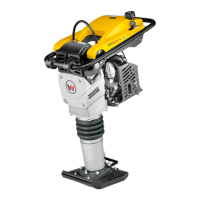
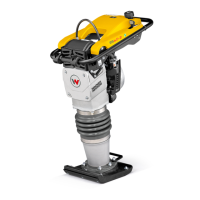
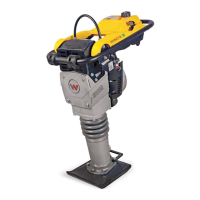
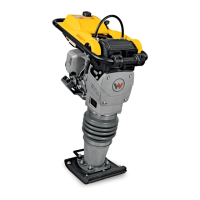
Details the vibratory rammer's components, function, and specifies prohibited uses to prevent damage or injury.
Essential safety rules for operating the rammer, including PPE, general precautions, and prohibitions.
Specific safety precautions for operating the engine, covering fueling, exhaust, and refueling hazards.
Critical safety protocols and requirements for performing maintenance and repair tasks on the rammer.
Guidance on maintaining emission systems and the process for warranty repairs.
A table detailing maintenance tasks and their recommended service intervals for the machine.
Step-by-step instructions for cleaning, inspecting, and replacing the air cleaner components.
Procedures for checking the oil level and performing oil changes for the ramming system.
Torque values and procedures for ensuring the secure fastening of the rammer shoe hardware.
Instructions for setting the correct idle speed for the rammer's engine.
Procedures to follow to prepare the rammer for extended periods of storage to maintain its condition.
Details engine model, speeds, power ratings, and key machine specifications.
Reports the measured sound pressure and power levels according to industry standards.
Provides data on hand-arm vibration measurements and their uncertainties for operator safety.
Lists physical dimensions and item numbers for the BS 60-2 and BS 70-2 models.
Explains EPA regulations concerning exhaust and evaporative emissions for gasoline engines.
Details the warranty period, coverage, and conditions for the rammer's emission control system.
Specifies which components are covered and excluded under the emission control system warranty.
Outlines the owner's obligations for maintenance and presenting the machine for warranty service.
Provides a step-by-step process for initiating and processing claims related to the emission control system.