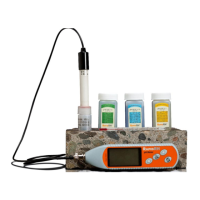
A. A small amount of protective solution is kept in the small bottle holding
the pH electrode’s front-end. This solution is to maintain the
electrode’s glass ball and junction’s sensitivity to the measured
solution. When taking a pH measurement, unscrew the bottle cap,
bring the electrode out, and wash the electrode with pure water (see
4E on page 4). After completing a pH measurement, return the
electrode into the bottle of protective solution and tighten the cap to
prevent spilling of the protective solution during storing.
Note: If the protective solution in the bottle looks muddy or
moldy, replace with new protective solution (see 7B below) to
store the electrode properly.
B. To make the electrode protective solution: Dissolve 25 grams of
Potassium Chloride to 100 ml pure water.
Note: Do not leave the electrode immersed in pure water, protein
solution, or acidic fluoride solution for a long time. Avoid direct
contact between the electrode and organic oil.
C. The pH meter should be kept dry and clean; especially the
temperature meter and electrode outlets. If these elements become
dirty or damp during storage, the pH meter may give inaccurate or
failed pH measurements.
Note: If the pH meter needs cleaning, lint-free absorbent cotton
and ethyl alcohol can be used sparingly.
A. The calibration times should be subject to the actual sampling
solution, electrode capability and precision requirement. High
precision measurement (≤±0.02 pH) requires more frequent
calibration and highly-precise buffer calibration solutions. Normal
precision measurement (≤±0.1 pH) normally requires one calibration
per week. However, we recommend you recalibrate the Rapid RH
®
Portable pH Meter in the following situations:
a. The electrode has not been used for a long time, or needs
replacing;


 To Next Page