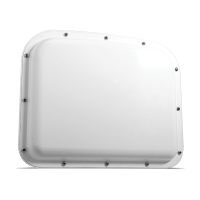
SmartSensor HD
5
SmartSensor HD Bid Specification
1.0 General. is item shall govern the purchase of aboveground radar vehicle sensing devices (RVSD) equivalent to the Wa-
vetronix SmartSensor™ HD.
An RVSD detects vehicles by transmitting electromagnetic radar signals through the air. e signals bounce o vehicles in their
paths and part of the signal is returned to the RVSD. e returned signals are then processed to determine trac parameters.
RVSDs are not aected by normal weather and environmental conditions such as rain, wind, snow, dust, etc. ey also do not
require cleaning and can maintain performance over a wide range of ambient temperatures.
RVSDs provide a non-intrusive means of detecting trac because they can be installed at the side of a roadway. is property not
only makes them safer to install but also more cost eective than sensors that require roadway modications or placement.
2.0 Measured Quantities. e RVSD shall provide volume, average speed, occupancy, classication counts, 85th percentile speed,
average headway, average gap, speed bin counts and direction counts for user-congurable time intervals for up to 22 lanes of
trac.
e RVSD shall provide up to eight length-based classication bins.
e RVSD shall provide up to 15 speed bins.
e RVSD shall provide speed, length, class, lane assignment, and range data for each vehicle detection.
e RVSD shall provide presence data for up to 22 lanes of trac.
3.0 Detectable Area.
3.1 Maximum Lanes. e RVSD shall be able to detect and report information from up to 22 lanes.
3.2 Detection Range. e RVSD shall be able to detect and report information in lanes with boundaries as close as 6 ft.
(1.8 m) from the base of the pole on which the RVSD is mounted.
e RVSD shall be able to detect and report information in lanes located with the far boundary at 250 ft. (76.2 m) from
the base of the pole on which the RVSD is mounted.
e RVSD shall be able to simultaneously detect and report information from a lane located at the minimum oset and
from a lane located at the maximum range.
3.3 Lane Size and Spacing. e RVSD shall allow any spacing of trac lanes positioned from the minimum oset to
the maximum range. Gore and unequally sized or spaced lanes shall be handled so that detections from the lanes meet all
performance specications.
Not all roadways have lanes that lie on evenly spaced intervals. Some roadways have gore, odd-sized medians and unequal lane
sizes. An RVSD should be able to handle all these cases.
3.4 Barrier Performance. e RVSD shall detect vehicles with the specied accuracy in lanes that are adjacent to a barrier
when 50% of a sedan is visible over the barrier from the point of view of the RVSD.
4.0 Performance.
4.1 Volume Accuracy. e volume data shall be within 5% of truth for a direction of travel during nominal conditions. In-
dividual lane volume data shall be within 10% of truth during nominal conditions. e percentage of missed detection and
the percentage of false detections for each lane shall not exceed 15% during nominal conditions. Nominal conditions exist
when average speeds are greater than 10 mph (16 kph) in every lane; when there is less than 20% truck trac per lane; and


 To Next Page
 Loading...