6 www.wavetronix.com
SmartSensor HD
when at least 50 cars per lane are counted in the interval.
e RVSD shall detect a minimum separation of 5.5 ft. (1.67 m) between two vehicles depending on vehicle speed and
range.
4.2 Speed Accuracy. Average speed data shall be accurate to within 3 mph (5 kph) for any direction of travel when there
are more than ve cars per lane in an interval. Average speed data for any individual lane shall be accurate to within 3 mph
(5 kph) when there are more than ve cars per lane in an interval.
e RVSD shall provide per-vehicle speed measurements on 95% of vehicles that are not occluded by other vehicles or by
barriers. e RVSD shall provide per-vehicle speed measurements in which 90% of the measurements are within 5 mph (8
kph).
e RVSD shall measure speed using a dual-radar speed trap that calculates the time delay between two dierent radar
beams.
e dual-radar time delay method of calculating speed produces accurate per-vehicle speeds which enable accurate length measure-
ments, classication, 85th percentile speed measurements and responsive average speed measurements. In contrast, algorithms that
derive the speed from presence measurements or vehicle durations have been shown to produce signicant biases in the speed measure-
ments especially during congestion.
4.3 Occupancy Accuracy. Occupancy data shall be within 10% of truth for any direction of travel on a roadway during
nominal conditions. For example, if the true occupancy in a lane is 20%, then the measured occupancy shall be between
18% and 22%. Individual lane occupancy shall be within 20% during nominal conditions. Nominal conditions exist when
true occupancy is less than 30%, without merging trac; when average speeds are greater then than 10 mph (16 kph) in
every lane; and when there is less than 20% truck trac per lane.
4.4 Classication Accuracy. e RVSD shall correctly determine classication for 80% of detected vehicles when the clas-
sication bins are at least 10 ft. (3 m) wide and occupancy of all lanes is below 30%.
5.0 Performance Maintenance. e RVSD shall not require cleaning or adjustment to maintain performance.
e RVSD shall not rely on battery backup to store conguration information, thus eliminating any need for battery replacement.
Once the RVSD is calibrated, it shall not require recalibration to maintain performance unless the roadway conguration changes.
e RVSD shall be manufactured using techniques that will yeild a mean time between failures of 10 years.
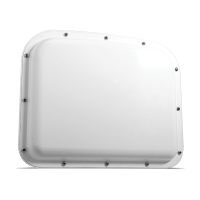
6.0 Physical Properties. e RVSD shall not exceed 5 lbs. (2.3 kg) in weight.
e RVSD shall not exceed 14 in. by 12 in. by 4 in. (35.6 cm x 30.5 cm x 10.2 cm) in its physical dimensions.
All external parts of the RVSD shall be ultraviolet-resistant, corrosion-resistant, and protected from fungus growth and moisture
deterioration.
6.1 Enclosure. e RVSD shall be enclosed in a Lexan polycarbonate.
e enclosure shall be classied “f1” outdoor weatherability in accordance with UL 746C.
e RVSD shall be classied as watertight according to the NEMA 250 standard.
e RVSD enclosure shall conform to test criteria set forth in the NEMA 250 standard for type 4X enclosures. Test results
shall be provided for each of the following type 4X criteria:
• External icing (NEMA 250 clause 5.6)
• Hose-down (NEMA 250 clause 5.7)


 To Next Page
 Loading...