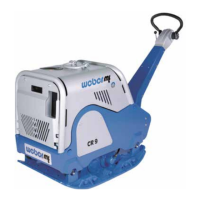
This document serves as the operating and maintenance manual for the SRV 590-II, SRV 620-II, and SRV 660-II soil compactors manufactured by Weber Maschinentechnik GmbH. It is designed to familiarize users with the machine, its intended purpose, and proper maintenance procedures to ensure safe and efficient operation.
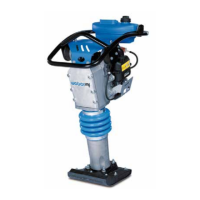
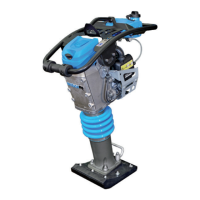
The device is a hand-guided vibrating tamper, powered by an air-cooled Honda gasoline engine. The engine drives the tamping system through a centrifugal clutch, causing it to vibrate. Starting the gasoline engine is done manually using an attached reversing starter. The engine speed can be adjusted between idle and full-throttle via a gas lever, which also integrates a valve to shut off and open the fuel line. The operator's work position is behind the machine, guiding it safely with both hands on the handle.
Function Description:
The primary function of the SRV series soil compactor is to compact various types of soil. It is specifically designed for compacting:
- Sand
- Gravel
- Crushed rock
- Semi-cohesive mixed material
The machine achieves compaction through its vibrating tamping system, driven by the gasoline engine. The centrifugal clutch ensures that the tamping system engages only when the engine reaches a certain speed, providing controlled vibration for effective compaction. The hand-guided nature allows the operator to direct the machine precisely over the area requiring compaction.
Usage Features:
- Hand-Guided Operation: The machine is designed to be guided by an operator walking behind it, using a manual guidance rod. This allows for precise control over the compaction area.
- Engine Speed Control: The gas lever provides control over the engine speed, allowing the operator to switch between idle speed, reduced speed, and full-throttle speed. Full-throttle speed enables the tamper to operate at full power, while reduced speed provides less power. The engine is switched off by setting the gas lever to the "Stop" position, which also closes the fuel line.
- Choke Lever: A choke lever is provided for starting the engine, particularly when cold. It should be slid to the right for starting and then gradually moved to the left after the engine warms up.
- Oil Monitoring System: The engine is equipped with an oil monitoring system, indicated by a red LED on the protective frame. This LED lights up during start-up if the oil level is too low, signaling a need to check and top off the oil to prevent engine damage.
- Transport Roller: The machine is equipped with a transport roller, which can be used to set the tamper down for maintenance or when not in operation.
- Crane Bracket: A crane bracket is integrated for lifting the machine, facilitating loading onto vehicles or other transport.
- Safety Features: The manual emphasizes the importance of wearing personal protective equipment (protective goggles, hearing protection, work shoes/boots with toe guard) during operation and maintenance. It also highlights the need to ensure adequate ventilation when operating in enclosed spaces to prevent suffocation from engine exhausts.
Maintenance Features:
The manual outlines a comprehensive maintenance schedule to ensure the machine's reliability and longevity. Maintenance tasks are categorized by frequency: initial maintenance (after 10 operating hours), every 50 operating hours/every six months, and every 150 operating hours/every year.
Key maintenance operations include:
- Engine Oil Management:
- Checking Engine Oil Level: Regularly check the engine oil level using the dipstick. The level should be between the upper (max) and lower (min) marks.
- Changing Engine Oil: The engine oil should be changed according to the maintenance schedule. This involves warming up the engine, switching it off, unscrewing the oil dipstick, placing a collection vessel under the oil drain, removing the cover cap, screwing on the oil drain hose, draining the oil, attaching the cover cap, filling with fresh oil, and checking the level.
- Fuel System Maintenance:
- Changing Fuel Filter: Both in-line fuel filters (between the tank and engine) must be replaced every 50 operating hours or every six months. This involves draining the fuel tank or catching fuel, pulling off fuel lines, unscrewing the filter, cleaning or replacing it, and reassembling.
- Air Filter Maintenance:
- Cleaning/Changing Main Air Filter: The main air filter insert and fleece should be cleaned by tapping and replaced if damaged or extremely contaminated. This involves unscrewing the air filter cover, removing the insert and fleece, cleaning, and reassembling.
- Cleaning/Changing Secondary Air Filter: The secondary air filter also requires cleaning and replacement if damaged. This involves unscrewing the guard and air filter cover, removing the filter, cleaning, and reassembling.
- Spark Plug Maintenance:
- Adjusting/Replacing Spark Plug: The spark plug should be checked, cleaned, and its electrode air gap measured (0.6-0.7 mm). If necessary, the gap should be corrected, or the spark plug replaced. This requires pulling off the connector and unscrewing the plug.
- Tamping Foot Maintenance:
- Changing Tamping Foot: The tamping foot needs to be replaced when worn. This involves loosening nuts, lifting the tamper off the foot, installing a new foot, and tightening the nuts to a specified torque (35 Nm). Plate springs must be arranged correctly below the nuts.
- Tamping System Oil Change:
- Changing Oil in Tamping System: This involves placing a collection vessel, unscrewing the screw plug from the fill opening, tilting the machine backward to drain waste oil, setting the tamper down, filling with new oil, and screwing in the plug.
- General Inspections: Before starting work, the operator should perform visual inspections for external damage, fuel system leaks, and crack formation in rubber buffers. Compliance with the maintenance schedule and ensuring firm seating of threaded unions are also crucial.
- Storage Procedures: Specific instructions are provided for short-term (construction site) and extended storage. For extended periods, the machine must be thoroughly cleaned, checked for leaks, fuel tank emptied and refilled with clean fuel, engine oil level checked, air and fuel filters checked/cleaned/replaced, and bare parts lightly oiled.
The manual also emphasizes that all maintenance and repairs should be carried out by trained professionals using original Weber MT spare parts to ensure reliability and safety. It also highlights the importance of proper disposal of discharged operating fluids in accordance with environmental protection regulations.

 Need help?
 General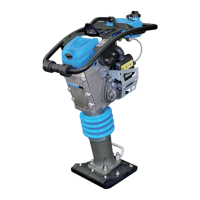

 To Next Page