The DBW03 is a dynamic braking module designed to manage the energy generated by motors driven by inverters during deceleration, thereby reducing braking time and providing faster dynamics. It is an accessory that can be incorporated into an inverter system.
Function Description:
The DBW03 braking module is an inverter intermediate circuit device. It rectifies the AC input voltage from an external power supply or from the inverter bridge, forming IGBTs. The inverter circuit transforms the direct voltage of the DC link into alternate voltage AC. The IGBT (Insulated Gate Bipolar Transistor) is a basic component of the output inverters, working as electronic switches in two modes: saturated (closed switch) and cut off (open switch). Braking IGBTs switch on to turn on the braking resistors, controlled by the DC link level. The module provides Protective Earth (PE). PWM (Pulse Width Modulation) is used for modulation by pulse width, generating pulsed voltage by the output inverter which feeds the motor. Switching Frequency refers to the inverter bridge IGBTs commutation frequency, specified normally in kHz. A heatsink is a metal part designed for dissipating the heat generated by the power semiconductors.
Important Technical Specifications:
The DBW03 braking module has a weight of 15 kg. Its dimensions are 214.5 mm (width) x 492 mm (height) x 317.6 mm (depth).
The module supports various line voltages: 380-480 V and 500-690 V.
For 380-480 V, the rated current is 380 A, and for 500-690 V, it is 250 A.
The braking actuation overvoltage is 800 Vdc for 380-480 V models and 1200 Vdc for 500-690 V models.
Minimum braking resistance is 1.8 Ω for 380-480 V models and 2.6 Ω for 500-690 V models.
Rated effective current on the module is 250 A for 380-480 V and 250 A for 500-690 V.
Peak current is 440 A for 380-480 V and 457 A for 500-690 V.
Dissipated power is 1.00 kW for both voltage ranges.
The module includes digital inputs (CDB), relay outputs (CDB1 Board), and protection features. Inputs include 1 insulated input and 1 thermostat input. Outputs include 2 relays with contacts NC/NO, 240 Vac, 1 A. Protection features include under/overvoltage, overtemperature on the heatsink and braking resistor, overcurrent, and ground fault. The enclosure has an IP00 rating.
The module adheres to safety standards such as UL 840 (insulation coordination), EN61800-5-1 (safety requirements), EN 50178 (electronic equipment for use in power installations), EN 60146 (IEC 146 – semiconductor converters), EN 60529 (degrees of protection provided by enclosures), and UL 50 (enclosures for electrical equipment).
Usage Features:
The DBW03 offers several key features:
- Supply of electronics: Obtained directly from the DC link.
- Digital control: Allows for precise management of braking operations.
- Self-contained operating mode: Can operate autonomously.
- Slave operating mode: Can be integrated into a master-slave system.
- Disabling via external control: Allows for external control to disable the module.
- Braking resistor temperature monitoring: Via a thermostat for safety.
- Ground fault monitoring: Detects and signals ground faults.
- Module status signaling via LEDs: Provides visual indicators of the module's operational status.
- Relay outputs for fault indication: Signals faults to external systems.
- Master/Slave Connection: For parallel operation of braking modules, one module can be configured as master and others as slaves. The master module must have the DIP Switch S2 adjusted to the desired braking actuation level. Slave modules must have the DIP Switch S2 configured in position number 15.
- Start-up Preparation: Involves checking panel connections, short-circuits in the input/DC link, fuses, groundings, and removing excess materials from the braking module or cabinet.
- Start-up: Setting line voltage, desired braking actuation level via DIP switches, measuring line voltage, powering up the inverter, checking LED operation, and verifying fan operation.
Maintenance Features:
Preventive maintenance is crucial for the DBW03. Recommended periodic inspections (every 6 months) include:
- Terminals/Connectors: Check for loose screws and dirty connectors. Tighten loose screws and clean dirty connectors.
- Fans/Cooling System: Inspect for dirty fans, abnormal acoustic noise, and blocked fans. Clean dirty fans, replace noisy fans, and unblock fans. Verify fan connections. It is recommended to replace fans after 50,000 hours of operation.
- Printed Circuit Boards: Check for dust in the cabinet air filter and on the boards. Clean or replace the air filter and clean the boards.
- Power Module/Power Connections: Check for accumulation of dust, oil, humidity, and odor. Clean, replace, or substitute as necessary. Inspect for loose connection screws and tighten them.
- Heatsink: Check for dust accumulation and dirt. Clean the heatsink.
Cleaning Instructions:
- Ventilation System: Disconnect power, wait 10 minutes, remove dust from the cooling air inlet using a soft brush or flannel, and remove dust from the heatsink fins and fan blades using compressed air.
- Electronic Boards: Disconnect power, wait at least 10 minutes, remove dust from the electronic board using an anti-static brush or an ion air gun (Charges Burtes Ion Gun - reference A6030-6DESCO). If necessary, remove the boards of the rectifier. Always wear a ground strap.
Safety Instructions:
The manual emphasizes several safety warnings:
- DANGER! Procedures must be followed to protect the user against death, serious injuries, and considerable material damage.
- ATTENTION! Procedures must be followed to avoid material damage.
- NOTE! Text intends to supply important information for the correct understanding and good operation of the product.
- High voltages are present.
- Components are sensitive to electrostatic discharge; do not touch them.
- Mandatory connection to the protective earth (PE).
- Connection of the shield to the ground.
- Hot surface.
- Only qualified personnel familiar with the DBW03 and associated equipment should plan or implement installation, start-up, and subsequent maintenance.
- Always disconnect the main power supply before touching any electrical component associated with the dynamic braking module.
- Several components may remain charged with high voltage and/or in movement (fans), even after the AC power supply has been disconnected or turned off. Wait at least 10 minutes to guarantee the fully discharge of capacitors.
- Always connect the equipment frame to the ground protection (PE).
- Electronic boards have components sensitive to electrostatic discharges. Do not touch directly on components or connectors. If necessary, touch the grounded metallic frame before or use an adequate grounded wrist strap.
- Do not perform any high pot tests with the dynamic braking module. If it is necessary, consult WEG.
- Read the entire manual before installing or operating this braking module.

 Need help?
 General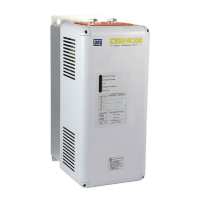

 To Next Page