Modied in accordance with therapy recommendations for emergency medicine 2022
published by the Association of Emergency Physicians of Northern Germany
(Arbeitsgemeinschaft in Norddeutschland tätiger Notärzte e.V. - AGNN).
Indications
• Hypoxemic ARI with respiratory rate > 25/min (count!) and
SpO
2
< 90 % despite O
2
administration; e.g. cardiogenic pulmonary edema.
• Hypercapnic ARI = clinical ventilatory insufciency with high respiratory rate/low
TV; e.g. acute exacerbated COPD (aeCOPD), bronchial asthma.
Contraindications
• Absolute: Absence of spontaneous respiration, gasping, airway obstruction,
gastrointestinal bleeding or ileus, non-hypercapnic coma
• Relative: Hypercapnic coma, high-grade hypoxemia agitation, pronounced
secretion, hemodynamic instability with shock, mask leakages.
Procedure
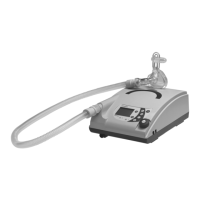
• Ensure logistical requirements: Check oxygen supply: at least a 2-l bottle; lled.
Check and adjust ventilator.
• Monitoring of respiratory rate (count!), SpO
2
, ECG and etCO
2
as soon as NIV
initiated
• Commence NIV with patient semi-seated or seated.
• Slowly adjust the patient’s face mask; the patient can initially hold the mask in
place themselves where possible. The most important aim of the adaptation
phase is the synchronization of the ventilator and the patient.
• If the patient is highly agitated, careful sedation may be helpful and necessary.
A benzodiazepine, opiate or Propofol in a sub-anesthetic dose can be used here.
• In the case of continuing leakage or patient apnea, the device switches to Apnea
ventilation (if activated). This mode can also be selected before connection to
the patient.
SOP
Non-invasive ventilation (NIV)
in the case of acute respirators insufciency (ARI)


 To Next Page
 Loading...