16
Steady Rest
The steady rest serves as a support for shafts on the
free tailstock end. For many operations the tailstock
can not be used as it obstructs the turning tool or
drilling tool, and therefore, must be removed from the
machine. The steady rest, which function as an end
support, ensures chatter-free operation. The steady
rest is mounted on the bedways and is secured from
below with a locking plate. The sliding fingers require
continuous lubrication at the contact points to prevent
premature wear. (Fig.30)
Setting the Steady Rest
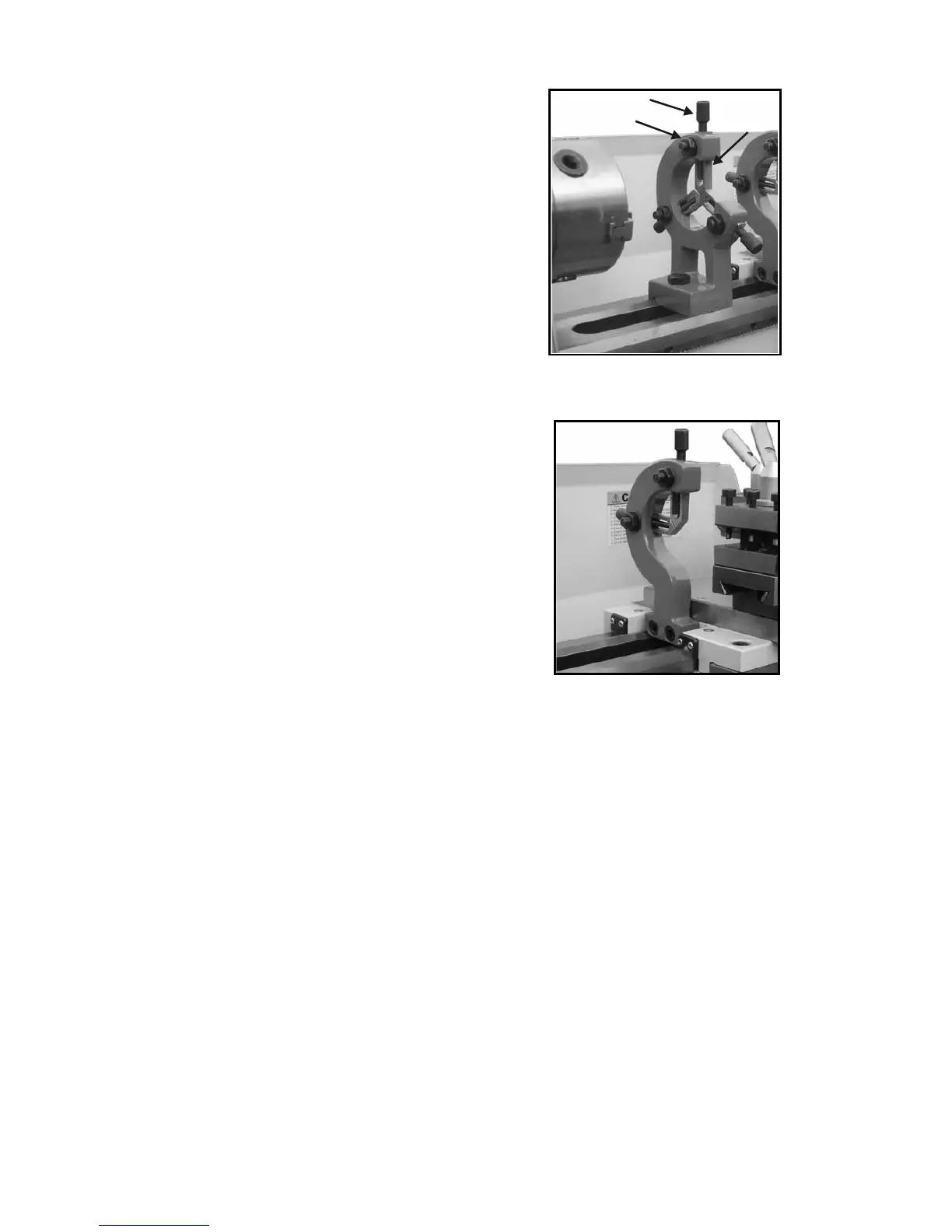
1. Loosen three hex nuts. (A, Fig.31)
2. Loosen knurled screw (B, Fig.36) and open the
sliding fingers. (C, Fig.31) until the steady rest can
be moved with its finger around the workpiece.
Secure the steady rest in position.
3. Tighten knurled screws so that fingers are snug but
not tight against the workpiece. Tighten three nuts
(A, Fig.31). Lubricate the sliding points with machine
oil.
4. When, after prolonged operation, the jaw show
wear, the tips of the fingers may be filed or remilled.
Follow Rest
The follow rest is mounted on the saddle and follow
the movement of the turning tool. Only two sliding
fingers are required. The place of the third finger is
taken by the turning tool. The follow rest is used for
turning operations on long, slender workpieces. It
prevents flexing of the workpiece under pressure from
the turning tool. ( Fig.31 )
Set the fingers snug to the workpiece but not overly
tight. Lubricate the fingers during operation to prevent
premature wear.
Fig. 30
Fig. 31
A
B
C


 To Next Page