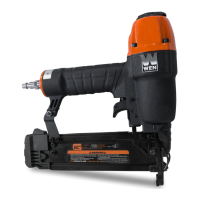
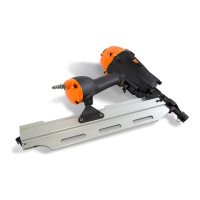
The WEN 18-Gauge 2-Inch Brad Nailer, models 61721 and 61723K, is a pneumatic power tool designed for various fastening tasks, particularly those involving trim installation and light construction projects like building birdhouses. This instruction manual provides comprehensive guidance on the safe operation, assembly, and maintenance of the tool, ensuring years of reliable service when properly cared for and used for its intended purpose.
Function Description
The WEN Brad Nailer is an air-powered fastening tool that drives 18-gauge brad nails into workpieces. It operates by connecting to a compressed air supply, which provides the necessary force to drive fasteners. The tool is designed for precision and efficiency, allowing users to quickly and securely attach materials. Key functional components include a trigger for activation, a depth adjustment wheel for controlling nail penetration, a jam-clearing latch for easy maintenance, and a safety bracket with a no-mar tip to protect the workpiece. The nailer features two driving modes: single-sequential and bump-fire, offering flexibility for different applications and user preferences. The air exhaust cap is adjustable, allowing users to direct the released air away from themselves and the workpiece, enhancing comfort and safety during operation.
Usage Features
Before operating the WEN Brad Nailer, it is crucial to perform initial lubrication. The tool requires 4-5 drops of air tool oil into the air inlet before each use, especially the first time, unless an inline oiler is already in place. This lubrication is vital for the longevity of the tool and to prevent voiding the warranty. After lubricating, the tool should be connected to a properly installed compressed air supply. The working pressure of the air compressor must be regulated between 60 and 100 PSI to match the nailer's operating requirements. It is imperative to ensure the nailer magazine is empty and the tip is pointed away from the user and others when connecting to the air supply to mitigate the risk of misfires. Only clean, dry, and regulated air should be used; bottled gases are strictly prohibited due to explosion risks.
Loading fasteners is a straightforward process. The magazine lock is depressed, and the movable magazine is pulled out. Brad nails, ranging from 3/8" to 2" in length, are then placed into the grooves of the fixed magazine with the nail tips pointing downwards and the nail heads resting against the appropriate groove. The movable magazine is then pushed forward until it clicks shut, ensuring it is securely locked. The nailer has a capacity of up to 100 fasteners. Users should regularly check the fastener gauge window and reload as necessary to avoid dry-firing, which can damage the tool and leave unwanted marks on the workpiece.
The depth adjustment wheel is a key feature for precise operation. Turning the wheel clockwise increases the firing depth, while turning it counterclockwise decreases it. Users are advised to experiment on scrap wood to determine the optimal depth for their specific workpiece, fastener length, and air pressure. The goal is to achieve the desired firing depth with the lowest possible air pressure, which conserves energy, reduces noise, and minimizes wear on the tool.
When firing fasteners, safety is paramount. Users must wear proper eye and hearing protection and maintain alertness and balance. The tool should be held upright on the workpiece, with the no-mar tip positioned where the fastener will be driven. The safety bracket is pressed against the workpiece, and then the trigger is pulled to drive a fastener. In single-sequential mode, the safety bracket must be removed from the workpiece and the tool repositioned before driving the next fastener. In bump-fire mode, the trigger is held, and the safety bracket is repeatedly pressed against the workpiece to drive fasteners in rapid succession. After operation, the air compressor should be turned off and depressurized, the air hose disconnected from the nailer, and all fasteners removed from the magazine.
Clearing jammed fasteners is a critical maintenance task that must be performed safely. First, the tool must be disconnected from the air supply, and all other fasteners removed from the magazine. The jam-clearing latch is then flipped open, and the front plate pulled up to access and remove the jammed fastener, using pliers or another tool if needed. If the piston assembly is in the down position, a screwdriver or rod should be inserted into the nosepiece to push it back into position. After clearing the jam, the front plate is closed, and the latch cover pushed down to secure it, ensuring the trigger and safety bracket move freely without sticking. Finally, the nailer is reconnected to the air supply, fasteners are loaded, and the tool is test-fired into scrap wood to confirm proper operation.
Maintenance Features
Regular maintenance is essential for the WEN Brad Nailer's performance and longevity. Routine lubrication, as described in the usage section, is required before each workday if an inline oiler is not used. This ensures that all moving components, seals, and O-rings remain properly lubricated.
The air compressor, which powers the nailer, also requires regular maintenance. Users should follow the compressor's owner's manual for its maintenance schedule, including checking the air filter and draining the tank weekly. This practice helps prevent water and other contaminants from entering the nailer, which are major causes of pneumatic tool wear.
Cleaning the tool contributes to better and safer performance. The nailer should be wiped clean with a damp towel and mild soap. Compressed air can be used to blow the tool clean, and non-flammable cleaning solutions can be used for the exterior. However, the tool should never be soaked in cleaning solutions, as this can damage internal parts.
Regular inspection of the tool is crucial. Users should check the trigger and safety mechanism to ensure they are complete and functional, with no loose, missing, binding, or sticking parts. Any damaged, inoperable, disconnected, or altered parts, or any air leaks, must be repaired or replaced before further use. All screws should be kept tight, as loose screws can cause personal injury or damage to the tool.
For storage, the nailer and its accessories should be placed inside the blow mold case to protect them from dust and moisture. The unit should be stored in a dark, dry, frost-free, and well-ventilated area, out of reach of children. The ideal storage temperature is between 50 to 86 °F (10 and 30 °C).
When the tool reaches the end of its useful life, it should be disposed of responsibly. Used pneumatic tools contain recyclable materials and should not be discarded with household waste. Users are encouraged to take the product to a local recycling facility to minimize its environmental impact.


 To Next Page
 General