This document provides installation, safety, usage, and maintenance instructions for a built-in oven.
Function Description:
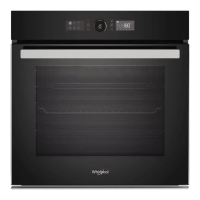
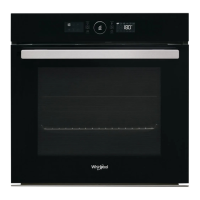
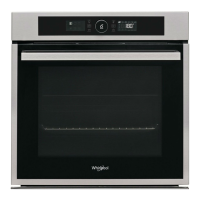
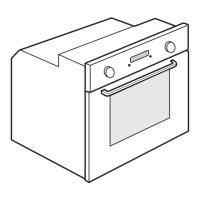
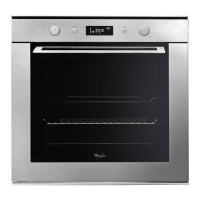
This appliance is a built-in electric oven designed for domestic use, suitable for cooking and baking various foods. It is intended for installation within kitchen cabinetry, either under a worktop or in a tall cabinet. The oven operates by heating elements, and its design includes a door for accessing the cooking cavity.
Important Technical Specifications:
- Dimensions (Oven):
- Width: 540 mm
- Height: 572 mm
- Depth: 538 mm
- Front panel height: 97 mm
- Distance from front panel to rear: 473 mm
- Dimensions (Built-in Niche - Under Worktop):
- Minimum width: 560 mm
- Minimum height: 500 mm
- Minimum depth: 550 mm
- Minimum distance from bottom to front edge: 30 mm
- Minimum distance from rear wall to appliance: 5 mm
- Dimensions (Built-in Niche - Tall Cabinet):
- Minimum width: 560 mm
- Minimum height: 583 + 2 mm
- Minimum depth: 550 mm
- Minimum distance from bottom to front edge: 30 mm
- Minimum height from bottom shelf to appliance: 500 mm
- Electrical Connection: The appliance requires a proper electrical connection, including earthing, and must be disconnected from the power supply before any installation or maintenance. The rating plate, visible when the door is open, provides specific electrical details.
- Temperature Warning: The oven can reach temperatures of up to 90°C, indicating hot surfaces during and after use.
Usage Features:
- Installation Flexibility: Can be installed under a worktop or in a tall cabinet, with specific dimensional requirements for each.
- Safety during Use:
- The appliance and its accessible parts become hot during use; care must be taken to avoid touching heating elements.
- Children (especially those under 8 years old) must be kept away unless continuously supervised.
- Never leave the appliance unattended during food drying.
- If suitable for probe usage, only use the recommended temperature probe.
- Keep flammable materials away from the appliance until it has cooled down completely.
- Exercise caution when cooking foods rich in fat, oil, or with alcoholic beverages due to fire risk.
- Use oven gloves to remove pans and accessories.
- Open the door with caution after cooking to allow hot air/steam to escape gradually, preventing burns.
- Do not obstruct hot air vents at the front of the oven.
- Exercise caution when the oven door is in the open or down position to avoid hitting it.
- Permitted Use: Intended for household and similar applications (staff kitchen areas, farmhouses, hotels, motels, bed & breakfast, other residential environments). Not for professional use, outdoor use, or heating rooms.
- Energy Saving Tips:
- Only preheat the oven if specified in the cooking table or recipe.
- Use dark lacquered or enamelled baking trays as they absorb heat better.
- Food requiring prolonged cooking will continue to cook even after the oven is switched off.
Maintenance Features:
- Cleaning:
- Always switch off and disconnect the appliance from the power supply before cleaning or maintenance.
- Never use steam cleaning equipment.
- Do not use harsh abrasive cleaners or metal scrapers on the door glass to avoid scratching and potential shattering.
- Ensure the appliance is cooled down before any cleaning or maintenance to prevent burns.
- Lamp Replacement: Switch off the appliance before replacing the lamp to avoid electric shock.
- General Maintenance:
- Any repairs or replacement of parts must be carried out by a qualified technician.
- If the supply cord is damaged, it must be replaced with an identical one by the manufacturer, service agent, or similarly qualified persons to avoid electric shock. Contact an authorised service centre for power cable replacement.
Installation Guidelines:
- Handling: The appliance must be handled and installed by two or more persons, using protective gloves to prevent injury and cuts.
- Qualified Technician: Installation, including water supply (if any), electrical connections, and repairs, must be carried out by a qualified technician.
- Unpacking: After unpacking, ensure the appliance is not damaged. Store packaging waste out of reach of children.
- Electrical Safety: Disconnect from power supply before installation. Ensure the power cable is not damaged during installation. Only activate the appliance once installation is complete.
- Cabinet Preparation: Carry out all cabinet cutting operations before fitting the appliance and remove all wood chips and sawdust.
- Clearance: Do not obstruct the minimum gap between the worktop and the upper edge of the oven to prevent burns.
- Polystyrene Base: Do not remove the oven from its polystyrene foam base until installation.
- Accessibility: After installation, the bottom of the appliance must not be accessible to prevent burns.
- Decorative Door: Do not install the appliance behind a decorative door to prevent fire.
- Electrical Connections: The appliance must be earthed according to national electrical safety standards. It must be possible to disconnect the appliance from the power supply (unplugging or via a multi-pole switch). Do not use extension leads, multiple sockets, or adapters. Electrical components must not be accessible after installation. Do not use the appliance if wet, barefoot, or if it has a damaged power cable, plug, or is not working properly.
Disposal:
- Packaging Materials: Packaging materials are 100% recyclable and should be disposed of responsibly in compliance with local authority regulations.
- Household Appliances: The appliance is manufactured with recyclable/reusable materials. Dispose of it according to local waste disposal regulations. It is marked in compliance with European Directive 2012/19/EU (WEEE) and should not be treated as domestic waste but taken to an appropriate collection centre for recycling electrical and electronic equipment.

 Need help?



 To Next Page

 General