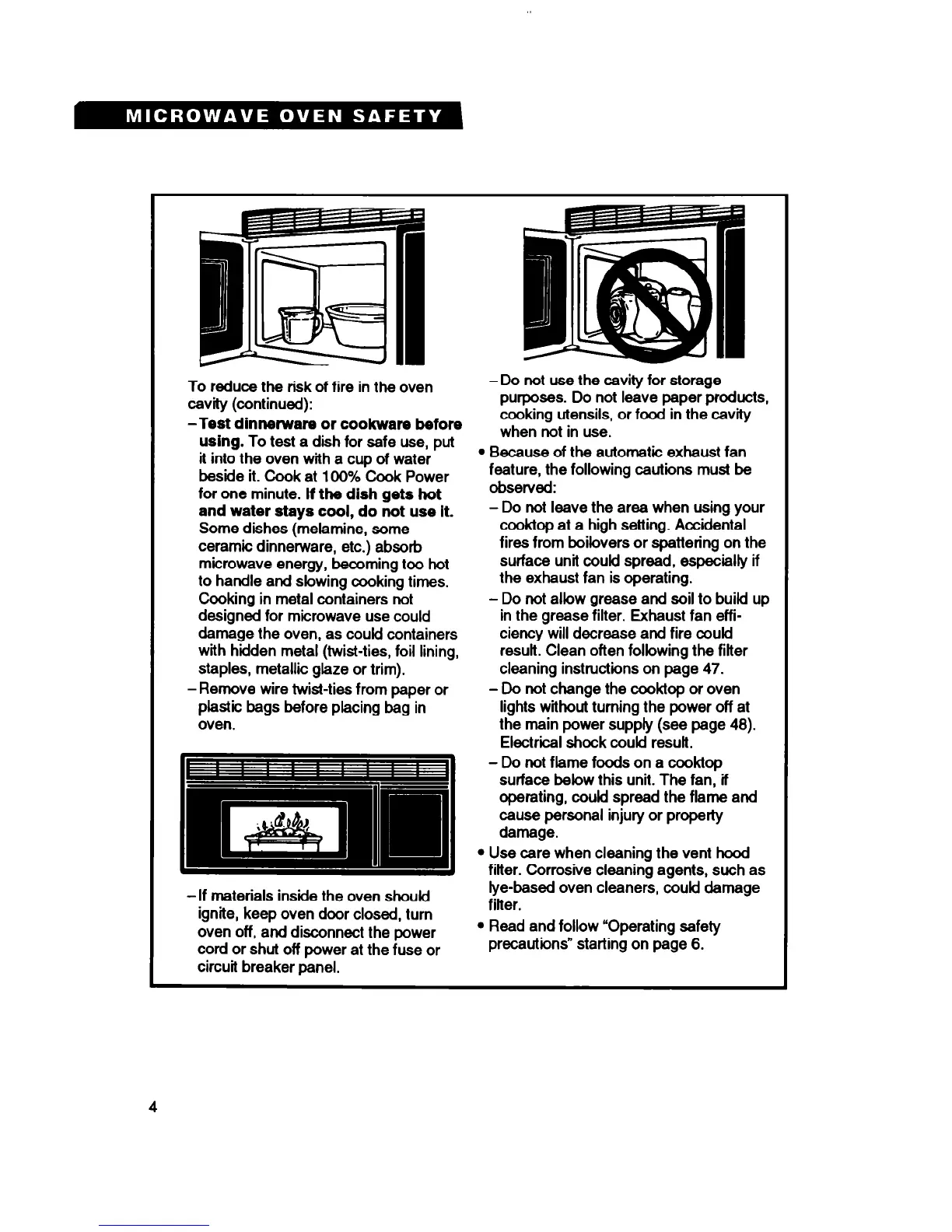
To reduce the risk of fire in the oven
cavity (continued):
-Test dinnemare or cookware before
using.
To test a dish for safe use, put
it into the oven with a cup of water
beside it. Cook at 100% Cook Power
for one minute.
If the dish gets hot
and water stays cool, do not use it.
Borne dishes (melamine, some
ceramic dinnennrare, etc.) absorb
microwave energy, becoming too hot
to handle and slowing cooking times.
Cooking in metal containers not
designed for microwave use could
damage the oven, as co&i containers
with hidden metal (twist-ties, foil lining,
staples, metallic glaze or trim).
- Remove wire twist-ties from paper or
plastic bags before placing bag in
oven.
-If materials inside the oven should
ignite, keep oven door closed, turn
oven off, and disconnect the power
cord or shut off power at the fuse or
circuit breaker panel.
- Do not use the cavity for storage
purposes. Do not leave paper products,
cooking utensils, or food in the cavity
when not in use.
l
Because of the automatic exhaust fan
feature, the following cautions must be
observed:
- Do not leave the area when using your
cooktop at a high setting. Accidental
fires from boilovers or spattering on the
surface unit could spread, especially if
the exhaust fan is operating.
- Do not allow grease and soil to build up
in the grease filter. Exhaust fan effi-
ciency will decrease and fire could
result. Clean often following the filter
cleaning instructions on page 47.
- Do not change the cooktop or oven
lights without turning the power off at
the main power suppfy (see page 48).
Electrical shock could result.
- Do not flame foods on a cooktop
surface below this unit. The fan, if
operating, couM spread the flame and
cause personal injury or property
damage.
l
Use care when cleaning the vent hood
filter. Corrosive cleaning agents, such as
lye-based oven cleaners, coukl damage
filter.
l
Read and follow “Operating safety
precautions” starting on page 6.
4



 To Next Page