
 Need help?
Do you have a question about the Whirlpool WH31BKE and is the answer not in the manual?
Essential safety precautions for operating electrical appliances, including grounding and handling refrigerants.
Instructions for proper grounding to prevent electrical shock, including plug and outlet requirements.
Guidance on safe placement, keeping away from flammable materials to prevent explosions.
Safety warning about the weight of the refrigerator and the need for assistance during installation.
Common causes and solutions for the refrigerator not turning on or functioning.
Diagnosing problems like insufficient cooling, compressor cycling, moisture, and vibration noise.
This document is a comprehensive Use and Care Guide for a Whirlpool refrigerator, specifically models WH31S1E and WH31BKE. It provides essential information for safe operation, installation, maintenance, and troubleshooting, ensuring users can maximize the appliance's performance and longevity.
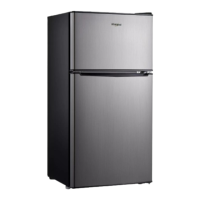
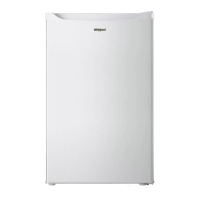
The Whirlpool refrigerator is designed to store food and beverages at cool temperatures, preserving their freshness and extending their shelf life. It features a freezer compartment for frozen items and a main refrigeration compartment for fresh produce, dairy, and other perishables. The appliance allows for manual temperature control, enabling users to adjust cooling levels according to their needs. It is a free-standing unit, not intended for built-in or recessed installation, and is designed for household use.
Installation and Setup: Before initial use, the refrigerator requires a four-hour upright stand to allow refrigerants to settle. It must be plugged into a properly grounded 3-prong outlet to prevent electrical shock. The guide emphasizes the importance of removing all packing materials, including the foam base and adhesive tape, before operation.
Temperature Control: The refrigerator's temperature is controlled manually via a knob. Settings range from "OFF" (no cooling, but power remains on) to "MAX" (coolest temperature). The "MED" setting is generally recommended for optimal performance. Users can adjust the knob towards "MIN" for warmer temperatures if desired.
Food Storage: For best results and to prevent odors or drying, food should be stored in sealed containers. Hot food should be allowed to cool down before being placed inside the refrigerator to avoid increasing the interior temperature and power consumption. Frequent opening of the door is discouraged to minimize power consumption and maintain consistent internal temperatures.
Door Reversal: A notable feature is the ability to reverse the door swing, offering flexibility in placement within a kitchen layout. The guide provides detailed, step-by-step instructions for this process, including removal and reinstallation of hinges, screws, and leveling legs. It cautions against tilting the appliance over 45 degrees during this procedure to prevent damage to the sealed system.
Moving the Refrigerator: When moving the appliance, users are advised to turn it off, unplug it, remove all food, and secure loose items. The door should be taped shut. The guide stresses the importance of using two or more people to move the refrigerator due to its weight, and warns against lifting or pulling by the door or door handle. It also advises against tilting the appliance more than 45 degrees to prevent damage to the sealed system and to avoid strong vibration or impact.
Power Failure and Vacation: In the event of a power failure, the refrigerator is designed to keep food cool for several hours. Users are advised not to add additional food or open the door during this time. For extended vacations, it is recommended to remove all food, turn off and unplug the appliance, clean the interior, and leave the door open to prevent odors.
Cleaning: Regular cleaning is crucial for maintaining hygiene and efficiency. The interior should be cleaned with a mixture of warm water and baking soda (1-2 tablespoons per quart of water), using a sponge or soft cloth. Excess moisture should be wiped away, especially around controls. The exterior can be cleaned with warm water and mild detergent, followed by a rinse and dry with a soft cloth.
Door Gasket Maintenance: The door gasket, which ensures a proper seal, must be kept clean. Regular cleaning of the gasket, using the same method as for the exterior, is recommended to maintain its effectiveness.
Defrosting: Frost build-up in the freezer compartment can increase energy consumption and reduce efficiency. The freezer should be defrosted when frost reaches a thickness of 1/4 inch (0.64 cm). The defrosting process involves removing food and ice cube trays, turning off and unplugging the unit, and allowing several hours for the frost to melt. A drip tray should be placed under the freezer compartment to collect water, and may need to be emptied multiple times. After defrosting, the compartment should be wiped dry. The guide explicitly warns against using sharp or pointed objects to remove frost or ice, as this can damage the compartment walls and cooling coils, voiding the warranty.
Interior Light Replacement: The guide provides instructions for replacing the interior light bulb. This involves moving the lamp cover, rotating the old bulb counterclockwise to remove it, and then replacing it with a new 120 V/10 W screwing light bulb before reinstalling the cover.
Troubleshooting: A dedicated troubleshooting section helps users diagnose and resolve common issues such as the refrigerator not operating, being too warm, the compressor running too long, or moisture/vibration problems. It offers possible causes and corresponding solutions, encouraging users to attempt these steps before seeking professional assistance. This section also highlights normal operating conditions, such as refrigerant flow noise and warm appliance sides due to cooling function.
 General
| Brand | Whirlpool |
|---|---|
| Model | WH31BKE |
| Category | Refrigerator |
| Language | English |


 To Next Page