Keep hearing aids, their parts, accessories and batteries away from chil-
dren and mentally disabled people.
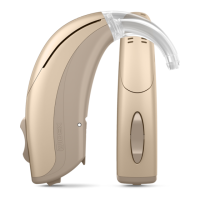
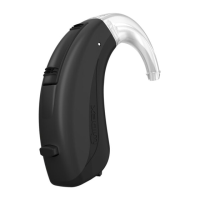
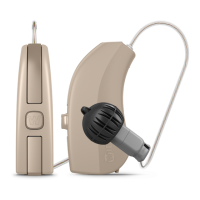
Never try to open or repair the hearing aid yourself. Contact your hearing
care professional if you need to have your hearing aid repaired.
Your hearing aids contain radio communication technology. Always ob-
serve the environment in which you are using them. If any restrictions ap-
ply, you must take precautions to comply with these.
Please note that streaming sound to your hearing aids at a high volume
can prevent you from hearing other important sounds such as alarms
and traffic noise. In such situations make sure to keep the volume of the
streamed sound at a suitable level.
Your hearing aid is very powerful and it can play sounds that exceed a
level of 132 dB. There may therefore be a risk of damaging your remain-
ing hearing.
Do not expose your hearing aids to extreme temperatures or high humid-
ity, and dry them quickly if they get wet, or if you perspire heavily.
Operating conditions
Your hearing aid has been designed to operate in everyday situations, and it
works in environmental conditions that are comfortable for you. You can
wear your hearing aid during flights, but you should remove it before show-
ering or swimming.
The specific operating conditions for your hearing aid are listed below:
Minimum
Maximum
Temperature 0°C (32°F) 50°C (122°F)
9




 To Next Page