EasyManua.ls Logo

WilTec Naturewater NW-BR10B4 - User Manual

WilTec Naturewater NW-BR10B4
3 pages
Print Icon
To Next Page IconTo Next Page
Loading...
Operation Manual
Naturewater 3 Stage Filter
51101 bis 51106, 51116, 51118
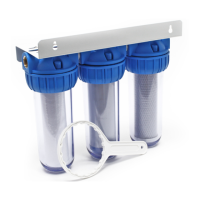
Illustration similar, may vary depending on model
Read and follow the operating instructions and safety information before using for the first time.
Technical changes reserved!
Due to further developments, illustrations, functioning steps and technical data can differ insignificantly.
Updating the documentation
If you have suggestions for improvement or have found any irregularities, please contact us.
Question and Answer IconNeed help?

Do you have a question about the WilTec Naturewater NW-BR10B4 and is the answer not in the manual?

Summary

Introduction and Safety Precautions

Filter System Description

Details the three-stage filter system, including sediment, activated carbon granules, and activated carbon block filters.

Installation and Connection

Instructions for connecting the filter system, ensuring secure positioning, and opening the tap.

Filter Cartridge Replacement

Guidance on replacing used filter inserts and cartridges, recommending replacement every 6 months.

Overview

The Naturewater 3 Stage Filter is a water purification system designed to remove various impurities from drinking water. This manual covers models 51101 to 51106, 51116, and 51118. The system utilizes a multi-stage filtration process to ensure cleaner, safer water.

Function Description:

The Naturewater 3 Stage Filter operates through a sequential filtration process, each stage targeting specific contaminants.

  1. First Stage (5µ Sediment Filter - PP): This initial stage employs a 5-micron sediment filter (PP, likely polypropylene) designed to physically remove larger suspended particles from the water. These particles typically include sand, rust, algae, and other floating debris. This stage acts as a pre-filter, protecting subsequent stages from premature clogging and extending their lifespan.

  2. Second Stage (Activated Carbon Granules Cartridge - UDF): Following the sediment filter, the water passes through an activated carbon granules cartridge (UDF, likely Uniform Distribution Filter or similar granular activated carbon). This stage is crucial for chemical filtration. Activated carbon is highly effective at adsorbing a wide range of organic and inorganic contaminants. Specifically, this filter cleans drinking water from ozone, pesticides, rust (though most larger rust particles should be caught by the first stage, finer particles or dissolved iron can be addressed here), calcium oxide particles, and chlorine. Furthermore, it significantly lowers the concentration of heavy metals such as lead and copper. The granular form of activated carbon provides a large surface area for efficient adsorption.

  3. Third Stage (Activated Carbon Block Filter Cartridge - CTO): The final filtration stage utilizes an activated carbon block filter cartridge (CTO, likely Chlorine, Taste, Odor). This stage provides a more refined level of chemical filtration compared to the granular carbon. The compressed carbon block structure offers a higher density and often a finer filtration capability, ensuring thorough removal of remaining ozone, pesticides, rust, calcium oxide particles, and chlorine. Similar to the second stage, it also contributes to reducing the concentration of heavy metals like lead and copper, acting as a final polish for the water's taste and odor.

The combined action of these three stages ensures comprehensive purification, resulting in water that is free from visible particles, unpleasant tastes and odors, and harmful chemical contaminants.

Important Technical Specifications:

While specific flow rates, pressure ratings, and exact dimensions are not detailed in the provided excerpt, the general design indicates a standard inline water filter system.

  • Filter Types: The system uses three distinct filter types:
    • 5µ Sediment Filter (PP)
    • Activated Carbon Granules Cartridge (UDF)
    • Activated Carbon Block Filter Cartridge (CTO)
  • Connections: The system features inlet and outlet ports, with the manual indicating options for 1/2" (3/4", 1") connections, suggesting flexibility in plumbing integration. The illustration shows standard threaded connections suitable for common household water lines.
  • Housing: The filters are housed in transparent or translucent casings, allowing for visual inspection of the filter condition, particularly the sediment filter. The housings are designed for easy opening and closing to facilitate filter replacement.

Usage Features:

  • Easy Installation: The system is designed for straightforward installation. Users are instructed to connect the feed to the tap, ensuring a secure positioning. The different connection options allow for adaptation to various plumbing setups.
  • Inline Operation: The filter system operates inline, meaning water flows directly from the tap through the filter system before being dispensed. This ensures that all water used for drinking or cooking is filtered.
  • Visual Filter Inspection: The transparent filter housings (as depicted in the illustration) allow users to visually monitor the condition of the filters, particularly the sediment filter, to gauge when replacement might be necessary.
  • Customizable Connections: The ability to choose different connections for the inlet and outlet provides flexibility for the customer to integrate the system into their existing plumbing.

Maintenance Features:

  • Regular Filter Replacement: The most critical maintenance feature is the regular replacement of the filter inserts and cartridges. The manual explicitly states that the sediment and activated carbon filters cannot be washed out and must be replaced.
  • Recommended Replacement Interval: The recommended replacement interval for both the sediment and activated carbon filters is approximately every 6 months. This interval is a general guideline and may vary depending on the local water quality and usage volume.
  • Simple Filter Exchange Process: The process for exchanging filters is designed to be user-friendly:
    1. Open the casing.
    2. Remove the used filter cartridge.
    3. Remove any wrapping from the new cartridge.
    4. Place the new filter cartridge back into the casing.
    5. Close the casing securely.
  • Pre-use Preparation: Before first use, users are instructed to open the casing, remove the filter cartridge, remove its wrapping, and then place it back. This step ensures that the filters are properly prepared for operation.
  • Leak Check: After installation and filter replacement, users are advised to check all connections between the product and connected components to ensure there are no leaks.
  • Flushing: After installation or filter replacement, users should open the tap to allow water to flow through the filter system. This flushes out any air or loose carbon fines from the new filters before consumption.

The Naturewater 3 Stage Filter provides a reliable and user-maintainable solution for improving drinking water quality through its multi-stage filtration design and straightforward maintenance procedures.

WilTec Naturewater NW-BR10B4 Specifications

General IconGeneral
BrandWilTec
ModelNaturewater NW-BR10B4
CategoryWater Filtration Systems
LanguageEnglish

Related product manuals