Need help?
Do you have a question about the Wolo OCEAN ALERT 170-24 and is the answer not in the manual?
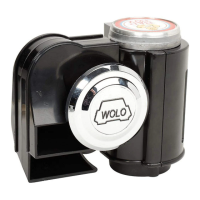
The Wolo OCEAN ALERT® Air Horn is a marine signaling device designed to provide an extra level of protection for boats. It is manufactured with high-quality materials and undergoes rigorous testing to ensure it meets all manufacturing specifications before being packaged. This air horn is intended to complement a boat's existing safety equipment by providing a loud and clear audible signal.
The OCEAN ALERT® Air Horn operates by using a compressor to force air through trumpets, producing a powerful sound. It is designed for use on boats and is specifically engineered to meet marine regulations and standards, including those set by the U.S. Coast Guard, the National Marine Manufacturers Association (NMMA), and the American Boat & Yacht Council (ABYC). The horn's primary function is to alert other vessels or individuals to the presence of the boat, especially in situations requiring immediate attention or to signal intentions as per maritime rules of the road.
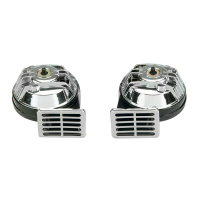
The system comprises several key components: the trumpet assembly, a compressor, a relay, and associated wiring and tubing. The compressor, which is the heart of the system, generates the necessary air pressure. This air is then channeled through plastic tubing to the trumpet assembly, where it is converted into sound. The relay acts as an electrical switch, allowing a low-current signal from a horn button to control the higher current required to power the compressor, thereby protecting the boat's electrical system and horn switch.
The Wolo OCEAN ALERT® Air Horn is designed for straightforward installation, although it requires careful attention to detail and knowledge of marine electrical systems. The horn trumpet should be mounted facing forward, ideally in an unobstructed location, to ensure the sound can carry straight ahead for maximum effectiveness. This forward-facing orientation is particularly important for boats 39 feet or longer, as mandated by the NMMA Certification Program.
For optimal performance and sound quality, the compressor should be mounted in a dry interior location, keeping the hose length connecting it to the trumpet as short as possible, ideally not exceeding 30 inches. This minimizes pressure loss and ensures the horn produces its best sound. The compressor can be mounted vertically with the air outlet on top for efficient operation.
The installation process involves drilling holes for mounting the trumpet and securing the compressor. Users are warned to inspect both sides of selected mounting locations to avoid damaging existing wires, fuel lines, or other components. If wires are routed through drilled holes, it is crucial to de-burr the holes and install rubber grommets to prevent chafing and damage to the wire insulation.
The horn system can be integrated into a boat's electrical system in two primary ways: using a new horn button switch or connecting to the boat's existing factory horn system (two-wire system). When using a new horn button switch, the provided relay is essential for protecting the compressor and ensuring reliable operation. The relay connects the compressor to the battery, with the horn switch activating the relay. For boats with a factory horn system, the supplied relay is mandatory to protect the factory horn button switch and wiring, as the OCEAN ALERT® draws more amperage than a typical factory horn. This ensures the horn works reliably and prevents damage to the boat's original electrical components.
A 15-amp inline fuse is a critical safety feature that must be installed directly to the power source to protect the electrical circuit. This fuse prevents overcurrent situations that could damage the compressor or other electrical components.
The design includes features to ensure a watertight seal at the trumpet mounting location, such as a rubber gasket. Soft rubber strips are also provided for the trumpet support bracket to ensure a tight fit and prevent vibration, contributing to the horn's durability and consistent performance.
While the manual does not explicitly detail routine maintenance, the design choices imply certain aspects that contribute to the horn's longevity and ease of care. The use of durable materials and rigorous testing at the factory suggests a product built for reliability.
The requirement to mount the compressor in a dry interior location is a key maintenance feature, as it protects the electrical and mechanical components of the compressor from the corrosive marine environment, extending its lifespan. Keeping the plastic tubing free of kinks and sharp bends not only ensures optimal sound but also prevents premature wear and tear on the tubing itself.
The inclusion of a rubber gasket for the trumpet mounting and rubber strips for the support bracket helps prevent water ingress and reduces vibration, which are common causes of wear and failure in marine equipment. Regularly checking these seals and connections can help maintain the system's integrity.
The electrical system's protection, through the use of a relay and an inline fuse, is also a form of preventative maintenance. These components safeguard the horn and the boat's electrical system from damage due to electrical faults, reducing the need for repairs.
In the event of a proven defect within twelve months of purchase, Wolo Manufacturing Corporation offers a warranty service. This involves returning the product with proof of purchase and a description of the problem. This warranty covers defects in workmanship and materials, indicating that the product is designed to be repairable or replaceable under specific conditions, further supporting its long-term usability. However, the warranty does not cover damage resulting from neglect, abuse, abnormal use, modifications, faulty installation, or natural causes, emphasizing the importance of proper installation and care as outlined in the manual.
 General
| Voltage | 12V DC |
|---|---|
| Sound Output | 120 dB |
| Sound Level | 120 dB |
| Frequency | 500 Hz |
| Current Draw | 4 Amp |


 To Next Page