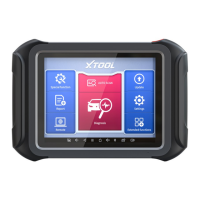
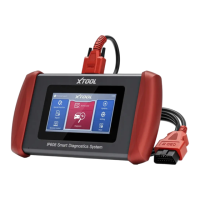
This function allows the device to send information to and receive information from, vehicle control modules. For example,
in the case of OBD II generic information Mode 1 (which relates to data parameters), the scan tool user initiates a request
for information from the powertrain control module (PCM), and the PCM responds by sending the information back to the
scan tool for display. Most enhanced scan tools also can actuate relays, injectors and coils, perform system tests, etc. Users
could check the individual part to see what is working properly by actuation test.
Usually, special functions provide various reset or re-learning functions menus for most vehicle systems. You can easily and
quickly solve some faults through special functions for your car. After some functions are successfully executed, fault codes
will be generated, which need to be cleared manually after the car is running for a little while which could include a single
start of the engine or multiple warm up cycles.
And under each system, you can view the special features supported by that system. Different models and systems often
have different special functions. Even for the same system of the same model, the years and ECU type may lead to different
special functions supported.
The Scan Tool supports a lot of commonly used special reset functions, allowing you to quickly access your vehicle system
for various scheduled services, maintenance, and reset performance. These functions often eliminate the need to reset
codes after resolving common problems. Since XTOOL is continuously developing, the manual may not include all of the
latest special functions that are available for download. This user manual lists some of the commonly used special reset
services for your reference.
Anti-Lock Braking System keeps the tires from locking up immediately when there are brakes. Keeping ABS in good
condition can give full play to the effectiveness of the brakes, shorten the braking time and distance, prevent the vehicle
from skidding and tailing during emergency braking, ensure good driving stability and steering maneuverability, and avoid
violent friction between the tires and the ground to reduce tire wear. When the ABS contains air, the ABS bleeding function
must be performed to bleed the brake system to restore ABS brake sensitivity.
ABS Bleeding can be performed in the following cases:
replace the rear brake distributor pump or the front brake distributor pump. 2.
Severe brake fluid shortage
change the brake fluid
The operation guidelines of the ABS Bleeding function are shown as below:
Read the operating instructions and precautions that appear on the screen carefully before performing the operation
to ensure that the equipment and car are in the correct condition
Attach bleeder bottle to the left rear bleeder screw.
Open the left rear bleeder screw.


 To Next Page
 Loading...