VESDA by Xtralis Introduction to the VESDA System Design Manual
www.xtralis.com 9
4 Introduction to the VESDA System
The VESDA System incorporates a network of pipes, detectors and supporting devices, and a
communications network. It is a versatile modular system that can be designed to meet site specific
requirements. The system can be broadly divided into:
l Pipe Network
l Detectors
l Software
l Communications Network
The System Design Manual also covers topics such as Commissioning, Troubleshooting and Accessories.
4.1 Pipe Network
Each detector is connected to a pipe network. The pipe network collects air samples through sampling holes
from a designated protected area and transports the sample air to the detector. The VESDA Pipe Network
Design Guide and the VESDA Pipe Network Installation Guide explain in detail the design and installation
requirements for an efficient pipe network.
4.2 Detectors
There are four standard detectors:
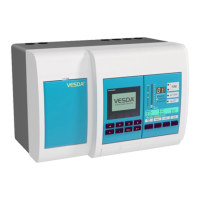
VESDA VLP - The VESDA VLP can be connected to four pipes, each of these can be further branched into
two. For further details, refer to the VESDA VLP Product Guide.
Figure 4-1: VESDA VLP Detector
VESDA VLS - The VESDA VLS can be connected to four pipes that may be further branched into two. The
VESDA VLS can identify the pipe which introduces the smoke and will monitor and report on the progress of
the occurrence for the relevant sector in the protected area. The VESDA VLS has four Alarm Thresholds. For
further details, refer to the VESDA VLS Product Guide.
Figure 4-2: VESDA VLS Detector


 To Next Page