ii 1
THIS PAGE LEFT INTENTIONALLY BLANK
INTRODUCTION
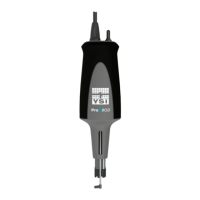
Thank you for purchasing a YSI Optical Biochemical Oxygen Demand
probe (ProOBOD® or IDS ProOBOD). The ProOBOD is designed for
use with a YSI ProODO® instrument. The IDS ProOBOD is designed
for use with a YSI MultiLab IDS instrument. This manual provides
information on the ProOBOD and IDS ProOBOD probes only. For more
detailed instructions on how to operate the ProODO or MultiLab IDS
instrument, please refer to the instrument-specific user manual.
The ProOBOD and IDS ProOBOD are designed to fit in a standard 300
ml BOD bottle as well as other international BOD bottles. YSI offers two
ProOBOD probe versions and one IDS ProOBOD version:
• ProOBOD USA (Japan), YSI item number 626400 - This probe
works with the ProODO instrument. It fits in standard USA
BOD bottles, standard Japanese BOD bottles and many
other international BOD bottles. A power supply for USA and
Japanese style AC outlets is included.
• ProOBOD International, YSI item number 626401 - This
probe works with the ProODO instrument. It fits in standard
USA BOD bottles, standard Japanese BOD bottles and many
other international BOD bottles. A funnel adapter for fitting in
standard UK BOD bottles and a switching power supply with
3 international outlet adapters are also included.
• IDS ProOBOD, YSI item number 626500 - This probe works
with a MultiLab IDS instrument. It fits in standard USA BOD
bottles, standard Japanese BOD bottles and many other
international BOD bottles. The MultiLab IDS instrument
powers the probe’s stir motor so an external power supply is
not required. A funnel adapter for fitting in standard UK BOD
bottles is available for purchase (item # 626473).
The OBOD sensors measure dissolved oxygen in water using lifetime
luminescence technology and uses a digital signal to send information
to the instrument. The probe features a stirrer and motor to aid in
sample movement, to keep solids from settling at the bottom of the
bottle and to quicken the response of the sensor. Key advantages of
the OBOD’s optical technology for DO measurement over traditional
electrochemical methods include the elimination of sensor flow
dependence and sensor warm-up time, greater stability, the ability
to zero the sensor for more accurate measurements at low dissolved


 To Next Page