EasyManua.ls Logo

Yamaha MA190 - User Manual

Yamaha MA190
206 pages
Print Icon
To Next Page IconTo Next Page
Loading...
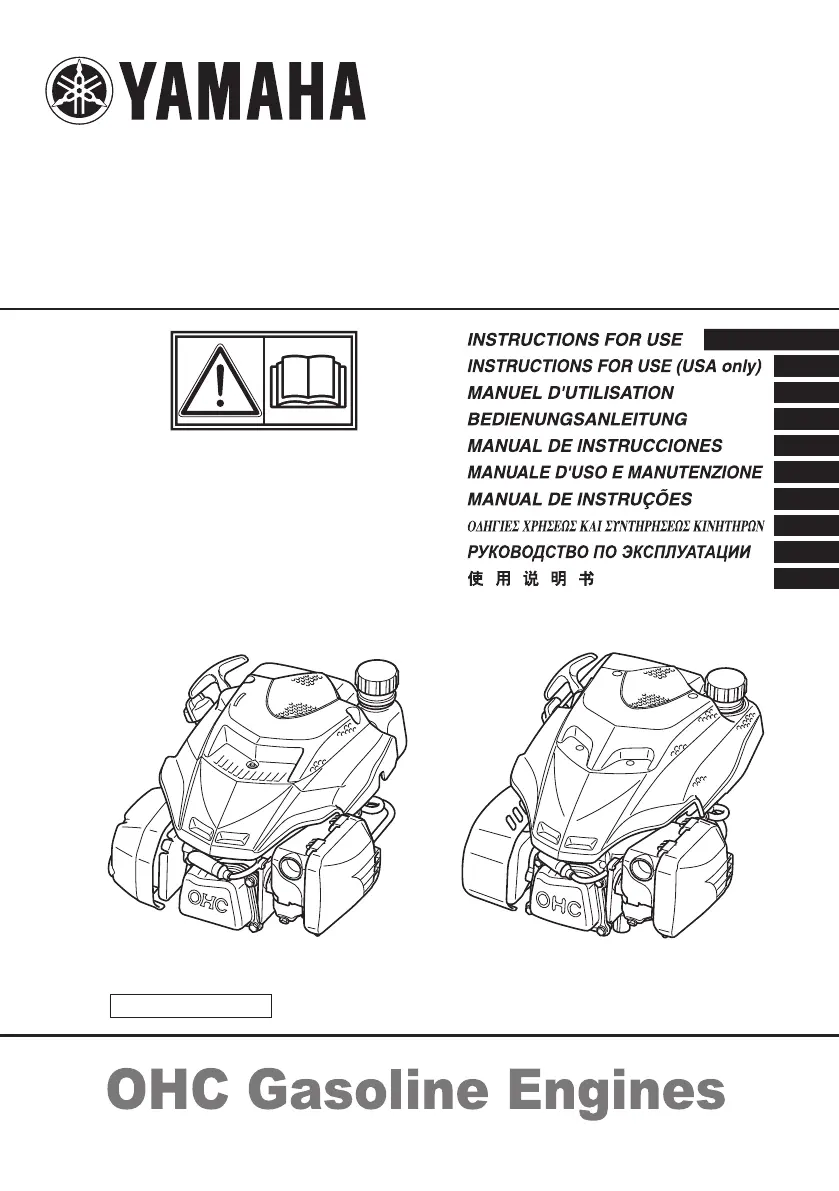
MA175/MA190
MA175 MA190
7EC-F8199-U1
LIT-19626-02-58
Original
EN
US
FR
DE
ES
IT
PT
GR
RU
CN
PRINTED IN CHINA
2017 • 12 × 1
!
7EC-F8199-U1_cover.indd 1-3 2018/01/05 16:14:29

Other manuals for Yamaha MA190

Questions and Answers

  • G
    Gregory WilsonJul 27, 2025
    What to do if Yamaha Engine is unable to ignite?
    • R
      Robert WestJul 28, 2025
      If your Yamaha Engine is unable to ignite, it could be due to an empty fuel tank, a clogged carburetor, a leaking float, or a stuck needle valve. Other possible causes include a punctured or short-circuited spark plug, a dropped-out side electrode of the spark plug, a dropped-out high-tension wire, a punctured or short-circuited ignition coil, a parking wire located on the engine body, or a seriously scored cylinder and dropped-out valve. To fix this, refill fuel, check the fuel line and dredge the carburetor, repair the float, dismantle the float chamber and eliminate the stuck needle valve, replace the spark plug, weld on the high-tension wire, replace the ignition coil, find the meeting and insulate the parking wire, or repair or replace the damaged parts.
  • A
    amy53Aug 1, 2025
    How to troubleshoot Yamaha MA190 that is starting difficult?
    • S
      Sarah JacksonAug 1, 2025
      If your Yamaha Engine is difficult to start, possible causes include a fuel supply issue (not smooth or no fuel), a clogged air vent in the fuel filler cap, an improper or clogged main oil flow hole, or a needle valve problem. Other potential causes are a damaged or sticking float, filthy or deteriorated fuel, water in the fuel, too much fuel in the engine, or the wrong fuel brand. To resolve this, fill fuel and open the fuel cock, dredge the air vent, readjust or clean the main oil flow hole, dismantle and repair the needle valve, repair the float, replace the fuel, drain extra fuel and dry the spark plug electrodes, or select the proper fuel brand.
  • D
    daniellejacobsAug 11, 2025
    Why is my Yamaha MA190 overheat?
    • S
      Sarah SchroederAug 11, 2025
      If your Yamaha Engine is overheating, it could be due to insufficient oil, an incorrect oil ratio in the gasoline, a blocked exhaust pipe, a shroud leak, or cooling fins blocked by foreign matter. Other possible causes include a loose or malfunctioning cooling fan, connection rod deformation, worn cylinder/piston/piston ring, improper adjustment of the engine governor, or a burnt-out crankshaft main bearing. To resolve this, refill engine oil, clean the exhaust pipe, repair the shroud, clear the cooling fins, reinstall the cooling fan, replace the connection rod, replace the worn parts, readjust the engine governor, or replace the main bearing.
  • L
    Lindsey KellyAug 17, 2025
    Why does my Yamaha MA190 Engine make an abnormal sound?
    • S
      Stephen JordanAug 17, 2025
      If your Yamaha Engine is producing abnormal sounds, it could be due to worn piston, piston ring, or cylinder, worn connection rod or piston pin and piston pin hole, or a worn crankshaft main neck. Other potential causes include a broken piston ring, too much carbon deposit in the combusting chamber, too small electrode clearance of the spark plug, too much engine fuel, an improper fuel brand, engine overheating, improper valve clearance, or a loose flywheel connection. To address this, replace the worn part, replace the bearing, replace the piston ring, clear away carbon deposit, adjust the electrode clearance, check relative parts such as carburetor, replace fuel, find a cause and eliminate it, readjust valve clearance, or connect the flywheel tightly.
  • M
    Michael BradshawNov 5, 2025
    Why does my Yamaha Engine have a power lack?
    • C
      Catherine GordonNov 5, 2025
      If your Yamaha Engine lacks power, it might be due to air in the fuel line, a clogged fuel line, or an improperly adjusted main oil flow hole. Other potential causes include clogged needle valve hole and main oil flow hole in the carburetor, a clogged fuel cock, too much carbon fouling in the muffler and exhaust pipe or in the combusting chamber, a clogged air cleaner, a leaking intake pipe, worn piston/cylinder/piston ring, air leakage from the cylinder block, or incorrect valve clearance. To address this, exhaust air or dredge the fuel line, readjust the main oil flow hole, clean the carburetor holes, clean or replace the fuel cock, clear away carbon fouling, clean the air cleaner filter, repair or replace the intake pipe, replace worn parts, replace the cylinder gasket, or readjust the ...
  • J
    Jessica PriceNov 20, 2025
    Why is the speed unstable on my Yamaha MA190?
    • T
      Thomas SharpNov 21, 2025
      If your Yamaha Engine has an unstable speed, it could be due to excessively worn piston, cylinder, or piston ring, or excessively worn piston pin and piston pin hole. Other possible causes include an excessively worn tie rod small head, worn roller bearing for crankshaft main shaft, the engine running too hot, too much carbon deposit in the combustion chamber, improper gasoline brand or low gasoline quality, water in the float chamber, improper spark plug electrodes clearance, or issues with the induced coil. To resolve this, replace the worn parts, replace the piston or piston pin, replace the tie rod, replace the roller bearing, troubleshoot the engine overheating, clear away carbon deposit, replace with qualified gasoline, clean the float chamber, adjust spark plug electrodes clearance,...

Summary

FOREWORD

SAFETY PRECAUTIONS

EXHAUST GASES

Hazards of engine exhaust gases and necessary precautions.

REFUELING PRECAUTIONS

Safety measures during fuel refueling to prevent fire and explosion.

FIRE PREVENTION

Preventing fires when operating near flammable materials.

OTHER SAFETY PRECAUTIONS

General safety practices for hot parts and moving components.

PRE-OPERATION CHECKS

Essential checks to perform before operating the engine.

COMPONENTS

ENGINE COMPONENTS

Identifies and illustrates the main parts of the engine.

PRE-OPERATION CHECKS

CHECK ENGINE OIL

How to check and add engine oil, including capacity.

CHECK FUEL

How to check fuel level and type, including capacity.

OPERATING

TYPE 1: Cable choke control

Operating instructions for cable choke system, covering choking, starting, throttle, and stopping procedures.

TYPE 2: Manual choke

Operating instructions for manual choke system, covering choking, starting, throttle, and stopping procedures.

TYPE 3: Auto choke

Operating instructions for automatic choke system, covering choking, starting, and throttle procedures.

TYPE 4: Primer bulb

Operating instructions for primer bulb system, covering choking, starting, throttle, and stopping procedures.

MAINTENANCE

DAILY INSPECTION

Daily checks for engine condition.

PERIODIC INSPECTION

Periodic maintenance intervals and checks.

INSPECTING THE SPARK PLUG

How to inspect and adjust the spark plug.

ENGINE OIL CHANGE

Procedure for changing the engine oil.

PREPARATIONS FOR STORAGE

DISCHARGE FUEL

Instructions for safely draining fuel for storage.

ENGINE OIL

Guidance on engine oil management before storage.

CLEAN AND STORE

Steps for cleaning and storing the engine properly.

SPARK ARRESTER (OPTIONAL)

Information on the optional spark arrester.

EASY TROUBLESHOOTING

SPARK CHECK

How to check for spark across spark plug electrodes.

COMPRESSION CHECK

How to check for sufficient engine compression.

WET SPARK PLUG

Troubleshooting a spark plug wet with gasoline.

SPECIFICATIONS

Yamaha MA190 Specifications

General IconGeneral
BrandYamaha
ModelMA190
CategoryEngine
LanguageEnglish

Related product manuals