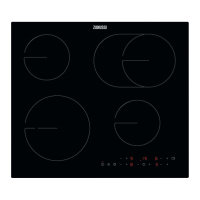
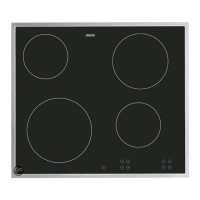
This document is an operating and assembly instruction manual for Zanussi ceramic built-in hobs, specifically models ZK 630 L, ZK 630 LN, ZK 630 LW, and ZK 630 LX. It provides comprehensive information in German, English, and Dutch.
Function Description:
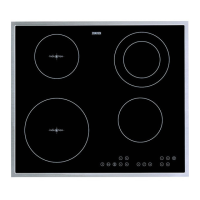
The Zanussi ceramic built-in hobs are designed for cooking and frying food. They feature multiple cooking zones clearly marked on the ceramic surface, which are operated by a corresponding switch box or built-in oven. The hobs utilize ceramic technology, offering a smooth, easy-to-clean surface and efficient heat transfer. Each cooking zone is equipped with a residual heat indicator that lights up when the surface reaches a temperature that could cause burning (above 50°C), remaining lit until the zone has cooled down sufficiently. This feature serves as a safety warning and also allows users to utilize the residual heat for keeping food warm or finishing cooking, thus saving energy. The hobs are designed to accommodate standard-sized saucepans.
Important Technical Specifications:
The manual provides detailed technical specifications for the different models:
- ZK 630 L / ZK 630 LN / ZK 630 LW / ZK 630 LX:
- Hob Dimensions: Length: 572 mm, Width: 502 mm, Height: 43 mm.
- Cutout Dimensions: Length: 560 mm, Width: 490 mm.
- Voltage: 230 V ~ 50 Hz.
- Total Power: 7.6 kW.
- Cooking Zones (specific to the listed models):
- One double-circuit cooking zone: 120/210 mm, 750/2200 W.
- One cooking zone: Ø 145 mm, 1200 W.
- One double-circuit cooking zone: 170 x 265 mm, 1500/2400 W.
- One cooking zone: Ø 180 mm, 1800 W.
- Residual Heat Indicator: Present for each cooking zone.
The manual also includes rating plate information with model type (e.g., KEE2 001), instrument number, serial number, product number (e.g., 949 590 628), and CE mark, indicating conformity with European safety standards.
Usage Features:
- Safety First: Users are strongly advised to read the operating and assembly instructions carefully before first use to ensure personal safety and prevent damage to the appliance.
- Professional Installation: The appliance must be installed by a qualified electrician. Repairs must also be undertaken by qualified electricians only, as improper repairs can cause serious harm.
- Child Safety: Prevent small children from touching the cooktop when in use, as they can burn themselves or pull pans off the hob.
- Pan Placement: Cooking zones heat up quickly; turn them on only after placing a cooking pan onto the area.
- Cooking Equipment:
- Use specially tested cooking pans for ceramic hobs, paying attention to manufacturer declarations.
- Avoid pans with aluminium or copper bottoms as they can cause metallic discolouration.
- Exercise caution with enamel pans and avoid heating empty pans to prevent base damage and scratches.
- Pans should have flat, solid bases without rough edges to prevent scratches.
- Pan diameters should correspond to the cooking zone diameter for optimal energy consumption and cooking time.
- Using a lid prevents heat escape, shortens heating time, and reduces energy consumption.
- Avoiding Damage:
- The ceramic hob surface is resistant to extreme temperatures but avoid dropping objects (e.g., salt shakers) as punctiform impacts can cause fissures and cracks.
- If cracks appear, switch off the hob immediately, disconnect it from the mains, and inform the service department.
- Never leave the hob unattended when cooking with oil and fats due to fire risk.
- Prevent sugar (solid or liquid), plastic, or aluminium foil from getting onto the hot surface. If this occurs, scrape off the remains while the hob is still warm to prevent fissures and cracks upon cooling.
- Troubleshooting (What to do in case of a defect):
- If a cooking zone doesn't heat up, check if the fuse is turned on.
- Buzzing during heating is normal and stops with increasing heat.
- Discolouration of a cooking zone is usually burnt food remains, not a material change, and does not affect function or durability.
- Before calling customer service, ensure correct operation and that the fuse is not blown.
- In case of fissures or cracks, switch off the hob immediately, disconnect from mains, and contact service.
Maintenance Features:
- General Cleaning:
- Never use aggressive detergents, scouring powder, or sponges with abrasive surfaces.
- For slight, not burnt soiling, wipe with a damp cloth without detergents. Detergents can cause discolouring.
- For burnt soiling, use a scraper, then wipe with a damp cloth.
- Stain Removal:
- Light metallic stains (aluminium remains): Remove from cooled cooking zones with a special detergent.
- Calcareous deposits (from overboiling water): Remove with vinegar or a special detergent.
- Sugar, sugar-containing food, plastic objects, or kitchen foil: Do not turn off the cooking zone. Scrape off immediately from the hot zone with a scraper. The zone can be switched off after removal of the soiling and cleaned with a special detergent once cooled.
- Detergent Application: Do not apply detergents on hot cooking zones. Allow the detergent to dry on the surface, then wipe it off with a damp cloth. Remove any cleaning agent remains before reheating to prevent corrosion.
- Product Availability: Mentioned detergents and scrapers are available in supermarkets, electrical shops, drug stores, grocery stores, and kitchen studios.
Zanussi explicitly states that it declines any liability if the appliance is used improperly or if safety measures are not observed. They also state that using hobs other than Zanussi-brand hobs excludes any liability. The manual emphasizes keeping these operating and assembly instructions for future reference.

 Need help?

 To Next Page
 General