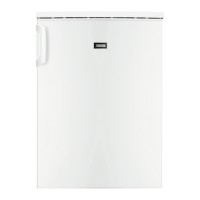
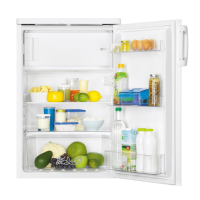
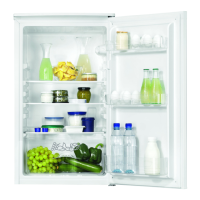
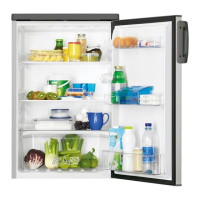
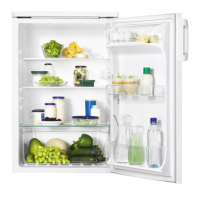
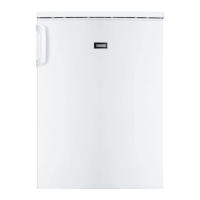
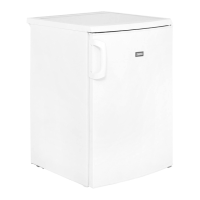
This document is a user manual for a Zanussi refrigerator, model ZRG15805WV, providing comprehensive instructions for its installation, safe use, maintenance, and troubleshooting.
Function Description
The Zanussi ZRG15805WV is a refrigerator designed for household and similar applications, including farmhouses, staff kitchen areas, hotels, motels, and bed and breakfast environments. Its primary function is to store fresh and frozen food, maintaining optimal temperatures to preserve food quality and extend shelf life. The appliance features a freezer compartment suitable for freezing fresh food and storing deep-frozen items for extended periods. It is equipped with a temperature regulator for adjusting the internal temperature, which is automatically regulated.
Usage Features
Installation and Positioning:
The refrigerator should be installed in a dry, well-ventilated indoor area where the ambient temperature aligns with the appliance's climate class (SN, N, ST, T, ranging from +10°C to +43°C). It is crucial to ensure proper air circulation around the back of the cabinet and to install it away from heat sources like radiators or direct sunlight. The appliance comes with rear spacers to facilitate proper positioning and airflow. After initial installation or door reversal, it's recommended to wait at least 4 hours before connecting to the power supply to allow the compressor oil to settle.
Electrical Connection:
The appliance requires earthing and must be connected to a correctly installed shockproof socket. It is essential to ensure that the electrical parameters match the rating plate. Multi-plug adapters and extension cables should not be used. The mains plug should be accessible after installation, and the mains cable must remain below the level of the mains plug.
Temperature Regulation:
The temperature is controlled by a regulator. Turning it clockwise towards lower settings achieves minimum coldness, while higher settings provide maximum coldness. A medium setting is generally recommended. The internal temperature depends on room temperature, door opening frequency, food quantity, and appliance location. Continuous operation at the lowest setting in high ambient temperatures or with a full load can cause frost buildup, necessitating a warmer setting for automatic defrosting and energy saving.
Freezing Fresh Food:
The freezer compartment is designed for freezing fresh food. While the medium setting is usually sufficient, turning the temperature regulator to higher settings can accelerate the freezing process. Caution is advised, as this might drop the refrigerator compartment temperature below 0°C, requiring a reset to a warmer setting.
Storage of Frozen Food:
When starting up or after a period of disuse, the appliance should run for at least 2 hours on higher settings before loading frozen products. In case of accidental defrosting due to power failure, if the power has been off longer than the "rising time" indicated in the technical characteristics, defrosted food should be consumed quickly or cooked and then re-frozen after cooling.
Thawing:
Deep-frozen or frozen food can be thawed in the refrigerator compartment or at room temperature, depending on the available time. Small pieces can be cooked directly from frozen, though this will extend cooking time.
Movable Shelves and Door Shelves:
The refrigerator walls have runners for flexible shelf positioning. The glass shelf above the vegetable drawer should not be moved to ensure proper air circulation. Door shelves can be repositioned to accommodate various package sizes by pulling them out and reinserting them at the desired height.
Hints for Fresh Food Refrigeration:
To optimize performance, avoid storing warm food or evaporating liquids uncovered. Food should be covered or wrapped, especially if it has a strong flavor, and positioned to allow free air circulation. Meat should be wrapped and stored on the glass shelf above the vegetable drawer for 1-2 days. Cooked foods should be covered. Fruits and vegetables should be cleaned and placed in a special drawer, with bananas, potatoes, onions, and garlic stored unpacked outside the refrigerator. Butter and cheese should be in airtight containers or wrapped in foil/polythene. Bottles should be capped and placed on the door bottle shelf.
Hints for Freezing:
To maximize freezing efficiency, adhere to the maximum freezing quantity specified on the rating plate within 24 hours. Freeze only high-quality, fresh, and thoroughly cleaned foodstuffs in small portions. Wrap food in airtight aluminum foil or polythene. Prevent fresh food from touching already frozen food to avoid temperature increases. Lean foods store better and longer, while salt reduces storage life. Water ices can cause freeze burn if consumed immediately. Label packs with freezing dates for storage tracking.
Door Reversibility:
The appliance's door can be reversed. This operation involves unscrewing and reattaching hinges, feet, and the handle on the opposite side. It is recommended to perform this with assistance.
Maintenance Features
General Warnings:
Always unplug the appliance before any maintenance. The cooling unit contains hydrocarbons, so maintenance and recharging must be performed by authorized technicians. Accessories and parts are not dishwasher-safe.
Cleaning the Interior:
Before first use, clean the interior and all accessories with lukewarm water and neutral soap, then dry thoroughly. Avoid detergents, abrasive powders, chlorine, or oil-based cleaners, as they can damage the finish.
Periodic Cleaning:
Regularly clean the appliance's interior and accessories with lukewarm water and neutral soap. Check and wipe door seals to ensure they are clean and free from debris. If accessible, clean the condenser and compressor at the back with a brush to improve performance and save electricity. Avoid pulling or damaging internal pipes/cables and the cooling system during cleaning.
Defrosting the Refrigerator:
Frost is automatically eliminated from the refrigerator evaporator when the compressor stops. Defrost water drains into a special container over the motor compressor, where it evaporates. Periodically clean the defrost water drain hole in the refrigerator compartment channel to prevent overflow onto food.
Defrosting the Freezer:
Defrost the freezer when the frost layer reaches 3-5 mm thickness. About 12 hours before defrosting, set a lower temperature to build up chill reserve. Switch off the appliance or unplug it. Remove stored food, wrap it in newspaper, and place it in a cool area. Do not touch frozen goods with wet hands to avoid freeze burn. Leave the door open. To speed up defrosting, place a pot of warm water in the freezer compartment and remove loose ice pieces. After defrosting, dry the interior thoroughly, switch on the appliance, and reload food after three hours. Never use sharp metal tools or mechanical devices to scrape off frost, as this can damage the evaporator and shorten the safe storage life of frozen food.
Periods of Non-Operation:
For long periods of non-use, disconnect the appliance from electricity, remove all food, defrost and clean the appliance and accessories, and leave the door open to prevent odors. If the appliance must remain on, arrange for someone to check it periodically to prevent food spoilage during power failures.
Replacing the Lamp:
The appliance uses a long-life LED interior light (E14 base). Only original spare parts should be used. Disconnect the plug from the mains socket before replacing. Remove the screw from the lamp cover, detach the cover, replace the lamp with an identical one, reassemble the cover, tighten the screw, reconnect the plug, and ensure the light switches on when the door is opened.


 To Next Page
 General