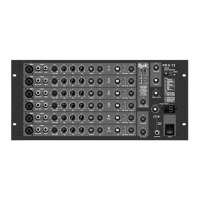
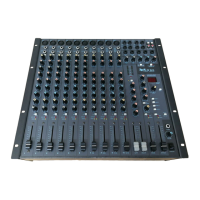
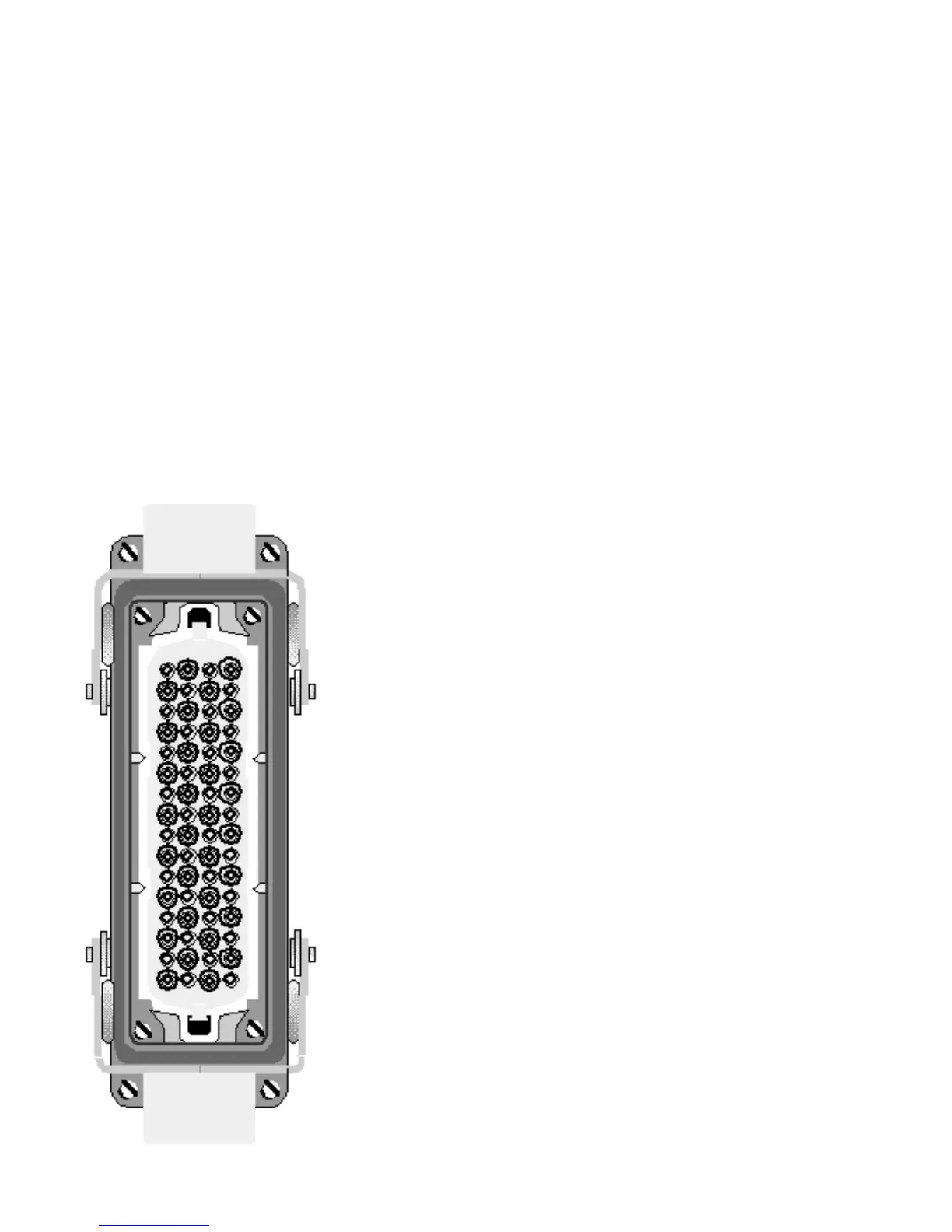
Multipin
Jeder Zeck-Mischer ist mit einem Multi-
pin für entsprechende Multicore-Syste-
me lieferbar. Auch nachträglich läßt sich
jeder Zeck-Mischer relativ einfach mit
einem Multipin nachrüsten. Der Durch-
bruch für die Nachrüstung ist bereits vor-
handen. Nähere Informationen bei Zeck-
Stützpunkthändlern oder bei unseren
Technikern.
Multipin
Every Zeck Mixer can be delivered with
a multipin for compatible multicore sy-
stems. Zeck Mixers can also easily mo-
dified at a later date with multipin. Fur-
ther information can be optained from
Zeck dealers or from our technicians.
Tips zum Anschließen
Eingangsmodul
Der Mic Input (XLR) ist für symmetrische
niederohmige Quellen gedacht, also Mi-
krofone (dynamische/Kondensator) und
niederohmig symmetrierte Instrumente.
Am Line Eingang können unsymmetri-
sche mittelohmige Quellen angeschlos-
sen werden (Synthesizer, Bandgeräte
u.ä.). Bei der Belegung dieser Anschlüs-
se sollte man ganz konsequent sein:
Micros gehören an den XLR, Synthesi-
zer an die Klinken-Buchse oder -besser-
an eine Directbox und von da weiter
über ein symmetrisches Mikrofonkabel
an den Mic Eingang. Falls man Synthe-
sizer oder ähnliche Geräte mit unsym-
metrischem Ausgang an die XLR-Mic-
Buchse anschließt, kann es bei einge-
schalteter Phantomspeisung zu Proble-
men kommen: der Ausgang des Synthe-
sizers wird dann u.U. mit Gleichstrom
belastet und es stellt sich ein lautes
Brummen ein. Deshalb: Synthesizer
gehören an den Line Eingang oder nur
über die DI-Box an den Mic Input. Di-
rektboxen (DI-Box) haben einen einge-
bauten Transformator und wandeln das
unsymmetrisch mittelohmige Synthesi-
zer-Signal in ein symmetrisch niederoh-
miges Signal um.
Mastermodul
Die XLR-Ausgänge des Zeck-Mixers
sind symmetrisch. Dies hat den Vorteil,
daß das Zeck-System Mixer-Endstufe
bzw. Mixer-Aktivweiche-Endstufe konse-
quent symmetrisch ausgeführt ist. Hier-
durch werden Erdschleifen-Probleme
ausgangsseitig unterbunden. Zu beach-
ten ist, daß bei Belegung der XLR-Aus-
gangsbuchsen und Verbindung zu sym-
metrischen Endstufen die Ausgangs-
spannung des Mixers um 6 dB angeho-
ben wird. Um diese 6 dB wird dann die
Empfindlichkeit des gesamten Systems
erhöht und dadurch der Geräuschspan-
nungsabstand verändert. Es kann je
nach Eingangsempfindlichkeit der End-
stufe zu Master-Rauschen kommen.
Man muß dann einfach den Level-Reg-
ler an der Endstufe um diese 6 dB
zurücknehmen, um die Empfindlichkeits-
erhöhung wieder auszugleichen.
Phantomspeisung
Die Phantomspeisung wirkt auf die XLR-
Buchsen der Eingangskanäle 1–8. Bei
symmetrischem Anschluß aller Mikros
gibt es hier keine Probleme. Sollte je-
doch ein Synthesizer unsymmetrisch an
der XLR-Mic-Buschse angeschlossen
sein, kann es in diesem Fall zu einem
Brummen kommen. Deshalb für Key-
boards, E-Drums, Drum-Computer u.ä.
gilt: Entweder am Line-Eingang mit Klin-
kenstecker anschließen oder -besser-
über eine DI-Box symmetrisch am Mic-
Eingang.
Tips for connection
Input module
The mic input (XLR) was designed for
balanced, low ohm sources such as
microphones (dynamic and condenser)
and balanced, low ohm instruments. Un-
balanced, medium ohm sources (syn-
thesizer, tape deck etc.) can be connec-
ted to the line input. One should be con-
sistent with these connections: micro-
phones to XLR, synthesizers to the
jacks or better still, through a DI-Box,
over a balanced cable to the Mix input.
If one connects synthesizers or other, si-
milar equipment with unbalanced out-
puts to the XLR Mic socket, problems
can arise when the phantom is switched
on the synthesizer output could become
charget with direct current producing a
loud buzz. This is why synthesizer
should only be connected to the line
input or, only with a DI-Box with a balan-
ced cable, to the Mix input. DI-Boxes
have built-in transformers which convert
the unbalanced, medium ohm synthesi-
zer signal into a balanced, low ohm sig-
nal.
Master module
The XLR outputs on the Zeck Mixer are
balanced. This is of advantage as the
whole Zeck System (mixer-power amp,
or mixer-active crossover-power amp)
has balanced connections which pre-
vents ground looping problems. It
should be noted that the output of the
mixer is raised by 6 dB when the XLR-
output sockets are connected to balan-
ced power amps. The sensitivity of the
whole system is then increased by these
6 dB which deteriorates the signal to
noise ratio. Depending on the input sen-
sitivity of the power amp, a masterhis-
sing can occur. This can be eliminated
simply by taking the power amp level
control down by 6 dB.
Phantom Power
Phantom Power works on all XLR
sockets in the input channels. This cau-
ses no problems when all microphone
connections are balanced. If, for exam-
ple, a synthesizer makes an unbalanced
connection to the XLR mike socket, buz-
zing can occur. For this reason keybo-
ard, electric drums, drum computer etc.
should be connected to the line input
with jacks or, better still, through a DI-
Box and balanced cable to the mike
input. This is an absolute must when
multicore is being used!
26



 To Next Page
 Loading...