EasyManua.ls Logo

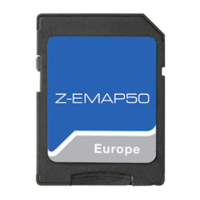
ZENEC Z-EMAP50 - User Manual

ZENEC Z-EMAP50
80 pages
Print Icon
To Next Page IconTo Next Page
Loading...
ESSENTIAL II
NAVIGATION USER MANUAL
EN
Z-EMAP50

Table of Contents

Question and Answer IconNeed help?

Do you have a question about the ZENEC Z-EMAP50 and is the answer not in the manual?

Summary

1 Getting Started

1.1 Initial Set-up Process

Guides through initial setup, language, voice, units, and route preferences.

1.2 Screen Controls

1.2.1 Using Buttons and Controls

Explains operation via touch screen buttons, icons, lists, switches, and sliders.

Virtual Keyboard and Cursor Use

Details on using the virtual keyboard and selecting map locations with the cursor.

1.2.3 Keyboard Operations

Instructions for typing with screen keyboards, changing layouts, and correcting entries.

1.2.4 Touch Gestures and 1.2.5 Map Manipulation

Using gestures like tapping, holding, dragging, and manipulating the map view.

1.3 Navigation View

Navigation View Layout and Elements

Overview of screen elements like buttons, data fields, and route information during navigation.

1.3 Navigation View Element Details

Detailed explanation of navigation view components like markers, previews, and signposts.

1.3.1 Streets & Roads and 1.3.2 GPS Markers

Display of streets and explanation of GPS position markers on the map.

1.3.3 Turn Preview & Next Street

Information about manoeuvres, street names, and how the planned route is displayed.

1.3.4 Planned Route Display

How the navigated route is shown on the map, including points and colour.

1.3.5 Manoeuvre Icons

Table of intuitive icons representing various navigation manoeuvres like turns and roundabouts.

1.3.6 Lane Information and 1.3.7 Signposts

Display of lane guidance and road sign information in the navigation view.

1.3.8 Junction View, 1.3.9 Motorway Services, 1.3.10 3 D Objects

Features for junctions, motorway services, and 3D map elements like terrain and buildings.

1.3.11 Traffic Events Display

Showing road segments affected by traffic events and relevant icons on the map.

1.4 Navigation Menu

Navigation Menu Options (No Route)

Menu options for starting new routes, checking traffic, and accessing settings without a planned route.

Navigation Menu Options (With Route)

Additional menu options available when a route is planned, such as Add Waypoint and Route Summary.

2 Warnings and Safety Information

General Driving Safety Recommendations

Important safety advice for using the navigation system while operating a vehicle.

3 Using the Navigation

3.1 Destination Selection Overview

Introduction to route calculation and the various methods for selecting a destination.

3.1.1 Combined Search Functionality

Step-by-step guide on using the combined search to find destinations efficiently.

3.1.2 Selecting an Address

Guide to entering address details like country, town, and street for destination selection.

3.1.2.1 Address Entry and 3.1.2.2 Town Centre

Entering addresses, confirming locations, and selecting a town centre as a destination.

3.1.2.3 Selecting the Midpoint of a Street

Navigating to the midpoint of a street without needing a house number.

3.1.2.4 Selecting an Intersection in a Town

Steps for selecting an intersection as a destination by entering street names.

3.1.2.5 Postcode Destination Selection

Using a postcode to select a destination instead of a city name.

3.1.3 Selecting a Place of Interest

Overview of searching for Points of Interest using menu options and quick search categories.

3.1.3.2 Searching for Places by Category

Searching for Places by category, subcategory, and selecting search areas (Around Here, Along Route).

3.1.3.3 Searching for Places by Name

Searching for Places by name using the keyboard and selecting search areas.

3.1.4 Selecting a Saved Location

Selecting a previously saved location as a destination from the list.

Saved Locations and History Items

Saving locations, adding home/work addresses, and selecting destinations from history.

3.1.6 Saved Routes and 3.1.7 Entering Coordinates

Selecting saved routes and entering coordinates for destination selection.

3.1.8 Selecting Location on Map and 3.1.9 Multipoint Route

Selecting destinations directly from the map and planning routes with multiple destinations.

3.2 Checking Route Information and Alternatives

Route Summary and Alternatives

Viewing route length, time, detailed information, and available route alternatives.

3.3 Checking Traffic Events

Checking traffic summaries and displaying real-time traffic information on the map.

3.4 Editing the Route

3.4.1 Setting a New Starting Point

Changing the starting point of a route to a location other than the current GPS position.

3.4.2 Adding an Additional Destination

Adding an intermediate destination to an existing planned route.

3.4.3 Modifying the List of Destinations

Editing routes by moving, saving, or deleting intermediate destinations from the list.

3.4.4 Saving and 3.4.5 Deleting Planned Routes

Saving the current route and options for deleting the planned route or waypoints.

3.4.6 Selecting Route Alternatives During Planning

Selecting route alternatives or changing planning methods while planning a route.

3.4.7 Selecting Route Alternatives for Existing Route

Recalculating routes with different planning methods and comparing alternatives.

3.4.8 Setting a Detour

Setting up detours to avoid specific road sections or the road ahead.

Detour Options and Pausing Guidance

Avoiding sections, roads, or the road ahead, and pausing/resuming navigation guidance.

3.5 Saving a Location

Saving Locations and Adding Home;Work

Saving locations, adding home/work addresses, and renaming saved locations.

3.5.1 Editing Saved Locations

Editing saved locations, including renaming or deleting entries.

3.6 Running a Simulation

Route Simulation and Controls

Running a simulated navigation and using its controls for playback.

3.7 Off-road Navigation

3.7.1 Switching to Off-Road Mode

Steps to switch the navigation mode from on-road to off-road.

Off-road Navigation Features and Limitations

Limitations and characteristics of off-road navigation, including destination selection and navigation.

4 Reference Guide

4.1 Concepts

Explanation of GPS reception accuracy and types of voice guidance (Natural vs. TTS).

4.1.3 Route Calculation & Recalculation

How routes are calculated, recalculated based on traffic, and deviations.

4.1.4 Smart Zoom and 4.1.5 Speed Limit Warning

Smart Zoom features and how the device warns about exceeding speed limits.

4.1.6 Real-time Traffic and 4.1.7 Intelligent Navigation

Real-time traffic information benefits and intelligent navigation features.

4.1.7.1 Congestion Detour on Highways

How the system offers detours on highways due to traffic jams and their details.

4.1.7.2 Alternative Routes, Parking & Detour Hints

Alternative routes, parking suggestions, and detour hints for better navigation.

4.2 Useful Information Menu

Useful Information Menu Functions Overview

Introduction to menu functions like Where Am I, Help Nearby, and Trip Monitor.

4.2.1 Where Am I Function

Displaying current position details, saving locations, and searching for nearby assistance.

4.2.2 Trip Monitor and 4.3 Settings Menu

Using the Trip Monitor to log routes and accessing the main Settings menu.

Settings Menu Options Overview

Summary of available settings: Route Preferences, Sound, Warnings, Display, Regional, Traffic, Trip Monitor.

4.3.1 Route Preferences Settings

Route Planning Method Types

Details on different route planning methods: Fast, Easy, Short, and Green.

4.3.1.2 Navigation Mode Selection

Switching between on-road and off-road navigation modes.

4.3.1.3 Road Types and 4.3.2 Sound Settings

Setting road type preferences and adjusting sound volumes for navigation.

Voice Guidance Settings

Configuring voice guidance options, including road names, language, and manoeuvre announcements.

Verbosity Levels and Warning Settings

Setting voice instruction verbosity and configuring speed limit warnings.

4.3.4 Navigation View Settings

Map Appearance Customization

Adjusting viewpoint, color modes, 3D elements, and place markers on the Navigation View.

Navigation View Additional Settings

Configuring data fields, route progress bar, services, signposts, and junction view.

4.3.5 Regional Settings

Language, Voice, and Units Settings

Changing user interface language, voice profiles, and measurement/time units.

4.3.6 Display Settings

Menu Animation Settings

Enabling or disabling animations for menus, buttons, and screen transitions.

4.3.7 Traffic Settings

Traffic Data Sources and Display Options

Configuring traffic reception, data sources, and how traffic information is shown on the map.

Traffic Detour and Confirmation Settings

Setting minimum detour savings and enabling manual confirmation for route recalculations.

4.3.8 Trip Monitor Settings

Trip Monitor Configuration Options

Enabling auto-saving, saving track logs, and managing trip database size.

5 Troubleshooting

5.1 GPS Signal Issues

Solutions for problems with weak or unavailable GPS signals.

5.2 Address Not Found Issues

Troubleshooting steps when an entered address cannot be located in the map data.

5.3 Route and Keyboard Issues

Resolving non-optimal routes, disabling speed warnings, and fixing greyed-out keyboard buttons.

5.5 Keyboard Buttons Greyed Out

Explanation for why some keyboard buttons might be inactive during address searches.

5.6 Map Hidden by Junction Image

Solution to turn off the junction view feature that obscures the map display.

6 Copyright Note

Summary

1 Getting Started

1.1 Initial Set-up Process

Guides through initial setup, language, voice, units, and route preferences.

1.2 Screen Controls

1.2.1 Using Buttons and Controls

Explains operation via touch screen buttons, icons, lists, switches, and sliders.

Virtual Keyboard and Cursor Use

Details on using the virtual keyboard and selecting map locations with the cursor.

1.2.3 Keyboard Operations

Instructions for typing with screen keyboards, changing layouts, and correcting entries.

1.2.4 Touch Gestures and 1.2.5 Map Manipulation

Using gestures like tapping, holding, dragging, and manipulating the map view.

1.3 Navigation View

Navigation View Layout and Elements

Overview of screen elements like buttons, data fields, and route information during navigation.

1.3 Navigation View Element Details

Detailed explanation of navigation view components like markers, previews, and signposts.

1.3.1 Streets & Roads and 1.3.2 GPS Markers

Display of streets and explanation of GPS position markers on the map.

1.3.3 Turn Preview & Next Street

Information about manoeuvres, street names, and how the planned route is displayed.

1.3.4 Planned Route Display

How the navigated route is shown on the map, including points and colour.

1.3.5 Manoeuvre Icons

Table of intuitive icons representing various navigation manoeuvres like turns and roundabouts.

1.3.6 Lane Information and 1.3.7 Signposts

Display of lane guidance and road sign information in the navigation view.

1.3.8 Junction View, 1.3.9 Motorway Services, 1.3.10 3 D Objects

Features for junctions, motorway services, and 3D map elements like terrain and buildings.

1.3.11 Traffic Events Display

Showing road segments affected by traffic events and relevant icons on the map.

1.4 Navigation Menu

Navigation Menu Options (No Route)

Menu options for starting new routes, checking traffic, and accessing settings without a planned route.

Navigation Menu Options (With Route)

Additional menu options available when a route is planned, such as Add Waypoint and Route Summary.

2 Warnings and Safety Information

General Driving Safety Recommendations

Important safety advice for using the navigation system while operating a vehicle.

3 Using the Navigation

3.1 Destination Selection Overview

Introduction to route calculation and the various methods for selecting a destination.

3.1.1 Combined Search Functionality

Step-by-step guide on using the combined search to find destinations efficiently.

3.1.2 Selecting an Address

Guide to entering address details like country, town, and street for destination selection.

3.1.2.1 Address Entry and 3.1.2.2 Town Centre

Entering addresses, confirming locations, and selecting a town centre as a destination.

3.1.2.3 Selecting the Midpoint of a Street

Navigating to the midpoint of a street without needing a house number.

3.1.2.4 Selecting an Intersection in a Town

Steps for selecting an intersection as a destination by entering street names.

3.1.2.5 Postcode Destination Selection

Using a postcode to select a destination instead of a city name.

3.1.3 Selecting a Place of Interest

Overview of searching for Points of Interest using menu options and quick search categories.

3.1.3.2 Searching for Places by Category

Searching for Places by category, subcategory, and selecting search areas (Around Here, Along Route).

3.1.3.3 Searching for Places by Name

Searching for Places by name using the keyboard and selecting search areas.

3.1.4 Selecting a Saved Location

Selecting a previously saved location as a destination from the list.

Saved Locations and History Items

Saving locations, adding home/work addresses, and selecting destinations from history.

3.1.6 Saved Routes and 3.1.7 Entering Coordinates

Selecting saved routes and entering coordinates for destination selection.

3.1.8 Selecting Location on Map and 3.1.9 Multipoint Route

Selecting destinations directly from the map and planning routes with multiple destinations.

3.2 Checking Route Information and Alternatives

Route Summary and Alternatives

Viewing route length, time, detailed information, and available route alternatives.

3.3 Checking Traffic Events

Checking traffic summaries and displaying real-time traffic information on the map.

3.4 Editing the Route

3.4.1 Setting a New Starting Point

Changing the starting point of a route to a location other than the current GPS position.

3.4.2 Adding an Additional Destination

Adding an intermediate destination to an existing planned route.

3.4.3 Modifying the List of Destinations

Editing routes by moving, saving, or deleting intermediate destinations from the list.

3.4.4 Saving and 3.4.5 Deleting Planned Routes

Saving the current route and options for deleting the planned route or waypoints.

3.4.6 Selecting Route Alternatives During Planning

Selecting route alternatives or changing planning methods while planning a route.

3.4.7 Selecting Route Alternatives for Existing Route

Recalculating routes with different planning methods and comparing alternatives.

3.4.8 Setting a Detour

Setting up detours to avoid specific road sections or the road ahead.

Detour Options and Pausing Guidance

Avoiding sections, roads, or the road ahead, and pausing/resuming navigation guidance.

3.5 Saving a Location

Saving Locations and Adding Home;Work

Saving locations, adding home/work addresses, and renaming saved locations.

3.5.1 Editing Saved Locations

Editing saved locations, including renaming or deleting entries.

3.6 Running a Simulation

Route Simulation and Controls

Running a simulated navigation and using its controls for playback.

3.7 Off-road Navigation

3.7.1 Switching to Off-Road Mode

Steps to switch the navigation mode from on-road to off-road.

Off-road Navigation Features and Limitations

Limitations and characteristics of off-road navigation, including destination selection and navigation.

4 Reference Guide

4.1 Concepts

Explanation of GPS reception accuracy and types of voice guidance (Natural vs. TTS).

4.1.3 Route Calculation & Recalculation

How routes are calculated, recalculated based on traffic, and deviations.

4.1.4 Smart Zoom and 4.1.5 Speed Limit Warning

Smart Zoom features and how the device warns about exceeding speed limits.

4.1.6 Real-time Traffic and 4.1.7 Intelligent Navigation

Real-time traffic information benefits and intelligent navigation features.

4.1.7.1 Congestion Detour on Highways

How the system offers detours on highways due to traffic jams and their details.

4.1.7.2 Alternative Routes, Parking & Detour Hints

Alternative routes, parking suggestions, and detour hints for better navigation.

4.2 Useful Information Menu

Useful Information Menu Functions Overview

Introduction to menu functions like Where Am I, Help Nearby, and Trip Monitor.

4.2.1 Where Am I Function

Displaying current position details, saving locations, and searching for nearby assistance.

4.2.2 Trip Monitor and 4.3 Settings Menu

Using the Trip Monitor to log routes and accessing the main Settings menu.

Settings Menu Options Overview

Summary of available settings: Route Preferences, Sound, Warnings, Display, Regional, Traffic, Trip Monitor.

4.3.1 Route Preferences Settings

Route Planning Method Types

Details on different route planning methods: Fast, Easy, Short, and Green.

4.3.1.2 Navigation Mode Selection

Switching between on-road and off-road navigation modes.

4.3.1.3 Road Types and 4.3.2 Sound Settings

Setting road type preferences and adjusting sound volumes for navigation.

Voice Guidance Settings

Configuring voice guidance options, including road names, language, and manoeuvre announcements.

Verbosity Levels and Warning Settings

Setting voice instruction verbosity and configuring speed limit warnings.

4.3.4 Navigation View Settings

Map Appearance Customization

Adjusting viewpoint, color modes, 3D elements, and place markers on the Navigation View.

Navigation View Additional Settings

Configuring data fields, route progress bar, services, signposts, and junction view.

4.3.5 Regional Settings

Language, Voice, and Units Settings

Changing user interface language, voice profiles, and measurement/time units.

4.3.6 Display Settings

Menu Animation Settings

Enabling or disabling animations for menus, buttons, and screen transitions.

4.3.7 Traffic Settings

Traffic Data Sources and Display Options

Configuring traffic reception, data sources, and how traffic information is shown on the map.

Traffic Detour and Confirmation Settings

Setting minimum detour savings and enabling manual confirmation for route recalculations.

4.3.8 Trip Monitor Settings

Trip Monitor Configuration Options

Enabling auto-saving, saving track logs, and managing trip database size.

5 Troubleshooting

5.1 GPS Signal Issues

Solutions for problems with weak or unavailable GPS signals.

5.2 Address Not Found Issues

Troubleshooting steps when an entered address cannot be located in the map data.

5.3 Route and Keyboard Issues

Resolving non-optimal routes, disabling speed warnings, and fixing greyed-out keyboard buttons.

5.5 Keyboard Buttons Greyed Out

Explanation for why some keyboard buttons might be inactive during address searches.

5.6 Map Hidden by Junction Image

Solution to turn off the junction view feature that obscures the map display.

6 Copyright Note

ZENEC Z-EMAP50 Specifications

General IconGeneral
Resolution800 x 480 pixels
GPSYes
BluetoothYes
USBYes
Operating SystemWinCE 6.0
Expandable StorageMicroSD up to 32 GB

Related product manuals