Need help?
Do you have a question about the ABB AV1 and is the answer not in the manual?
Details about actuators and positioners used with the AV models.
Specifies the Type AV1 and AV2 models covered in the manual.
Provides a summary of the manual's content and topics covered.
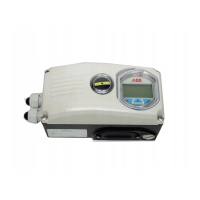
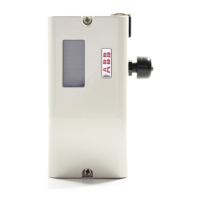
Describes the Type AV1 and AV2 positioners and their basic functions.
Details the steps for checking the equipment upon receipt.
Discusses factors for choosing a location and preparing for positioner mounting.
Details the procedures for adjusting zero and span for accurate operation.
Explains how to set the initial input signal level for actuator movement.
Describes how to adjust the actuator's travel range for a given signal.
Describes the operation of the manifold's equalizing valve for manual control.
Provides an introduction to the troubleshooting section and its purpose.
Explains the process of shaping cams for desired control characteristics.
Guides selection of standard cams based on application requirements.
Details the Type AV1 pneumatic position transmitter option.
Lists recommended preventive maintenance tasks and their intervals.
Provides procedures for removing and replacing the manifold assembly.
Lists parts recommended to be kept on hand for quick replacement.
Explains how position transmitters sense cam shaft position.
Provides calibration steps for potentiometric and 4-20mA transmitters.
Guides users on identifying positioner models using nomenclature.
Provides step-by-step instructions for mounting the positioner.
Details the process of shaping cams for desired control characteristics.
Guides selection of standard cams based on application requirements.
Describes the Type AV1 pneumatic position transmitter option.
Provides installation steps for the pneumatic position transmitter kit.
 General
| Input signal | 4-20 mA |
|---|---|
| Ambient temperature | -40 to 85°C (-40 to 185°F) |
| Enclosure Rating | IP66/NEMA 4X |
| Supply pressure | 20-100 psi |
| Mounting | Direct mounting on linear and rotary actuators |
| Hazardous Area Certification | ATEX, IECEx, FM, CSA |
| Type | Electro-pneumatic positioner |


 To Next Page