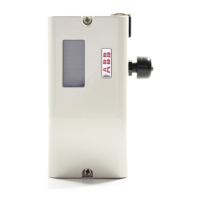
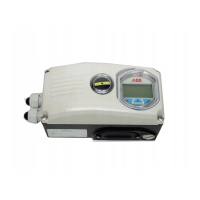
The TZID-C is an intelligent positioner designed for precise control of pneumatic actuators. It receives an analog input signal (4-20 mA) and converts it into a corresponding pneumatic output to position a valve or damper. This device is suitable for both linear and rotary actuators, offering versatile application across various industrial processes.
Function Description:
The core function of the TZID-C is to accurately position a pneumatic actuator based on a received electrical input signal. It employs a sophisticated control algorithm, including adaptive control, to ensure stable and precise positioning. The positioner continuously monitors the actual position of the actuator via an integrated sensor and compares it to the target position derived from the input signal. Any deviation is corrected by adjusting the pneumatic output pressure to the actuator.
The TZID-C supports various operating modes:
- Adaptive Control (Mode 1.0): This is the primary operating mode where the positioner automatically adjusts its control parameters to optimize performance based on the actuator's characteristics and process conditions. This mode is ideal for achieving high accuracy and stability without extensive manual tuning.
- Fixed Control (Mode 1.1): In this mode, the control parameters are fixed, providing a consistent response. This can be useful in applications where the actuator characteristics are well-known and constant, or where a specific, predictable response is desired.
- Manual Adjustment within Stroke Range (Mode 1.2): This mode allows for manual positioning of the actuator within its defined stroke limits. It's useful for testing, calibration, or temporary manual operation. The position is displayed as a percentage of the stroke.
- Manual Adjustment within Sensor Range (Mode 1.3): Similar to Mode 1.2, but allows manual positioning across the full range of the internal position sensor, which may extend beyond the actuator's normal stroke. This is particularly useful during initial setup and sensor calibration.
The device also features a "Autoadjust" function (P1.1), which is a crucial commissioning step. This function automatically determines the actuator's characteristics and optimizes the positioner's control parameters, simplifying setup and ensuring optimal performance.
Important Technical Specifications:
- Input Signal: Analog input, 4-20 mA.
- Output Signal (Optional): Analog output, position feedback, 4-20 mA. This allows the actual position of the actuator to be transmitted back to the control system.
- Digital Feedback (Optional): The TZID-C can be equipped with digital position feedback via microswitches (SW1, SW2) for limit detection. These can be configured as normally closed (NC) or normally open (NO) contacts, and can operate with a 24 V supply.
- Digital Input (Optional): An 81-82 digital input is available for external control signals.
- Digital Output (Optional): An 83-84 digital output provides an alarm contact, indicating fault conditions or specific operational states.
- Pneumatic Supply: Air supply range between 1.4 and 6 bar (20 to 90 psi). It is crucial not to exceed the maximum pressure rating of the actuator.
- Actuator Types: Suitable for both linear and rotary actuators.
- Minimum Angle: A minimum angle of 25° is recommended for proper operation.
- Limit Stop Recommendations: For linear actuators, recommended limit stops are > -28° and < +28°. For rotary actuators, > -57° and < +57°. These values refer to the internal sensor's angular measurement.
Usage Features:
- User Interface: The TZID-C features a local display and push buttons for configuration and operation. The display shows the current position (e.g., 85.2%) and operational status.
- Easy Commissioning: The "Autoadjust" function significantly simplifies the commissioning process by automatically calibrating the positioner to the specific actuator.
- Configuration Levels: The device has distinct operating and configuration levels. The operating level allows for mode selection and basic adjustments, while the configuration level provides access to detailed parameters for fine-tuning and advanced settings.
- Parameter Setting: Parameters are organized into groups (e.g., P1 for Autoadjust, P2 for Setpoint). Navigation and adjustment are performed using the MODE, ENTER, and arrow buttons.
- Valve Action: The positioner supports both "direct" and "reverse" valve action, allowing it to be adapted to different actuator types and control philosophies (e.g., air-to-open or air-to-close).
- Non-Volatile Memory: All settings are saved in non-volatile memory, ensuring that configurations are retained even after power loss.
- Error Messages: The device provides error messages on the display to indicate issues during Autoadjust or other operations, aiding in troubleshooting.
Maintenance Features:
- Self-Diagnostics: The intelligent nature of the positioner implies a level of self-diagnostics, particularly evident during the Autoadjust process where it can detect and report issues.
- Tolerance Band Adjustment (P1.2): This feature allows for fine-tuning the control sensitivity, which can be important for critical actuators or those with specific response requirements.
- Test Function (P1.3): A test function is available to verify the settings and performance after configuration or maintenance.
- Modular Design: While not explicitly detailed in the provided snippets, the mention of "Kit for digital position feedback" and "Shutdown module" suggests a modular design, potentially allowing for easier replacement of specific components or upgrades.
- Clear Electrical and Pneumatic Connections: The manual provides clear terminal designations for electrical connections and port labels for pneumatic connections, facilitating correct installation and troubleshooting.
- Fold-out Drawing: The reference to a "fold-out drawing" for mechanical mounting indicates comprehensive visual guidance for installation, which is crucial for proper maintenance and component access.

 Need help?
 General

 To Next Page