Need help?
Do you have a question about the ABB PGC5000 and is the answer not in the manual?
Explains symbols like DANGER, WARNING, NOTICE used in the document.
Lists potential dangers like explosion, high voltage, and ESD.
Describes the applications and uses of the DBDID detector.
Explains how the DBDID detector works using a plasma discharge.
Provides step-by-step instructions for safely removing the detector.
Details the steps required to install the DBDID detector.
Outlines the procedures for initializing and operating the detector.
States that no scheduled maintenance is required for the detector's power supply or electrometer.
Lists essential spare parts for the DBDID detector and how to order them.
Helps diagnose and resolve issues where the detector's plasma fails to ignite.
Guides users through troubleshooting scenarios when the detector produces no output signal.
Provides solutions for problems resulting in a weak or insufficient detector signal.
Offers troubleshooting steps for detecting and eliminating excessive noise in the signal.
Addresses issues causing a consistently high background signal in the detector.
Explains how to troubleshoot and correct gradual shifts in the detector's baseline signal.
Provides guidance on identifying and resolving sudden, sharp increases in the detector signal.
Details the physical characteristics and environmental requirements of the detector.
Specifies the power requirements and consumption of the DBDID detector.
Describes the different operating modes of the detector, HID and AID.
Explains factors affecting sensitivity and provides sensitivity values for different modes.
Lists the recommended gas flow rates for reaction and carrier gases.
The ABB PGC5000 Gas Chromatograph Dielectric Barrier Discharge Ionization Detector (DBDID) is a sophisticated analytical instrument designed for precise detection of trace components in various gas applications. Its primary function is to ionize sample components as they elute from a chromatographic column, allowing for their measurement and display. This detector is particularly well-suited for applications requiring high sensitivity, capable of detecting concentrations in the parts per billion (ppb) and parts per million (ppm) ranges.
The DBDID operates on the principle of dielectric barrier discharge, where a high voltage alternating current is applied to a reaction gas (typically helium or argon) flowing through a dielectric material, such as a quartz or Pyrex tube. This process generates a plasma discharge. Within the detector, two electrodes are arranged, and when high voltage is applied, a breakdown occurs, leading to a discharge between the electrodes. The dielectric barrier acts as a capacitor, storing significant energy for each discharge and generating highly excited state helium or argon atoms, which constitute the reaction gas. As sample components elute from the column, they are ionized by this reaction gas. A second set of electrodes then measures the current generated by these ionized components, and this output is amplified, measured, and displayed by an electrometer.
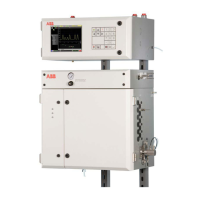
The DBDID is integrated into the ABB PGC5000 Process Gas Chromatograph and is designed for use by qualified personnel. It is capable of detecting impurities in high purity gases and products, halogenated hydrocarbons, BTEX compounds (Benzene, Toluene, Ethylbenzene, and Xylenes), arsine and phosphine, ethylene oxide, ammonia, nitric oxide in cold box applications, and ambient air applications.
The detector offers two primary modes of operation: Helium Ionization Mode (HID) and Argon Ionization Mode (AID). In HID mode, the detector is sensitive to all organic and inorganic components except neon, making it suitable for measuring sub-ppm levels of fixed gases. In AID mode, the detector is not sensitive to fixed gases and methane but is sensitive to a wide range of organic and inorganic volatile components, capable of ionizing any component with an ionization potential less than 11.5eV. The choice of reaction gas (helium or argon) is crucial for optimal performance in these modes.
Maintenance of the DBDID involves several procedures to ensure its continued accuracy and reliability. Before any maintenance, it is critical to disable the isothermal oven temperature zone, allow the oven to cool to room temperature, and power down the oven. Disconnecting the column, cell vent line, and reactor gas inlet from the cell body is also necessary. When removing the detector, the coax cable from the DBDID amplifier assembly, as well as the high voltage power connector, bias cable, and feedback cable from the DBDID power supply board, must be unplugged. The flange screws around the feedthrough tube are loosened, and the detector is carefully pulled from the oven, feeding the potted wires through the opening. Installation is the reverse of removal, followed by a leak check.
For operation, the oven should be allowed to heat up and stabilize with flows enabled before setting the correct flow rates, which are measured at the cell vent tube. The detector is designed to automatically light when power is applied, indicated by a soft blue plasma glow visible with low light after removing the front cover. Proper reinstallation of the cover, ensuring flame-proof or explosion-proof surfaces are not damaged, is essential.
Troubleshooting guidelines address common issues such as the plasma not lighting, no signal, low signal, excessive noise, elevated baseline, and baseline drift. For instance, if the plasma does not light, potential causes include no power, air in the plasma, high back pressure, wrong plasma gas, or defective electronics. Remedies range from purging the system with reaction gas and checking for leaks to replacing exhaust/signal tubes or verifying the correct reaction gas. Signal issues often point to air in the plasma, signal cable problems, or incorrect bias voltage, requiring checks of the plasma tube glow, BNC fitting contact, and voltage measurements. Excessive noise can be caused by bad electrical connections, air leaks, or insufficient clearance for the plasma electrode, necessitating checks of cable connections, ground, and O-ring integrity. Elevated baseline and baseline drift are often linked to poor carrier gas quality, air leaks, poor pressure control, column bleed, plasma cell leaks, or contamination, requiring actions such as replacing gas, checking for leaks, re-conditioning columns, or installing filters. Spikes can be caused by loose connections or missing ground leads, requiring verification of secure cable attachments and ground lead connections.
The design emphasizes safety, with warnings about high voltage and hazardous gases. Personnel performing maintenance must be qualified and use insulated tools. It is crucial to ensure no hazardous or flammable gases are present when working on the analyzer and to disconnect power before accessing electronics. The DBDID operates at high voltage, and the center rod of the plasma supply must be properly grounded to prevent electrical shock. Proper electrostatic discharge (ESD) measures are also required when handling printed circuit boards and other electronics.
The DBDID does not have parts within its power supply or electrometer that require scheduled maintenance. However, a list of recommended spare parts, including the power supply, detector cell assembly, and amplifier kit, is provided for replacement as needed. When ordering parts, it is important to contact ABB sales and service representatives and include equipment identification and configuration information to ensure the correct version of each part is supplied.
 General
| Analysis Type | Gas Analysis |
|---|---|
| Communication | Ethernet |
| Accuracy | ±1% of full scale |
| Output Signal | 4-20 mA |
| Power Supply | 100-240 VAC, 50/60 Hz |
| Enclosure Rating | IP65 / NEMA 4X |
| Measurement Principle | Paramagnetic for O2, Zirconia for O2, Infrared for CO/CO2, Electrochemical for other gases |

 To Next Page