4
Firewood – Use
Choosing your wood
All wood types have a different calorific value. You should choose only well-seasoned hard woods. Do
not use logs that are too large. Split round logs so they cannot roll and cause a hazard.
Drying your wood
Whichever firewood is chosen, it must be very dry and seasoned. Unseasoned or green firewood does
not heat as much, because a large part of the energy is consumed in the evaporation of the water and
creosote contained in the wood, which is highly corrosive and will damage the appliance and
consequently it could void your Warranty. In addition, moist firewood produces a large amount of
smoke and little flame, which will foul the appliance, the glass and the chimney. When raining the
stored wood should be covered and well ventilated. Generally, green wood should be left to “season”
for two years.
Wood to Avoid
Softwoods and low-density wood: This kind of firewood release a lot of heat but burn too quickly and
projects embers and resin that foul the chimney and the interior of your woodstove. These should be
used as Kindling only, for starting your fire.
Do not use:
Wood with varnish, exotic wood, treated/painted timber, agglomerates that can produce toxic fumes
which will damage the appliance. Do not use drift wood or coastal wood with high salt content, it will
quickly damage the heater.
All ADF appliances are designed to burn firewood and firewood only, with less than 20% moisture
contect. The use of unseasoned firewood or firewood with moisture or other types of fuel not
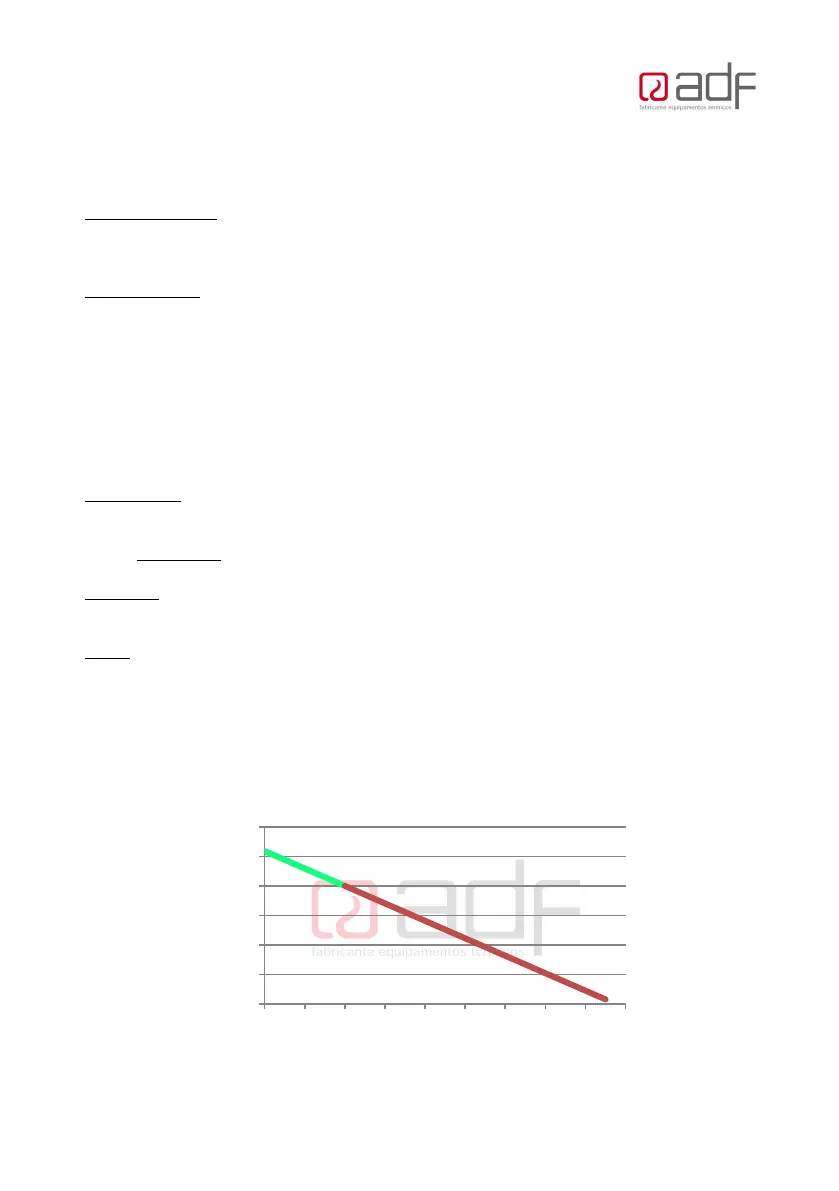
recommended will void the warranty. See below, the drier the wood the better heat you get out of it.
0.0
1.0
2.0
3.0
4.0
5.0
6.0
0 10 20 30 40 50 60 70 80 90
(kWh/kg)
Moisture (%)
Moisture Vs Energy released by firewood


 To Next Page