EasyManua.ls Logo

AGCO Gleaner S67 - User Manual

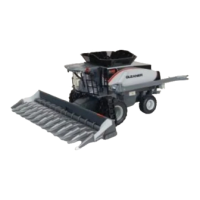
AGCO Gleaner S67
40 pages
Print Icon
To Next Page IconTo Next Page
Loading...
Quick Reference Guide
S67/S68/S96 • S77/S78/S97 • S88/S98 Models
It is YOUR responsibility to read and understand the safety section in your
Operator’s Manual and the manual for all attachments before operating your
machine. Remember YOU are the key to safety. Good safety practices not only
protect you, but also the people around you.
Study the features in your Operator’s Manual and make them a working part of
your safety program. Keep in mind that the safety section in your Operator’s
Manual is written only for this type of machine. Practice all other usual and
customary safe working precautions, and above all REMEMBER - SAFETY IS
YOUR RESPONSIBILITY. YOU CAN PREVENT SERIOUS INJURY OR
DEATH.

Questions and Answers

  • M
    Mr. Nicholas StarkSep 17, 2025
    What causes header conveyor plugging or material not moving from the center of the conveyor into the front feed chain on AGCO Flex Header Farm Equipment?
    • J
      joseph48Sep 17, 2025
      Adjust the straw retarder if the straw retarder clearance from the conveyor flight is too great. Adjust the reel height if the reel is not adjusted to provide a smooth flow of material into the header conveyor. Adjust the position of the conveyor fingers for best material flow if the conveyor fingers are retracting too early or too late. Conveyor flighting should have a slight lean toward the center of the conveyor if there is insufficient lean in the header conveyor flighting. Adjust the conveyor fore and aft position if the conveyor is too far forward or too far rear. Adjust the conveyor height if the conveyor is too high or too low. Move the front feed chain drum forward away from the header consistently if the feeder chains are not moving material.
  • T
    Tyler FullerSep 18, 2025
    What to do if grain is not threshed from heads or shelled from cob or pod in AGCO Gleaner S67 Farm Equipment?
    • R
      Robert LowerySep 18, 2025
      Decrease concave clearance and adjust cylinder speed to prevent cracking if the concave clearance is too great. Increase cylinder speed enough to do a good job of threshing if the cylinder speed is too slow. Level the concave to the cylinder if the concave is not level. Increase ground speed for more intake of material if there is insufficient material entering the cylinder. Replace cylinder bars if they are worn or damaged. Replace cylinder bars if the cylinder is not aggressive enough. Replace the concave if it is extremely worn or damaged. Install concave fillers if the crop is very difficult to thresh. On combines equipped with optional tailings return, adjust the handle to return tailings to the cylinder.
  • A
    Adrian ThompsonNov 22, 2025
    How to fix ragged and uneven cutting of crop with AGCO Gleaner S67 Farm Equipment?
    • E
      edwardstinaNov 22, 2025
      Ragged and uneven cutting of crops can occur due to several reasons. The cutting mechanism may not be operating at the recommended speed; check the basic speed of the combine and the header drives. The reel speed might be too slow for the ground speed, so increase the reel speed. The reel height could be too high, so lower the reel. Adjust the reel position so the reel bats hold the grain leaning slightly into the sickle. Ensure the header is level. Bent or broken guards can also cause this issue, so straighten or replace them. Adjust the upper lips of the guards to be parallel to the lower shear edge of the guard. Adjust the sickle so the tips of the sickle sections rest lightly on the guards. Replace worn hold-down clips and adjust the clips. Adjust wear plates if there's too much fore a...
  • C
    Cynthia HendrixNov 23, 2025
    What to do if there is excessive cracked grain in the grain tank of AGCO Gleaner S67?
    • M
      Mr. Derek PalmerNov 23, 2025
      Excessive cracked grain in the grain tank can occur if the crop is too damp or green, so allow the crop conditions to improve. If the cylinder speed is too fast, decrease it just enough to stop threshing. Other causes include uneven feeding or slugs entering the cylinder, the engine not running at the correct speed, the concave not being level, insufficient material entering the cylinder, dented conveyor housings, bent conveyor shafts, worn conveyor flighting, concave clearance too close, excessive tailings return, grain remaining in the cage too long, excessive feed chain speed, worn cylinder bars, or kernel moisture being too high. Level the concave to the cylinder. Remove dents from conveyor housings to achieve adequate clearance with the auger. Increase concave clearance. Adjust the cl...
  • G
    Gabriel SmithDec 1, 2025
    How to prevent guards from plugging on AGCO Gleaner S67?
    • K
      kbradyDec 1, 2025
      Guards can plug if sickle sections are not contacting guards, so adjust the sickle so the tips of the sickle sections rest lightly on the guards. Replace missing or worn sickle sections. The reel may not be adjusted to provide a smooth flow of material into the header conveyor; refer to the Operator Manual for the best starting position and adjust reel height, reel speed, and reel fore and aft position for even flow. Straighten or replace bent or broken guards. Tilt the cutter bar up if it is tilted down too much. Straighten or replace a bent or twisted sickle assembly. Reduce ground speed if it is too fast. Check that skid pad splice brackets are not binding skid pads. Decrease ground pressure by increasing spring tension on flex arms where plugging is occurring. Move selection to a highe...

Summary

Combine Setup

Cereal Grain - Wheat, Oats, Barley

Combine setup for wheat, oats, and barley, including rotor RPM, settings, and fan.

Milo - Grain Sorghum

Combine setup for milo and grain sorghum with specific settings.

Dry Corn (< 20% moisture)

Combine setup for dry corn (< 20% moisture) with recommended operational parameters.

High Moisture Corn (> 24% moisture)

Combine setup for high moisture corn (> 24% moisture) with specific adjustments.

Soybeans

Combine setup guidelines for soybeans, including operational settings and tips.

Canola;Rapeseed

Combine setup for canola and rapeseed, detailing operational parameters and tips.

Millet

Combine setup for millet, including initial parameters and required blanks.

Troubleshooting

Header Issues

Troubleshooting common issues with the combine header, like ragged cutting and wrapping.

Processor Adjustments

Troubleshooting cylinder slugging, overloading, vibration, and grain loss.

Loss Calculation Methods

Advanced Grain Loss Calculation Procedure

AGCO Gleaner S67 Specifications

General IconGeneral
Grain Tank Capacity300 bushels
TransmissionHydrostatic
Header WidthUp to 40 ft
Drive2WD
Engine TypeDiesel
Cutting WidthUp to 40 ft

Related product manuals