EasyManua.ls Logo

Air Liquide OP 310 - User Manual

Default Icon
20 pages
Print Icon
To Next Page IconTo Next Page
Loading...
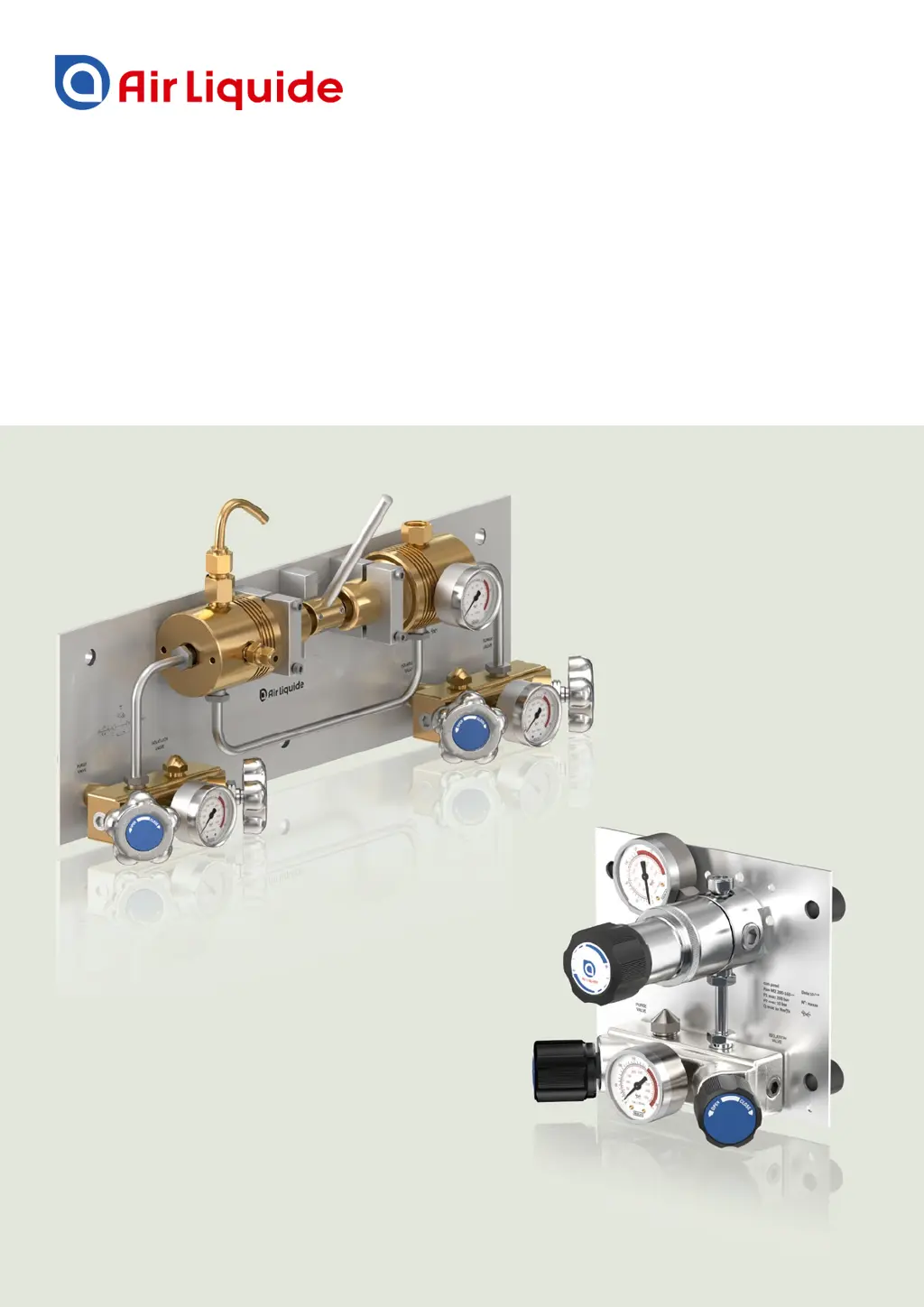
OP 310/360
Manifolds
Steel / brass
Operating manual

Questions and Answers

  • S
    Sarah GarrisonAug 3, 2025
    Why is there insufficient output of gas from my Air Liquide OP 310?
    • C
      Cynthia HernandezAug 3, 2025
      Insufficient gas output from your Air Liquide Industrial Equipment can occur due to several reasons. A valve might be limiting the cross-section passage, in which case you should open the valve. The cylinder may be insufficiently filled or empty, requiring you to change the cylinder. Alternatively, the valve might not be operating, also requiring a cylinder change. If the equipment is under-dimensioned, contact AIR LIQUIDE. Finally, the equipment in output might not be operational, meaning it should be changed.
  • B
    bryan66Aug 7, 2025
    What to do if gas comes out of the relief valve in Air Liquide OP 310 Industrial Equipment?
    • K
      Kathy ThomasAug 7, 2025
      If gas is escaping from the relief valve of your Air Liquide Industrial Equipment, it could be due to a leakage at the flap of the regulator, in which case you should replace the regulator. Another cause could be a defect in the relief valve itself, requiring you to replace the relief valve.
  • A
    Anthony WileyAug 11, 2025
    Why does the gas source in reserve drain without being used in my Air Liquide Industrial Equipment?
    • P
      padamsAug 12, 2025
      The gas source in reserve draining without being used in your Air Liquide Industrial Equipment can be due to occasional over-consumption; replace the equipment with one having a lower output. It can also be caused by leakage, so check out the gas tightness. Another possible cause is leakage at the main valve of the regulator, in which case you should replace the main valve or the regulator.
  • H
    Heather BrownAug 15, 2025
    How to fix decreasing outlet pressure in Air Liquide Industrial Equipment?
    • G
      gloversierraAug 16, 2025
      If the outlet pressure decreases in your Air Liquide Industrial Equipment, it may be because the output flow is too high. To resolve this, respect the regulator flow and limit the flow by using a valve or a calibrated orifice.
  • D
    Dr. Molly Baldwin DVMAug 20, 2025
    How to prevent frosting in Air Liquide OP 310 Industrial Equipment?
    • S
      silvadeannaAug 20, 2025
      Frosting in Air Liquide Industrial Equipment can occur if the working pressure is too low. Close the cylinder valve and increase the temperature of the equipment above 0 °C. It can also happen if the gas used is argon (Ar), carbon dioxide (CO2), or nitrous oxide (N2O); in this case, mount a heater at the inlet.
  • E
    Erin WilliamsAug 25, 2025
    How to troubleshoot assembly problems with Air Liquide OP 310 Industrial Equipment?
    • S
      Seth ClementsAug 26, 2025
      If you're experiencing assembly problems with your Air Liquide Industrial Equipment, it could be due to incompatible connections with gases, inlet, and outlet, so verify the compatibility. Alternatively, the connection may be damaged, requiring you to change the connection.
  • S
    Shannon MedinaAug 29, 2025
    What to do if outlet pressure varies between sides in Air Liquide OP 310 Industrial Equipment?
    • Q
      qwardAug 29, 2025
      If, at the same pressure and output entry, the outlet pressure differs depending on the side you are using with your Air Liquide Industrial Equipment, the regulators may be disturbed. Adjust the regulators to resolve this issue.

Summary

Preliminary Notes and Warranty Information

Warranty and Liability Conditions

Details warranty coverage, exclusions, and limitations of liability for the equipment.

Manifold Usage and System Specifications

Manifold Functions, Designs, and Gas Types

Explains manifold purposes, various designs, and suitability for different gases.

Operating, Transport, Storage, and Connections

Covers environmental conditions, transport, storage, and connection details for manifolds.

Intended Use and Acceptance Plant Requirements

Defines exclusive intended use and specifies requirements for acceptance plants.

Operational Guidelines and Regulatory Compliance

Regulatory Compliance: PED, ATEX, REACH

Addresses conformity with PED, ATEX, REACH regulations and lead content in brass.

Food-Grade Applications and Cleaning

Details guidelines for food-grade applications and proper equipment cleaning procedures.

Critical Safety Instructions for Gas Handling

Safe Gas Handling and Personnel Responsibilities

Emphasizes expert knowledge, operator/personnel duties for safe gas handling.

Hazards: Pressure, Leakage, and Electrical

Covers dangers from pressure energy, hazardous gas leakage, and electrical hazards.

Critical Safety Instructions for Gas Handling

Electrical Safety, Cleaning, and Special Gases

Details electrical safety, cleaning, and notes for special gases like oxygen.

Equipment Marking and Identification Details

Name Plate, Serial Number, and CE Marking Status

Describes name plate info, serial numbers, and reasons for absence of CE marking.

Manifold System Flow Schemes

Installation and Assembly Procedures

Assembly, Connections, and Component Fittings

Covers personnel, pre-assembly checks, hose lines, adapters, and fittings.

Orifice Plates, Purging, and Leak Tightness Testing

Details installing orifice plates, managing purge gas, and leak tightness verification.

Operation and System Management Procedures

Commissioning and Cylinder Changeover

Guides for initial commissioning and procedures for changing gas cylinders.

Safe System Decommissioning

Provides instructions for safely taking the manifold system out of operation.

Gas Shortage Warning System Operation

Warning System Operation and Settings

Explains system operation, signaling, and notes for pressure transmitter/scale settings.

Operation and Maintenance: Troubleshooting

Troubleshooting Common Operational Faults

Lists common operational faults, their causes, and recommended troubleshooting steps.

Operation and Maintenance: Troubleshooting

Preventive Maintenance Schedule and Checks

Presents a table with recommended periodicity for verifying and changing equipment parts.

Operation and Maintenance: Troubleshooting

Repair Procedures and Equipment Disposal

Details repair guidelines, spare parts, and procedures for equipment disposal and recycling.

Gas Compatibility Chart and Parameters

Contact and Company Information

Air Liquide OP 310 Specifications

General IconGeneral
BrandAir Liquide
ModelOP 310
CategoryIndustrial Equipment
LanguageEnglish

Related product manuals